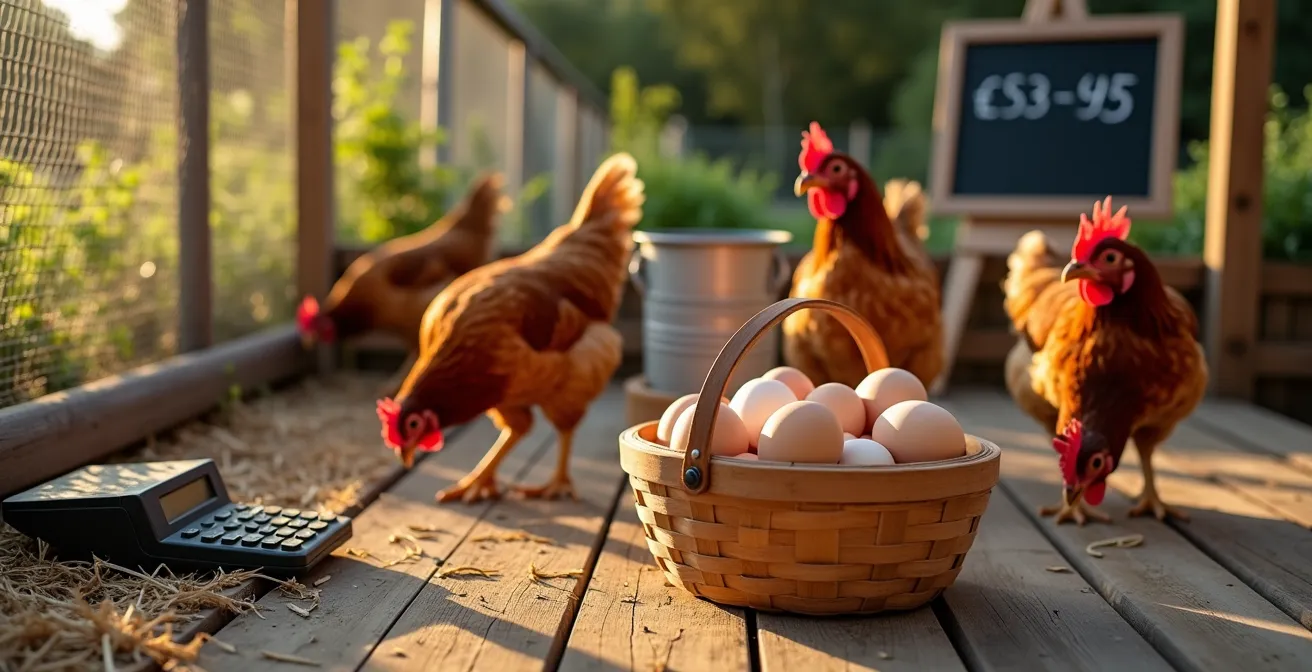
For most homeowners, the belief that backyard chickens provide a clear path to cheaper eggs is a dangerous oversimplification; profitability is not a given, but the result of rigorous risk management.
- Initial setup costs, particularly for predator-proofing, represent a significant capital expenditure that can negate years of egg savings if done incorrectly.
- Operational costs are driven by biosecurity and preventative health measures, where small, consistent investments yield a far higher ROI than expensive, reactive emergency care.
Recommendation: Approach raising backyard chickens not as a hobby with a side benefit, but as a micro-enterprise. Your primary goal is to mitigate financial risk through smart, upfront investments in security and health.
The image is appealing: stepping into your backyard to collect a basket of warm, fresh eggs. It’s a vision of self-sufficiency and superior quality that drives many homeowners to consider building a coop. The initial math seems simple enough—compare the cost of feed and a few chicks to the ever-increasing price of a dozen organic eggs at the supermarket. Many guides focus on this linear calculation, championing the hobby’s intangible benefits like garden fertilizer and educational opportunities for children to justify the expense.
However, this simplistic view overlooks a crucial financial reality. The cost-effectiveness of a backyard flock is not a fixed outcome. It is a highly volatile variable, precariously balanced on a series of critical management decisions. Viewing this endeavor solely through the lens of a hobbyist, rather than as the manager of a small-scale agricultural asset, is the most common path to financial loss. A single misstep in infrastructure, biosecurity, or flock management can instantly erase any potential savings and turn the dream of “free” eggs into a costly liability.
This analysis moves beyond the romanticized calculations. We will not just tally up feed costs; we will dissect the high-stakes decisions that determine the true return on your investment. We will explore how upfront capital expenditures in security are not an expense but a crucial form of insurance, why biosecurity is a powerful financial lever, and how preventative health management offers an ROI that reactive vet care can never match. This is a pragmatic guide to understanding if you have the risk tolerance and management mindset to make a backyard flock a genuinely cost-effective venture.
This article provides a detailed breakdown of the key financial decision points. The following summary outlines the critical areas where your choices will directly impact the long-term profitability of your flock.
Summary: Are Backyard Chickens a Sound Financial Investment?
- Hardware Cloth vs. Chicken Wire: The Fatal Mistake New Keepers Make
- Heat Lamps vs. Deep Litter Method: Which Is Safer for the Coop?
- Calcium Supplementation: Why Oyster Shell Should Be Separate from Feed?
- Coop Boots: How to Prevent Tracking Bacteria into Your House?
- Integrating New Pullets: How to Avoid Bloodshed in the Flock?
- Visceral Larva Migrans: The Risk of Kids Playing in Sandboxes
- Zinc and Lead Poisoning: The Hidden Dangers in Cheap Aviary Wire
- Heartworm Prevention: Why Missing One Dose Can Cost You $2000?
Hardware Cloth vs. Chicken Wire: The Fatal Mistake New Keepers Make
The single most catastrophic financial error a new chicken keeper can make is confusing “chicken wire” with a true predator barrier. The name is a misnomer; chicken wire is designed to keep chickens *in*, not to keep raccoons, hawks, or weasels *out*. Predators can tear through it with minimal effort, resulting in the total loss of your flock—a complete write-off of your initial investment in birds, feed, and time. The correct material for securing a coop and run is hardware cloth, a rigid, welded-wire mesh.
The primary objection is cost. A pragmatic analysis shows that hardware cloth has a 4-5x higher initial cost than chicken wire. This can feel like a significant hurdle in the initial setup budget. However, this is a classic case of capital expenditure (CapEx) functioning as insurance. Skimping on this critical component is akin to building a house without a proper foundation. The risk of 100% loss is so high that the cheaper option presents a near-guaranteed negative ROI.
The investment pays for itself with the first prevented attack. For example, one poultry farm in Texas reported a complete cessation of attacks after making the switch. In their report, they noted achieving zero predator attacks after replacing all chicken wire with ½ inch galvanized hardware cloth. This isn’t an expense; it’s the most fundamental investment in protecting the core asset of your entire operation: the chickens themselves.
Heat Lamps vs. Deep Litter Method: Which Is Safer for the Coop?
In colder climates, providing winter warmth presents another critical decision with significant financial and safety implications. The default solution for many beginners is a 250W heat lamp. While effective at providing heat, it introduces a substantial fire hazard and a recurring operational expenditure (OpEx). A faulty lamp or a bird knocking it into dry bedding can lead to a coop fire, resulting in a total loss of the flock and structure, and potentially impacting homeowner’s insurance liability.
A more cost-effective and safer alternative is the deep litter method. This technique involves starting with a thick layer of carbon-rich bedding (like pine shavings or chopped straw) and allowing it to compost in place throughout the winter. As the chickens’ manure (nitrogen) mixes with the carbon bedding, microbial activity generates a steady, low-grade heat, warming the coop from the ground up. This turns a waste product into a valuable asset—a natural, self-sustaining heat source.
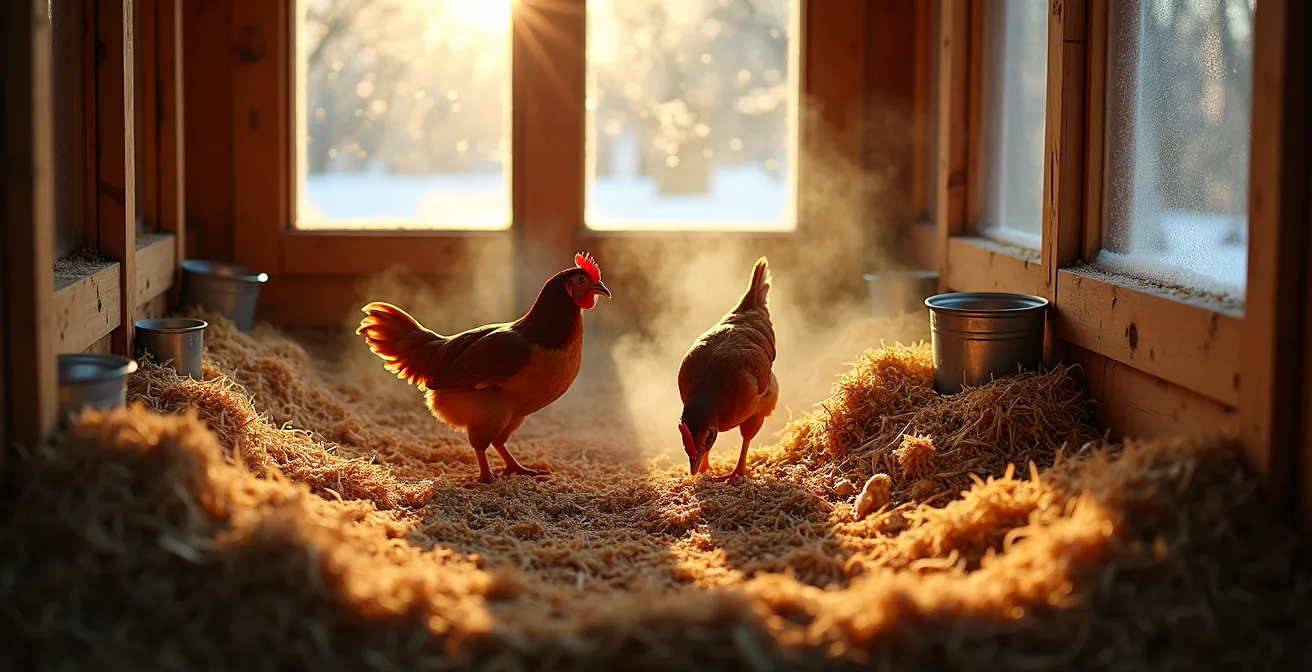
The deep litter system functions as a slow-burning biological furnace, eliminating the fire risk and electricity costs associated with heat lamps. At the end of the season, the resulting compost is a highly valuable soil amendment for gardens, which can be used to offset other costs or even sold. This method transforms a recurring cost and a major risk into a zero-cost heating system with a valuable byproduct, dramatically improving the flock’s overall ROI.
Your Action Plan: Cost-Benefit Analysis of Coop Heating
- Calculate the monthly electricity cost of a 250W heat lamp in your area (often $20-30/month during winter).
- Compare this recurring cost to the one-time purchase of deep litter materials ($50-100 for a season’s supply).
- Review your fire insurance policy regarding outbuildings and potential liability from heat lamp use.
- Factor in the potential value of the finished compost in the spring (estimated at $100-200 annually if sold or used to replace purchased fertilizer).
- Consider implementing passive solar heating with south-facing windows as a no-cost supplemental heat source.
Calcium Supplementation: Why Oyster Shell Should Be Separate from Feed?
Ensuring strong eggshells is paramount to getting a usable “product” from your flock. The common approach is to buy a layer feed with calcium already mixed in. While convenient, this is an inefficient and potentially harmful strategy. Not all birds in a mixed-flock have the same calcium requirements. Roosters and non-laying hens do not need the high levels of calcium required for egg production, and over-consumption can lead to kidney damage and costly health problems. This “one-size-fits-all” approach wastes money and creates health risks.
The financially and biologically superior method is to provide a calcium source, like crushed oyster shell, in a separate, free-choice feeder. This allows each hen to self-regulate her intake based on her individual laying cycle and needs. She will consume it when her body signals the need to form a shell and ignore it otherwise. This precision nutrition prevents overconsumption in the rest of the flock, safeguarding their health and reducing waste. As one homesteader notes, this method is also incredibly cost-effective:
With the addition of eggshells, we use the oyster shells somewhat sparingly. I buy about one 50# bag of oyster shells per year for our flock of 50 chickens. When we had a smaller backyard flock with 10 or less chickens, one 50# bag lasted us multiple years.
– From Scratch Farmstead, Cost of Chickens for Eggs Guide
Comparing the different methods reveals a clear winner from an ROI perspective. While recycling your own eggshells is technically free, it carries a biosecurity risk if not properly sterilized. Oyster shell provides the best balance of low cost, high bioavailability, and safety.
| Calcium Source | Annual Cost (10 hens) | Bioavailability | Safety Risk |
|---|---|---|---|
| Oyster Shell (free-choice) | $15-20 | 95% | None |
| Mixed in Feed | $40-50 | 60% | Overconsumption |
| Recycled Eggshells | $0 | 85% | Salmonella if not properly cleaned |
| Limestone | $10-15 | 75% | Minimal |
Coop Boots: How to Prevent Tracking Bacteria into Your House?
The concept of biosecurity can seem abstract, but it boils down to a simple financial principle: preventing catastrophic losses with minimal investment. One of the highest leverage points in a backyard flock’s biosecurity is a pair of dedicated “coop boots.” The ground inside a chicken run is a hotspot for bacteria like Salmonella, Campylobacter, and E. coli, as well as parasite eggs. Walking from the coop into your home with the same pair of shoes creates a direct vector for introducing these pathogens to your family and other pets.
The financial risk here is twofold. First, there’s the cost of veterinary or medical care for a family member or pet who becomes ill. Second, there’s the risk of introducing a disease *to* your flock. A simple pair of rubber boots that are exclusively worn in the chicken area and removed before re-entering the house costs very little but effectively severs this transmission route. It is the cheapest and most effective insurance policy you can implement.
The cost of ignoring this simple step can be substantial. As one experienced keeper painfully recalls, a single sick bird can quickly become a major expense: “I clearly remember my first sick hen’s vet visit cost me about $200, so vet expenses need to be considered into any economic analysis.” When you consider that vet costs for a single chicken can range from $25-$100 per bird on average, a $30 pair of boots that prevents a flock-wide illness offers an astronomical return on investment.
Integrating New Pullets: How to Avoid Bloodshed in the Flock?
From a pragmatic standpoint, a laying hen is a depreciating asset. Her peak productivity, often with hens laying 5-6 eggs per week on average, lasts for about two to three years before declining significantly. To maintain a steady supply of eggs and a positive ROI, a flock owner must have a strategy for rotating out older hens and integrating new, younger pullets. However, this process is fraught with peril. Chickens have a rigid social hierarchy or “pecking order,” and simply adding new birds to an established flock will almost certainly result in violent attacks, injury, or death.
A dead or injured pullet is a sunk cost. To avoid this, a strict quarantine and gradual integration process is non-negotiable. New birds must be kept in a separate quarantine area for at least two weeks to monitor for signs of illness. This prevents the introduction of diseases that could wipe out your entire established flock. Following quarantine, the new birds should be housed in a pen adjacent to or inside the main run, allowing them to see and be seen by the existing flock without physical contact. This “look but don’t touch” phase is critical for reducing the eventual stress of integration.
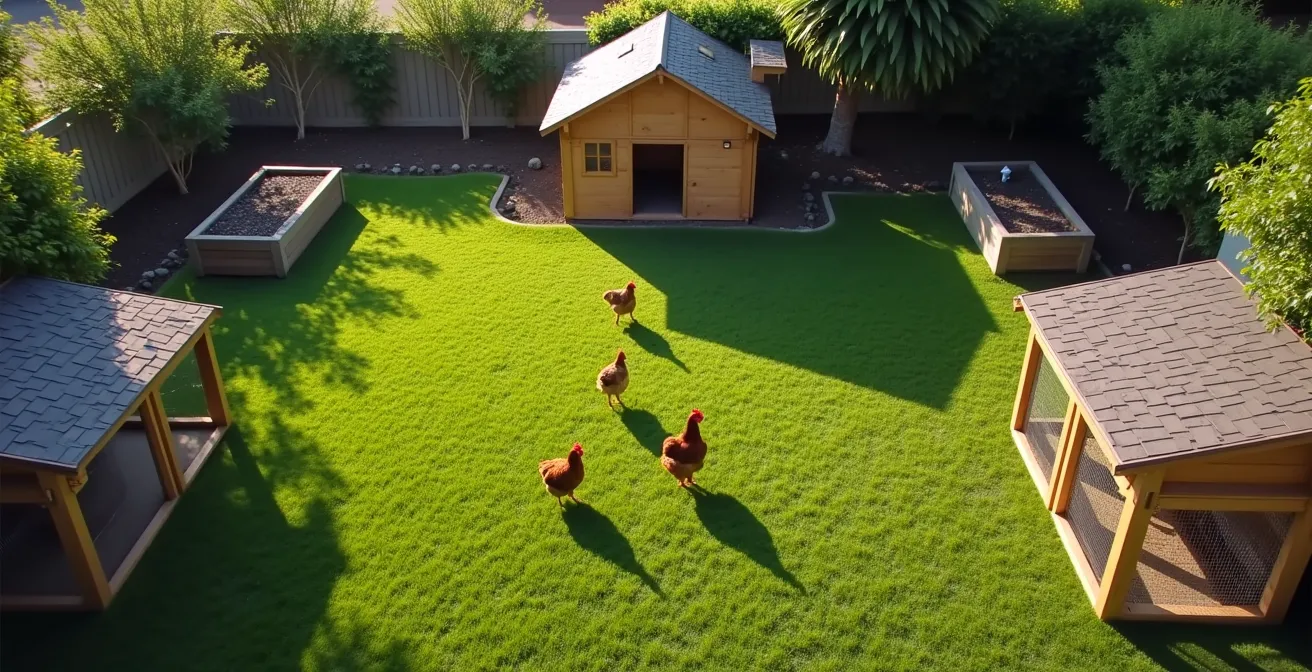
This careful process minimizes stress, which is crucial because stressed hens do not lay eggs. A chaotic integration can halt egg production in the entire flock for weeks, directly impacting your return. A proper integration, while requiring more time and a small investment in a temporary quarantine setup, protects your existing assets and ensures your new ones become productive as quickly as possible. It is a fundamental part of managing your flock as a productive portfolio rather than a static collection of pets.
Visceral Larva Migrans: The Risk of Kids Playing in Sandboxes
One of the most significant “hidden costs” of a backyard flock is the potential for zoonotic disease—illnesses that can pass from animals to humans. A particularly concerning risk for families with young children is Visceral Larva Migrans (VLM). This condition is caused by the accidental ingestion of microscopic roundworm eggs found in contaminated soil. Chickens can be carriers of these roundworms, shedding eggs in their feces. If the chicken run is located near a child’s play area, like a sandbox, the risk of transmission becomes very real.
The financial and emotional cost of a child contracting such an illness is incalculable and represents the ultimate negative ROI. Preventing this risk is a matter of basic hygiene and spatial planning. The cost of prevention is laughably small compared to the risk. Maintaining clean, dry bedding in the coop, which costs around $5-10 per month, significantly reduces the pathogen load. Implementing a regular deworming schedule for the flock is another low-cost, high-impact preventative measure.
Most importantly, strategic placement of the coop is key. The coop and run should be located as far as practically possible from high-traffic family areas, especially sandboxes, vegetable gardens intended for raw consumption, and patios. Covering sandboxes when not in use is another simple, effective barrier. These are not “extra” chores; they are fundamental risk-management protocols required when bringing livestock into a residential environment. The cost-effectiveness of your flock plummets to zero if it compromises the health of your family.
Zinc and Lead Poisoning: The Hidden Dangers in Cheap Aviary Wire
The decision to invest in quality hardware cloth over cheap chicken wire has another layer of financial implication: heavy metal toxicity. Much of the cheap, galvanized wire mesh available, particularly imported aviary wire, can contain excess zinc or even lead in the coating. Chickens are notorious for pecking at and licking surfaces in their environment. Ingesting flakes of this coating can lead to chronic or acute zinc and lead poisoning.
The symptoms are often non-specific—lethargy, weight loss, and reduced egg production—making diagnosis difficult without expensive veterinary testing. By the time the issue is identified, significant damage may already be done, leading to bird death or a permanent drop in laying capability. This turns a seemingly savvy cost-saving measure on building materials into a direct cause of asset destruction. This is why sourcing your wire from a reputable supplier is critical. As experts in materials explain, quality matters for longevity and safety:
Hardware cloth creates a nearly impenetrable barrier, safeguarding chickens from ground and aerial predators. Galvanized or PVC-coated hardware cloth withstands rain, snow, and heat without corroding or weakening.
– YESON Wire Mesh Company, Hardware Cloth vs. Chicken Wire Guide
The consensus among experienced builders is to invest in a quality, 19-gauge hardware cloth. This thickness is more than adequate to deter predators and, when sourced correctly, is manufactured with a safer galvanization process. A keeper who researched this concluded, “I did some research, and the general consensus is that a 19-gauge hardware cloth is the best option. A 19-gauge wire will be more than thick enough to keep a range of animals at bay.” Paying a premium for a safe, durable material is another form of insurance against the hidden costs of flock health issues and premature asset loss.
Key Takeaways
- Security is non-negotiable: Hardware cloth is an investment in asset protection, not an optional expense. One predator attack can erase all potential savings.
- Prevention is cheaper than crisis: Biosecurity measures like coop boots and preventative health care like vaccines offer the highest possible return on investment by avoiding catastrophic losses.
- Your flock is a managed asset: Profitability requires strategic planning for nutrition, flock rotation to manage age-related production decline, and risk mitigation.
Marek’s Disease vs. a 20-Cent Vaccine: The Brutal ROI of Prevention
The ultimate test of a chicken keeper’s financial acumen lies in their approach to health management. The temptation can be to view veterinary care as a reactive expense, only to be incurred when a bird is visibly sick. This is a financially ruinous strategy. The most devastating poultry diseases, like Marek’s Disease, are highly contagious, untreatable, and often result in the death of a large portion, if not all, of the flock. The true cost-effective approach is a ruthless focus on prevention.
Budgeting a modest amount, perhaps $50-100 per year for a small flock, for preventative care is one of the smartest financial moves you can make. This includes things like medicated feed for chicks to prevent coccidiosis and, most importantly, sourcing chicks that are already vaccinated for Marek’s. The vaccine costs mere cents per chick when done at the hatchery. Trying to save a dollar or two by buying unvaccinated birds is playing Russian roulette with your entire investment.
The math is brutal and unequivocal. A small, upfront cost for prevention consistently saves you from a massive, crippling cost of treatment or total loss. The following comparison illustrates just how dramatic the financial leverage of preventative care is.
| Health Issue | Prevention Cost | Treatment Cost | Flock Impact |
|---|---|---|---|
| Marek’s Disease | $0.20/chick vaccine | Flock replacement $100+ | Total loss possible |
| Coccidiosis | $15 medicated feed | $50-75 treatment | Growth stunting |
| External Parasites | $10 dust bath materials | $30-50 treatments | Egg production drop |
| Respiratory Disease | $0 (good ventilation) | $100+ antibiotics | Chronic issues |
As the table shows, a 20-cent vaccine prevents a loss of over $100. A $10 bag of sand for a dust bath prevents a $50 treatment bill and a halt in egg production. This is the core principle of a profitable backyard chicken operation: you are not just an animal owner; you are a risk manager. Every dollar spent on prevention yields an exponential return by protecting your flock’s health and productivity.
Now that you understand the critical risks and financial leverage points, the logical next step is to build your own preliminary budget. Use this analysis as a framework to honestly evaluate if this investment aligns with your financial goals, your available time for management, and your tolerance for risk. This will determine if a backyard flock is a truly wise investment for you.