
The decision to vaccinate is not about blind compliance; it’s about sober risk calculus.
- Believing an indoor pet is immune to exposure or that vaccine side effects outweigh disease lethality is a statistically unsound gamble.
- Core vaccines are the only scientifically proven defense against diseases like distemper, which has a high fatality rate, and rabies, which is 100% fatal.
Recommendation: Shift your perspective from avoiding vaccination to managing immunological risk. Use this guide to have a data-driven conversation with your veterinarian about your pet’s specific needs.
As a responsible pet owner, you question everything. Is this food optimal? Is this training method sound? And, inevitably, when a veterinarian recommends a slate of immunizations, you ask: “Is this shot really necessary?” The internet is a minefield of conflicting advice, filled with anecdotes of adverse reactions and arguments for a more “natural” approach. The desire to protect your animal from over-medicalization is valid, but it can lead to a dangerous miscalculation when weighing the risks of vaccination against the risks of the diseases themselves.
This is not another article that will simply tell you to “trust your vet.” Instead, this is an immunological briefing. We will dismantle the decision-making process, moving it away from fear or compliance and into the realm of scientific risk management. The core of this argument is not that vaccines are universally perfect, but that for certain diseases, they are the only rational choice in the face of catastrophic odds. We will not be talking about feelings; we will be talking about the mechanics of immunity, fatality rates, and legal imperatives. You will learn about the critical maternal antibody gap that leaves puppies vulnerable, the difference between assumed and measured protection, and the non-negotiable public health realities of zoonotic diseases.
This guide is structured to arm you with the scientific rationale behind modern vaccination protocols. By understanding the ‘why’ behind each recommendation, you can move from a position of skepticism to one of informed advocacy for your pet’s health. We will dissect the science of vaccine schedules, the protocols for managing the rare but real adverse reactions, and the legal and social requirements that are simply not optional.
Summary: Distemper and Adenovirus: A Scientific Look at Non-Negotiable Vaccines
- Core vs. Non-Core Vaccines: Do You Need Leptospirosis Protection?
- Annual vs. Triennial: Why Some Shots Last Longer Than Others?
- The Maternal Antibody Gap: Why the 16-Week Shot Is the Most Critical?
- When to Titer: Can You Skip Boosters Based on Blood Levels?
- Lethargy and Smell: The 2 Signs That Require Immediate ER Admission
- Facial Swelling: What to Do in the First 15 Minutes After a Shot?
- Boarding and Grooming: Which Vaccines Will Facilities Demand?
- Why Is the Rabies Vaccine Required by Law Even for Indoor Cats?
Core vs. Non-Core Vaccines: Do You Need Leptospirosis Protection?
Not all vaccines are created equal, nor are they all universally required. Veterinary immunology categorizes vaccines into two distinct groups: core and non-core. This distinction is the first and most critical step in moving away from a one-size-fits-all approach to a logical, risk-based strategy. Core vaccines are considered non-negotiable for every dog and cat, regardless of lifestyle or location. These are the immunizations against diseases that are highly prevalent, easily transmissible, and carry a high rate of severe illness or death. For dogs, this includes Canine Distemper Virus (CDV), Adenovirus (CAV), and Parvovirus (CPV). For cats, it includes Feline Herpesvirus, Calicivirus, and Panleukopenia.
Non-core vaccines, on the other hand, are optional and recommended based on a pet’s individual risk profile. This is where your veterinarian’s role as a strategist becomes paramount. A classic example is the Leptospirosis vaccine. As The Pet Care Clinic notes, Leptospirosis is a bacterial infection that can be fatal and is also zoonotic, meaning it can be transmitted to humans. However, the risk is not uniform. A chihuahua living in a high-rise apartment has a vastly different exposure risk than a Labrador Retriever that hikes and swims in rural ponds. The decision to vaccinate is a direct result of a risk assessment. Does your dog drink from puddles or streams? Is wildlife, such as raccoons or rats, common in your area? A “yes” to these questions significantly increases the risk and makes the vaccine a logical, protective measure.
Understanding this framework is essential. The skepticism directed at a non-core vaccine like Bordetella (kennel cough) for a solitary dog is reasonable. Applying that same skepticism to a core vaccine like distemper is a failure to differentiate between a low-stakes inconvenience and a life-threatening pathogen. Your first step in informed decision-making is to classify the recommended vaccine: is it a non-negotiable shield or a lifestyle-dependent precaution?
Annual vs. Triennial: Why Some Shots Last Longer Than Others?
A common point of contention for skeptical owners is the seemingly arbitrary frequency of booster shots. The “annual vaccine” model is an outdated concept that has been replaced by a more nuanced, scientific approach based on Duration of Immunity (DOI). The reason some vaccines provide protection for three years or more while others require annual boosters lies in their fundamental biological construction: Modified Live Vaccines (MLV) versus Killed (inactivated) vaccines.
Core vaccines like distemper and adenovirus are typically MLV vaccines. These contain a weakened or attenuated form of the live virus. When administered, the virus replicates in the pet’s body—but not enough to cause illness. This process mimics a natural infection, stimulating a powerful and long-lasting immune response. The body’s “memory cells” become highly adept at recognizing and neutralizing the real pathogen in the future. For this reason, the 2022 AAHA Canine Vaccination Guidelines state that annual boosters are not necessary for these core MLV vaccines after the initial puppy series; a triennial (every 3 years) schedule is sufficient to maintain protection in most adult dogs.
Conversely, many non-core vaccines, such as those for Leptospirosis or Bordetella, are killed vaccines or bacterins. These contain inactivated pathogens that cannot replicate in the body. While they are very safe, they provoke a less robust and shorter-lived immune response. The immunological memory they create is not as durable, requiring more frequent (typically annual) boosters to maintain a protective level of antibodies. Therefore, seeing an annual booster on your pet’s schedule does not mean all vaccines are being pushed unnecessarily. It is a specific requirement for a specific type of vaccine protecting against a specific risk.
The Maternal Antibody Gap: Why the 16-Week Shot Is the Most Critical?
The timing of the puppy and kitten vaccination series is one of the most misunderstood, yet most critical, aspects of immunology. It is not arbitrary. It is a calculated strategy designed to navigate a specific period of vulnerability known as the maternal antibody gap. When a puppy or kitten is born, it receives a dose of passive immunity through its mother’s colostrum (first milk). These Maternally Derived Antibodies (MDAs) provide crucial protection during the first few weeks of life.
However, these maternal antibodies are a double-edged sword. While they protect the young animal, they also actively interfere with and neutralize vaccines. If a puppy is vaccinated while it still has a high level of MDAs, the vaccine will be rendered ineffective. The problem is that the rate at which these MDAs decay varies significantly from one animal to another. One puppy in a litter might lose its protection at 8 weeks, while its sibling remains protected until 12 weeks or later. This creates a window of susceptibility: the MDAs are too low to provide protection against a real virus, but still high enough to block a vaccine from working. This is the immunological gap.
To overcome this, veterinarians administer a series of vaccines every 3-4 weeks (e.g., at 8, 12, and 16 weeks). The goal is to ensure that at least one of those doses is given *after* the maternal antibodies have fallen to a non-interfering level. According to AAHA vaccination guidelines, maternally derived antibodies are usually absent by 12-14 weeks of age in most puppies, but can persist longer in some. For this reason, the final shot of the series, typically given at or after 16 weeks of age, is considered the most important. It is the one most likely to be administered when MDAs are gone, thus stimulating the puppy’s own robust, long-lasting immunity. Skipping this final dose leaves the animal with a dangerously uncertain protection status.
When to Titer: Can You Skip Boosters Based on Blood Levels?
For the scientifically-minded skeptic, the concept of titer testing is compelling. A titer test is a blood test that measures the level of antibodies against a specific disease. Rather than blindly administering a booster, a titer test offers a way to measure a pet’s existing level of protection. If the antibody levels are adequate, a booster vaccine may be unnecessary, preventing potential over-vaccination. This aligns perfectly with a risk-management approach and is a valid tool in modern veterinary medicine, particularly for core MLV vaccines like distemper and parvovirus.
Research from institutions like the University of Wisconsin’s CAVIDS lab has established protective thresholds. For instance, their work confirms that antibody titers above 1:80 for CDV and CPV indicate sterile immunity in 95% of dogs. “Sterile immunity” is a powerful state where the immune system can neutralize a pathogen before it can even replicate and cause illness. The World Small Animal Veterinary Association (WSAVA) has endorsed titer testing as a valid method for assessing the need for boosters in adult dogs after their initial one-year booster. However, it’s crucial to understand the limitations. Titers are not a substitute for the initial puppy vaccination series, which is essential for priming the immune system. Furthermore, their use for killed vaccines or bacterins is less reliable, and critically, they are not legally accepted as a substitute for rabies vaccination in any jurisdiction.
The choice between routine triennial vaccination and titer testing involves weighing multiple factors, including cost, risk tolerance, and facility requirements. The following table provides a clear comparison:
| Factor | Annual Vaccination | Titer Testing (Every 3 Years) |
|---|---|---|
| Cost per year | $25-50 | $60-100 (amortized) |
| Risk of over-vaccination | Higher | Minimal |
| Legal compliance (Rabies) | Full | Not accepted |
| Boarding facility acceptance | Always | Sometimes with documentation |
| Protection assessment | Assumed | Measured |
Lethargy and Smell: The 2 Signs That Require Immediate ER Admission
While discussing prevention, it is a clinical necessity to understand the consequences of failure. Distemper and adenovirus are not minor illnesses. They are systemic, brutal diseases, and recognizing their advanced signs can be the difference between a slim chance of survival and certain death. If a pet is unvaccinated or has incomplete immunity, two specific signs—profound lethargy and a distinct “sick smell”—are red flags for immediate, life-or-death emergency admission. These are not symptoms to “watch and wait” on.
Profound lethargy in this context is not simple tiredness. A tired dog will still respond to its name or the sound of a food bowl. A lethargic animal is dull, unresponsive, and may be difficult to rouse. This indicates severe systemic illness and, particularly with distemper, potential neurological involvement as the virus attacks the central nervous system. The second, more unusual sign is a particular odor. This is often described by veterinarians as a sickly sweet or foul “sick smell” which can indicate systemic organ failure or sepsis. In the case of adenovirus, it can be associated with acute hepatitis and liver failure. This odor is a sign that the body’s systems are shutting down.
To be clear about the stakes: the American Veterinary Medical Association states that about 1 in 2 dogs will die from distemper infection. This is not a risk to be taken lightly. The cost, effort, and minimal risk of vaccination pale in comparison to the physical, emotional, and financial toll of treating—and likely losing—a pet to one of these preventable diseases.

The clinical assessment of these neurological signs, as shown in the examination of the eye’s pupil response, is a critical part of the emergency process. These are not subtle illnesses; they are aggressive pathogens that require an aggressive response, starting with prevention.
Facial Swelling: What to Do in the First 15 Minutes After a Shot?
The fear of an acute allergic reaction is one of the most significant drivers of vaccine skepticism. While severe reactions are rare, they are possible, and being prepared is a key component of responsible risk management. An anaphylactic reaction, characterized by facial swelling (angioedema), hives, or difficulty breathing, typically occurs within 15 to 30 minutes of vaccination. Knowing precisely what to do in these first few minutes is critical.
Most veterinarians will ask you to wait at the clinic for this period for exactly this reason. If you have already left, your response must be immediate and methodical. The first sign is often swelling around the muzzle, eyes, or ears. It’s crucial to distinguish this from normal, mild soreness at the injection site. An emergency reaction is systemic and escalates quickly. Your primary goal is not to treat it yourself, but to stabilize the pet and get to an emergency veterinarian immediately. Human medications like Benadryl should never be given without explicit veterinary instruction, as dosing is critical and it may not be sufficient for a severe reaction.
This image of a veterinarian performing an emergency assessment highlights the professional care required. Your role is to be the first responder who can recognize the signs and initiate transport.
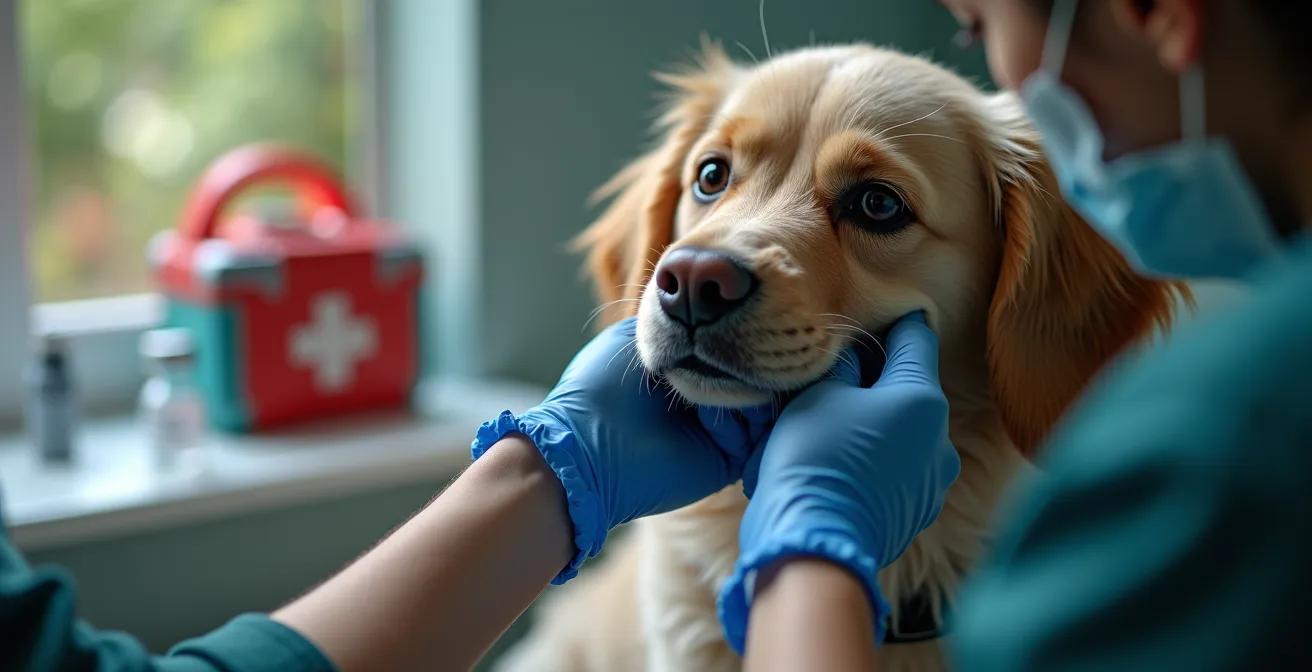
In the face of a potential reaction, a clear, step-by-step protocol is your most valuable asset. It removes panic and replaces it with action. The following checklist outlines the critical actions to take in the first 15 minutes while you are en route to an emergency facility.
Your action plan: The first 15 minutes of a vaccine reaction
- Minute 1-2: Check gum color. Pale or white gums can indicate shock. Call the emergency vet to let them know you are on your way and describe the symptoms.
- Minute 3-5: Monitor breathing rate. Count the number of breaths in one minute. A normal resting rate for dogs is 10-30 breaths per minute; labored or rapid breathing is an emergency.
- Minute 5-7: Document the swelling. If it’s safe to do so, take time-stamped photos from multiple angles to show the progression to the vet.
- Minute 7-10: Keep the pet calm and still. Do not give any food, water, or human medications. Stress can exacerbate the reaction.
- Minute 10-15: Ensure safe transport. If possible, have someone else drive while you monitor your pet’s breathing and consciousness on the way to the ER.
Boarding and Grooming: Which Vaccines Will Facilities Demand?
The decision to vaccinate does not exist in a vacuum. It has real-world consequences that extend beyond your home, impacting your ability to use essential services like boarding kennels, grooming salons, and training classes. These facilities have a duty of care to all animals on their premises, and their primary tool for managing disease risk is a set of strict vaccination requirements. For them, it is a matter of both animal welfare and legal liability.
Attempting to argue for an exemption or presenting a titer test result will, in most cases, be a futile effort. These businesses rely on standardized, easily verifiable protocols. Proof of current vaccination for core diseases is the gold standard they universally accept. An unvaccinated pet represents an unacceptable risk to their entire population of clients. As this image of a professional check-in process suggests, documentation is a non-negotiable part of entry. The health and safety of all animals in their care depends on this procedural rigor.

The specific vaccines required can vary by facility type and local disease prevalence, but there is a clear and consistent baseline. Core vaccines are almost always mandatory, with certain non-core vaccines required based on the environment.
This table outlines the typical requirements you will encounter. It is a practical illustration of how individual vaccination choices are superseded by community health standards in public settings.
| Facility Type | Core Requirements | Common Additional | Titer Acceptance |
|---|---|---|---|
| Boarding Kennels | DAPP, Rabies | Bordetella, Influenza | Rarely |
| Grooming Salons | Rabies | DAPP | Sometimes with documentation |
| Dog Parks | None mandated | DAPP recommended | N/A |
| Training Classes | DAPP series started | Bordetella | Case by case |
| International Travel | Rabies with certificate | Country-specific | Never for rabies |
Key takeaways
- Core vaccines (Distemper, Adenovirus, Parvovirus) are non-negotiable due to the high fatality rates of the diseases they prevent.
- The puppy/kitten vaccine series is scientifically timed to navigate the maternal antibody gap; the 16-week shot is the most critical for ensuring durable immunity.
- Titer testing is a valid tool for assessing the need for adult boosters of core vaccines, but it does not replace the initial series and is not legally accepted for rabies.
Why Is the Rabies Vaccine Required by Law Even for Indoor Cats?
The argument is a common one: “My cat never goes outside. Why does it need a rabies vaccine?” This logic, while seemingly sound from an individual’s perspective, completely misunderstands the nature of rabies and the public health laws built around it. The requirement for rabies vaccination is not about protecting your pet from rabies; it is about protecting the human population from a zoonotic imperative.
Rabies is a unique threat. As veterinary health authorities confirm, Rabies is a 100% fatal disease of mammals once clinical signs appear. There is no treatment and no cure. Because it is transmissible to humans and universally fatal, its control is a matter of public law, not personal choice. Health departments cannot and will not gamble on an owner’s assertion that their pet is “indoor only.” The reality is that indoor pets can and do escape. A bat, the most common carrier of rabies in many regions, can get inside a house. A bite or scratch is all it takes.
Because of this, rabies vaccination is legally mandated for dogs and cats in most states and municipalities. These laws do not permit exceptions for indoor-only lifestyles, nor do they accept titer tests in lieu of vaccination. The legal protocol following an animal bite is rigid. If an unvaccinated pet bites a person, public health officials may require a strict quarantine or, in the worst-case scenario, euthanasia of the animal for brain tissue testing. A current rabies vaccination certificate is the only thing that prevents this draconian but necessary legal process. Vaccinating your indoor cat is not for the cat’s benefit alone; it is your legal and civic responsibility to form a barrier against a 100% fatal disease, and it is the only way to protect your pet in a potential bite scenario.
Frequently asked questions on Distemper and Adenovirus: Why These “Invisible” Diseases Still Kill?
What’s the difference between normal soreness and an emergency reaction?
Most dogs show no side effects from vaccination, but they can become sore at the injection site or develop a mild fever—this is a normal and temporary immune response. Emergency reactions are systemic and severe, including facial swelling, widespread hives, difficulty breathing, vomiting, or collapse.
How quickly do serious reactions occur?
The vast majority of severe anaphylactic reactions occur within 15-30 minutes of vaccination. This is why most veterinarians recommend waiting at the clinic after a shot. However, some delayed reactions can occur up to 48 hours later, so it’s important to monitor your pet.
Should I pre-medicate my dog if they’ve had reactions before?
Never pre-medicate a pet without explicit guidance from your veterinarian. If your pet has a history of mild vaccine reactions, your vet may prescribe an antihistamine to be given beforehand or recommend splitting vaccines into separate appointments to reduce the load on the immune system. This must be a professionally managed decision.
What does the ‘sick smell’ actually mean?
It’s a distinct sweet, foul, or metallic odor that indicates systemic organ failure or sepsis. This smell is often associated with advanced stages of diseases like the hepatitis caused by adenovirus or the secondary bacterial infections that overwhelm the body during a distemper infection. It is a grave sign that the body’s systems are breaking down.
How can I tell if my dog is lethargic versus just tired?
A tired dog will still respond to stimuli like its name being called or the promise of a treat. It may be slow to get up, but it is aware and responsive. A truly lethargic dog appears dull, disoriented, unresponsive, or cannot be roused from sleep. This is not tiredness; it is a critical neurological sign requiring immediate veterinary care.