
The dread of confining a high-energy puppy for 10-14 days post-surgery is valid, but viewing recovery as a training challenge is a mistake. The key is to treat this period as a strict medical protocol. Your role is not to entertain, but to be a diligent post-operative nurse, managing their environment and physiology to prevent catastrophic failures like incision rupture or infection. This guide provides the non-negotiable framework for ensuring a safe and complete recovery.
The thought of bringing home a bouncy, energetic puppy after a spay or neuter surgery and telling them to “be quiet” for two weeks can feel like an impossible task. You’ve likely heard the standard advice: use a crate, try some puzzle toys, and hope for the best. For many owners of high-drive puppies, this feels woefully inadequate and sets the stage for a stressful, guilt-ridden recovery period filled with constant battles.
But what if the goal isn’t simply to “keep them quiet”? From a veterinary nursing perspective, the post-operative period is not a test of your dog training skills; it is a critical medical protocol. The restrictions on running, jumping, and licking aren’t suggestions—they are the primary defense against severe complications like incision dehiscence (rupture), seromas, and infections that can lead to emergency vet visits and further surgery.
The true key to a successful recovery lies in shifting your mindset from “containment” to “clinical management.” This involves understanding the *why* behind each rule, proactively monitoring for specific signs of pain or trouble, and using the right tools to make compliance easier for both you and your pet. This guide is your nursing chart for the next 10-14 days. We will systematically cover the essential pre-op preparations, how to decode your pet’s post-op behavior, and the steps for a safe return to normal life. This is your protocol for a complication-free recovery.
This comprehensive guide details the strict but necessary protocols for managing your pet’s recovery. The following sections break down each critical phase, from pre-surgical requirements to post-recovery care, providing the information you need to act as a confident and effective caregiver.
Summary: A Clinical Protocol for Post-Operative Spay/Neuter Care
- Why Bloodwork Before Surgery Is Mandatory even for Young Pets?
- Grimace Scales: How to Tell If Your Pet Is in Pain After Surgery?
- Seroma vs. Infection: When to Rush Back to the Vet?
- Inflatable Collars vs. Bodysuits: What Actually Stops Licking?
- Aspiration Pneumonia: The Real Reason Your Pet Must Fast Before Surgery
- Fasting Protocols: When to Stop Food Before Anesthesia?
- Swimming vs. Running: Safe Activity for Obese Animals
- Why Annual Bloodwork Is Crucial for Pets Over 7 Years Old?
Why Bloodwork Before Surgery Is Mandatory even for Young Pets?
Your recovery protocol begins before your puppy even enters the operating room. When a veterinarian recommends pre-anesthetic bloodwork, especially for a young and seemingly healthy pet, it’s easy to view it as an optional, costly add-on. This is a critical misunderstanding. This simple blood panel is the first and most important step in risk management, providing a crucial snapshot of your pet’s internal health and their ability to safely process anesthesia.
The screening checks several key areas. First, a complete blood count (CBC) looks for underlying anemia or signs of infection that could severely complicate surgery and recovery. Second, it assesses liver and kidney function. These organs are responsible for metabolizing and clearing anesthetic drugs from the body. If their function is compromised, even slightly, recovery can be prolonged, and the risk of adverse reactions increases significantly. The panel also checks blood glucose to prevent dangerous hypoglycemia during the procedure and may screen for clotting disorders in at-risk breeds.
Think of it as an internal system check for the high-performance machine that is your pet’s body. Anesthesia is a significant physiological event, and this data ensures the veterinary team can tailor the protocol specifically to your pet’s needs, minimizing risk. Furthermore, this early screening establishes a healthy baseline for all future veterinary care. For female dogs, this proactive approach is part of a larger health strategy, as research shows that early spaying can lead to a 95% reduction in mammary cancer risk when performed before the first heat cycle. It’s a non-negotiable step in a safe surgical plan.
Grimace Scales: How to Tell If Your Pet Is in Pain After Surgery?
One of the biggest challenges for an owner is deciphering a pet’s behavior post-surgery. Is that whining a sign of excruciating pain, or is it the lingering grogginess of anesthesia? Is the restless pacing due to boredom from confinement, or is it a sign of discomfort? Misinterpreting these signals can lead to under-medicating a pet in genuine pain or panicking unnecessarily. This is where objective tools like the Canine Grimace Scale become invaluable for proactive monitoring.
Instead of guessing, you must learn to look for specific facial cues. Pain isn’t always vocal. It often manifests as subtle tension: squinting or partially closed eyes, tension in the muzzle, a lowering of the ears, or a hunched posture. A dog in pain may be reluctant to move, whereas a bored dog will often pace restlessly and try to initiate play. The “anesthesia hangover” can cause confusion and a wobbly gait, but this typically resolves within 24-48 hours. True pain is often more persistent.
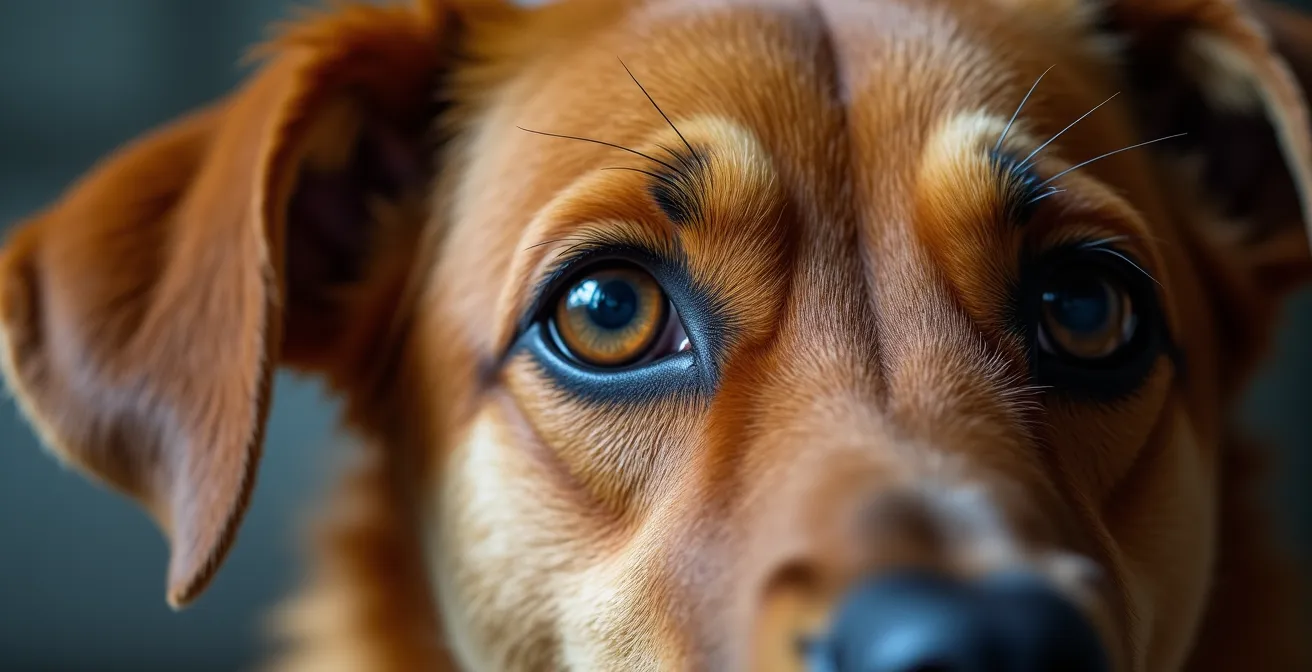
By learning to identify these specific indicators, you move from subjective worry to objective assessment. This allows you to communicate more effectively with your veterinarian and ensure your pet’s pain management plan is working. Do not assume a quiet pet is a pain-free pet. Use this clinical approach to become a more effective advocate for your pet’s comfort.
The table below provides a clear guide to help you differentiate between the most common post-operative behaviors. Use it as your daily diagnostic tool.
| Symptom Type | Pain Indicators | Boredom Signs | Anesthesia Hangover |
|---|---|---|---|
| Vocalization | Whimpering, continuous crying | Attention-seeking barking | Occasional confused whining |
| Movement | Reluctance to move, hunched posture | Restless pacing, trying to play | Wobbly gait, poor coordination |
| Eyes | Squinting, orbital tightening | Alert, bright eyes | Glassy, dilated pupils |
| Duration | Persistent beyond 48 hours | Intermittent throughout recovery | First 24-48 hours only |
Seroma vs. Infection: When to Rush Back to the Vet?
The incision site is ground zero for post-operative complications. For the next 10-14 days, you are the frontline observer tasked with monitoring this area. Vague advice to “watch for swelling” is unhelpful. You need a clear protocol to distinguish between normal healing, a minor issue like a seroma, and a true emergency like an infection.
A seroma is a common, minor complication where a pocket of clear fluid forms under the skin near the incision. It often feels soft, is not painful, and the fluid is typically straw-colored or pink-tinged if it leaks. While a large seroma may need to be drained by your vet, it is not a five-alarm fire. An infection, however, is a medical emergency. The key signs include swelling that is hot to the touch, firm, and painful. The site may have a foul odor or discharge thick, yellow, or green pus. Any sign of infection warrants an immediate call to your veterinary clinic.
Your job is to perform a daily, systematic check. Swelling is normal for the first 2-3 days but should gradually decrease. Any swelling that increases after day three is a red flag. Normal healing involves a clean, dry incision line that may be slightly red or bruised. Anything beyond this requires professional assessment. Do not “wait and see” if you suspect an infection. Early intervention is critical.
Your Daily Incision Audit Protocol: A 5-Point Checklist
- Daily Photo Log: Take a well-lit photo of the incision at the same time each day. This creates an objective record to track changes, not rely on memory.
- Temperature Check: Gently place the back of your hand near (not on) the incision. A seroma will feel like normal body temperature; an infection will radiate heat.
- Discharge Assessment: Note any fluid. A small amount of clear or slightly pink-tinged seepage can be normal in the first 24 hours. Yellow or green pus is an emergency.
- Swelling Measurement: Monitor swelling. It should peak around day 3 and then consistently decrease. If it increases in size or firmness, call your vet.
- Odor Detection: Any foul or unusual odor coming from the incision site is a sign of a likely bacterial infection and requires immediate veterinary attention.
Inflatable Collars vs. Bodysuits: What Actually Stops Licking?
Preventing your puppy from licking, chewing, or scratching at their incision is the single most important behavioral challenge of the recovery period. A few seconds of determined licking can introduce infection or pull out sutures, leading to a catastrophic failure of the surgical site. The traditional Elizabethan collar (the “cone of shame”) is effective but notoriously disruptive. Fortunately, modern alternatives offer a better balance of protection and comfort, but you must choose the right tool for your specific dog.
The primary options are inflatable “donut” collars and surgical recovery bodysuits. An inflatable collar is often more comfortable for sleeping and navigating the house, and it doesn’t obstruct vision. However, its effectiveness is limited. Highly flexible or long-snouted dogs can often find a way to reach around it to access their abdomen. It’s a good option for calmer dogs or for incisions on the upper body, but a risky choice for a determined, hyper puppy with an abdominal incision.
A recovery bodysuit, which fits like a onesie, offers excellent protection for abdominal incisions. It also provides gentle, constant pressure that can have a calming effect on anxious pets. The main drawback is that it must be unfastened or removed for bathroom breaks, which can be cumbersome. For extremely determined lickers, a “two-factor authentication” approach—using both a bodysuit and an inflatable collar—can provide maximum security. Your choice should be based on your dog’s personality and flexibility, not just comfort.
This table breaks down the pros and cons of each method to help you make an informed decision for your pet’s safety.
| Protection Type | Best For | Limitations | Comfort Level |
|---|---|---|---|
| Inflatable Collar | Short-snouted breeds, neck injuries | Flexible dogs can reach around it | High – allows normal sleeping |
| Recovery Bodysuit | Abdominal incisions, anxious pets | Must be removed for bathroom breaks | High – provides calming pressure |
| Traditional E-collar | Maximum protection, all incision sites | Disrupts eating, sleeping, navigation | Low – most restrictive |
| Combination Method | Determined lickers, high-risk cases | More expensive, requires both items | Medium – layered protection |
Aspiration Pneumonia: The Real Reason Your Pet Must Fast Before Surgery
The pre-operative instruction to withhold food is not about preventing your pet from having an upset stomach. It is a critical safety measure to prevent a life-threatening condition called aspiration pneumonia. Understanding this risk is essential for ensuring you adhere strictly to the fasting protocol provided by your veterinarian.
During anesthesia, a pet’s natural reflexes, including the ability to swallow, are suppressed. If there is food in the stomach, it can be regurgitated. Because the pet cannot swallow, this food and stomach acid can be inhaled into the lungs. This foreign material causes severe inflammation and a dangerous, often fatal, form of pneumonia. This is not a minor complication; it is a catastrophic event that is almost entirely preventable through proper fasting.
This is why your vet will give you a very specific cut-off time for food. It is not a guideline to be loosely interpreted. The goal is to ensure the stomach is completely empty at the time of anesthesia induction. Following this rule is one of the most important contributions you can make to your pet’s surgical safety. The required 10-14 days minimum recovery period is demanding enough without adding a preventable, life-threatening respiratory illness to the equation. Do not give in to begging or feel guilty; you are protecting your pet from a significant danger.
Fasting Protocols: When to Stop Food Before Anesthesia?
While the principle of fasting is universal, the specific “how-to” can vary based on your pet’s age, size, and health status. A one-size-fits-all approach is not appropriate, and your veterinarian will provide a protocol tailored to your individual pet. Generally, the standard protocol for healthy adult dogs and cats is no food for 12 hours before the scheduled surgery. Water is usually permitted until a few hours prior.
However, special populations require adjustments. Puppies under 16 weeks and toy breeds have lower energy reserves and are at a higher risk of hypoglycemia (low blood sugar), which can be dangerous under anesthesia. For them, a shorter fast of 4-6 hours is often recommended. In some cases, a small, specific meal may be prescribed a few hours before surgery to maintain stable blood sugar. Pets with conditions like diabetes have their own highly specific protocols that must be followed precisely, often involving adjustments to their morning insulin dose. It is absolutely critical to follow your vet’s instructions to the letter.

Managing a “hangry” puppy during this fasting period requires a strategy of distraction. This is not the time for high-energy games. Instead, prepare a calm environment with chew toys (that are not edible) and puzzle toys (used without treats). A pre-portioned, small, and easily digestible meal should be ready for them after they have recovered enough post-surgery, but only once your vet gives the all-clear, as anesthesia can temporarily affect appetite and digestion.
Swimming vs. Running: Safe Activity for Obese Animals
After the strict 10-14 day confinement period, the transition back to activity must be as carefully managed as the recovery itself. The temptation is to immediately let your now-frantic puppy run free. This is a mistake that can lead to injury, especially to a body that has been deconditioned. The principles of low-impact exercise, often discussed for overweight pets, are the cornerstone of a safe return to fitness for any recovering dog.
High-impact activities like running on hard surfaces, jumping, or sharp turns put immense stress on healing tissues and joints. The goal is to gradually rebuild strength and stamina without causing setbacks. Absolutely no swimming or bathing is allowed until the incision is fully healed and your veterinarian has given explicit clearance, as this can introduce infection. The first step back is short, controlled leash walks on flat ground. Start with 5-10 minutes and slowly increase the duration over the course of a week.
Once cleared by your vet (typically around week 3-4), you can introduce more advanced, low-impact exercises. Gentle swimming is excellent for cardiovascular health without stressing joints. Activities like cavaletti (walking over low poles) improve proprioception and body awareness. Balance board exercises can rebuild core strength. According to some recovery studies, larger dogs may need 2-3 days to return to normal behavior, but a full return to athletic activity takes much longer. A gradual, structured progression is the only safe way to reintroduce exercise.
Post-Recovery Low-Impact Exercise Progression
- Days 14-21: Begin short, controlled leash walks (5-10 minutes) on flat surfaces only.
- Week 3-4: If the incision is fully healed and cleared by your vet, introduce gentle swimming or hydrotherapy sessions.
- Week 4-6: Incorporate proprioception work like cavaletti, having your dog walk slowly over a series of low poles.
- Week 6-8: Add core strengthening exercises, such as brief sessions on a canine balance board.
- Week 8+: With final veterinary clearance, begin a gradual return to normal activity, monitoring for any signs of soreness or fatigue.
Key Takeaways
- Recovery is a medical protocol, not a training exercise. Your role is a nurse, not an entertainer.
- Proactive monitoring is key: learn to use objective tools like a grimace scale and an incision checklist instead of guessing.
- Prevention is everything: strict adherence to fasting rules and activity restriction prevents catastrophic complications.
Why Annual Bloodwork Is Crucial for Pets Over 7 Years Old?
Your journey through this spay/neuter recovery is your first major partnership with your veterinarian in proactive health management. This philosophy of prevention and early detection should not end after 14 days. While this specific title mentions pets over 7, the principle it represents—using data to stay ahead of disease—is a lifelong commitment that starts now.
Just as pre-anesthetic bloodwork established a healthy baseline for your puppy, annual bloodwork throughout their life continues to build on that data. As pets age, they are prone to gradual declines in organ function, particularly in the kidneys and liver. These changes are often silent, with no outward symptoms until a significant amount of function—sometimes up to 75%—is already lost. At that point, treatment is often about crisis management rather than prevention.
Annual screening allows your veterinarian to spot subtle changes year over year. Modern tests, like the SDMA marker for kidney disease, can detect problems far earlier than traditional methods, sometimes years before symptoms appear. This early detection is the key to effective management. It allows for simple, proactive interventions like diet changes or medication that can slow disease progression and dramatically improve your pet’s quality and length of life. By embracing this proactive partnership, you are extending the same diligent care you’re providing today across your pet’s entire lifetime.
The table below highlights the powerful difference between traditional and early detection markers, illustrating why this proactive approach is the modern standard of care.
| Marker Type | Traditional (Creatinine) | Early Detection (SDMA) | Detection Timeline |
|---|---|---|---|
| Kidney Function | Elevated when 75% function lost | Detects with 40% function loss | 2-3 years earlier detection |
| Cost | $45-75 per test | $80-120 per test | Saves thousands in crisis care |
| Frequency Needed | Annual after age 7 | Annual after age 5 | Bi-annual for at-risk breeds |
| Additional Benefits | Basic organ function | Comprehensive metabolic picture | Establishes baseline trends |
You have successfully navigated the most critical phase of your pet’s recovery. By following this medical protocol, you have given them the best possible chance at a complication-free healing process. This commitment to their health is a partnership with your veterinary team that should continue for life. To ensure you are fully prepared for this long-term journey, schedule your pet’s post-operative follow-up appointment and discuss a proactive wellness plan for their future.