
The link between diet and canine DCM isn’t about “grain-free” vs. “grain-inclusive,” but about the high concentration of pulse ingredients (peas, lentils) in many modern formulas.
- These ingredients can interfere with the absorption and metabolism of critical nutrients like taurine through complex biochemical interactions.
- “Ingredient splitting” on labels often masks the true quantity of these problematic fillers, making them appear lower on the list than they are.
Recommendation: Shift focus from the “grain-free” marketing label to vetting brands based on their nutritional expertise and whether they conduct feeding trials, as outlined by WSAVA guidelines.
The FDA’s investigation into a potential link between certain diets and canine Dilated Cardiomyopathy (DCM) sent a wave of fear through the dog owner community. Suddenly, the “grain-free” food you chose with the best intentions, believing it was a healthier, more “ancestral” option, was under suspicion. The common advice is often to simply switch to a “grain-inclusive” diet, but this guidance lacks the scientific depth required to make a truly informed decision. It leaves concerned owners wondering which grains are safe, why legumes are a problem, and how to trust any pet food label again.
The reality is more complex than a simple grain versus no-grain debate. As a nutritional epidemiologist, our goal is to look at population-level data and potential mechanisms without jumping to conclusions about causation. The evidence does not point to a single “bad” ingredient but rather to a problem of modern pet food formulation. The core issue appears to be the heavy reliance on pulse ingredients—like peas, lentils, and chickpeas—as primary protein and carbohydrate sources. These ingredients, when used in high concentrations, may create a perfect storm of nutritional disruption in some dogs.
This article will objectively evaluate the scientific evidence. We will move beyond marketing claims to dissect the role of specific ingredients, explain the potential biochemical mechanisms at play, and, most importantly, provide you with the data-driven tools to critically assess your dog’s food. The goal is not to create more fear, but to replace it with a clear understanding of the risk factors and a confident path forward in choosing a safe, well-formulated diet for your companion.
Summary: Decoding the Link Between Diet and Canine Heart Disease
- Peas, Pea Flour, Pea Protein: How “Grain-Free” Diets Hide Filler?
- Diagnosed Wheat Allergy: The 1% of Dogs Who Actually Need It
- Blocking Absorption: How Lentils Affect Heart Health?
- Rotating Proteins and Brands: Does It Reduce DCM Risk?
- Oats and Barley: Which Grains Are easiest to Digest?
- When to Avoid Grain-Free Diets: The DCM Risk Explained
- Adipokines: How Fat Tissue Creates Chronic Inflammation?
- How to Read Kibble Labels and Spot “Ingredient Splitting” Scams?
Peas, Pea Flour, Pea Protein: How “Grain-Free” Diets Hide Filler?
The rise of grain-free diets created a formulation vacuum that needed to be filled. To replace traditional grains like corn and wheat, many manufacturers turned to legumes, with peas becoming a ubiquitous ingredient. In fact, an analysis by Tufts University’s Petfoodology service found that 51% of dry dog foods contained peas in 2017. The problem is not that peas are inherently toxic, but their concentration and form in these diets are a cause for concern from a nutritional epidemiology standpoint.
A significant issue is a deceptive labeling practice known as “ingredient splitting.” A manufacturer might use peas, pea flour, and pea protein in the same formula. On the ingredient list, these appear as three separate items. This pushes each one further down the list, making a meat ingredient appear to be the primary component. However, if you were to combine the total “pea” contribution, it would likely be the most abundant ingredient in the bag, surpassing the meat. This practice misrepresents the food’s composition, leading owners to believe they are buying a meat-based diet when it is, in fact, heavily plant-based.
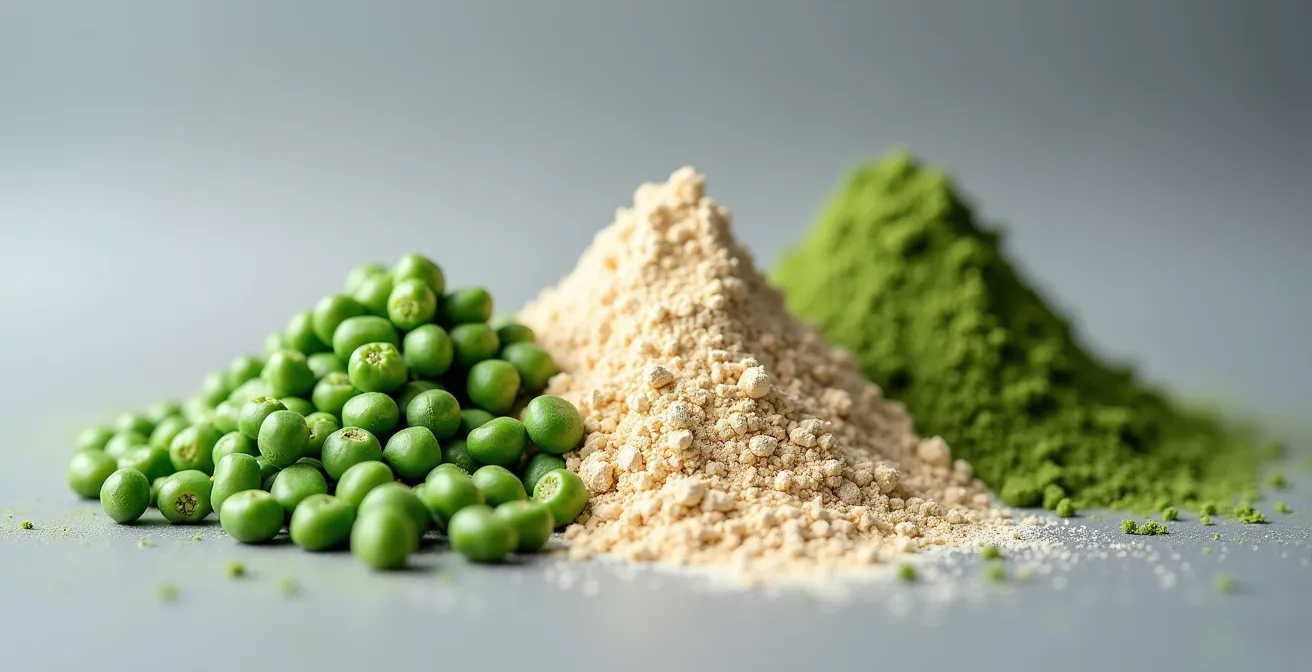
This heavy reliance on pea-derived components is central to the DCM investigation. High levels of these ingredients are suspected of interfering with the bioavailability of key nutrients essential for heart health. Unlike traditional grains, whose nutritional profiles in canine diets are well-studied over decades, the long-term effects of these high-concentration legume diets are only now being understood, often with concerning clinical observations.
Diagnosed Wheat Allergy: The 1% of Dogs Who Actually Need It
The grain-free movement was built on the premise that grains are a common cause of allergies and are “unnatural” for dogs. From a clinical perspective, this is largely a marketing narrative, not a scientific reality. True food allergies in dogs are relatively uncommon, and when they do occur, the most frequent culprits are protein sources like beef and chicken, not grains. A diagnosed, immunologically-confirmed grain allergy likely affects less than 1% of the canine population. Most issues attributed to grains, such as upset stomach or itchy skin, are more often food sensitivities or intolerances, or symptoms of an entirely different underlying problem.
Furthermore, the context of breed genetics is a critical, often overlooked, confounding variable in the DCM discussion. Many of the breeds most frequently reported in the FDA’s investigation, such as Golden Retrievers, Doberman Pinschers, and Great Danes, already have a known genetic predisposition to developing DCM. FDA data analysis showed that in one cohort, 73% of the reported DCM cases involved breeds with a known genetic link to the disease. This doesn’t absolve the diet’s role, but it suggests that for these dogs, a poorly formulated diet may act as a trigger, accelerating or unmasking a latent genetic condition that might otherwise have remained dormant.
Therefore, placing a dog on a grain-free diet “just in case” they have an allergy is not a benign decision. It may unnecessarily introduce the very risk factors—high levels of legumes and pulses—associated with nutritional DCM. An owner suspecting a food allergy should work with a veterinarian to perform a proper elimination diet trial, rather than unilaterally switching to a potentially problematic grain-free formula.
Blocking Absorption: How Lentils Affect Heart Health?
The primary hypothesis for how legume-heavy diets may lead to DCM centers on the disruption of nutrient bioavailability, particularly for the amino acid taurine, which is vital for heart muscle function. While most dogs can synthesize their own taurine from other amino acids (cysteine and methionine), this process can be compromised. Legumes and pulses contain what are known as “anti-nutrient factors,” such as high levels of certain fibers and compounds that can interfere with normal digestion and nutrient absorption.
Deep Dive: The Foodomics of DCM-Associated Diets
A groundbreaking foodomics study published in Nature analyzed the biochemical composition of diets associated with canine DCM. The researchers found that DCM-associated diets had significantly different metabolic profiles. They identified 88 biochemical compounds that were higher in these diets, including many plant compounds and xenobiotics from legumes. This suggests the problem is far more complex than a simple deficiency of one nutrient. It points towards a complex biochemical disruption where the food itself introduces compounds that alter the dog’s metabolism in potentially harmful ways, interfering with multiple nutritional pathways beyond just taurine.
One potential mechanism involves the enterohepatic circulation of bile acids. Taurine is used to create bile acids, which are essential for digesting fats. Normally, a large portion of these bile acids are reabsorbed in the gut and recycled. However, some research has indicated that the specific types of fiber in peas and lentils may bind to these bile acids, preventing their reabsorption and causing them to be excreted. One study demonstrated that the lowest fecal bile acid excretion occurred with high-oligosaccharide pea diets, implying that different pulse ingredients can alter this critical metabolic pathway. This forces the dog’s body to use up more of its taurine reserves to create new bile acids, potentially leading to a systemic depletion over time, even if the diet contains adequate precursor amino acids.
This “nutrient blocking” effect is a crucial concept. It highlights that the ingredient list alone does not tell the full story. The formulation philosophy and the complex interactions between ingredients are what ultimately determine the nutritional value and safety of a diet.
Rotating Proteins and Brands: Does It Reduce DCM Risk?
In response to the DCM crisis, many veterinary nutritionists and informed owners have adopted a strategy of rotating their dog’s food. The logic is simple: by not feeding the exact same formula for years on end, you diversify the nutrient sources and reduce the risk of long-term exposure to any potential deficiency or excess in a single product. This is a sound risk mitigation strategy, particularly in a market saturated with “boutique” diets that have not undergone rigorous testing.
The positive impact of a diet change away from a suspect formula is supported by clinical data. For dogs already diagnosed with diet-associated DCM, changing the food is a primary part of the treatment. A clinical study of dogs with DCM found a significant difference in outcomes based on diet, with a 344-day median survival for dogs switched from their grain-free diet compared to just 253 days for dogs whose diets remained unchanged. This strongly suggests that the diet is an active component of the disease process and that removing the offending formulation can lead to measurable improvement and even reversal of cardiac changes in some cases.
However, rotation is not a magic bullet if you are simply rotating between several poorly formulated diets. The key is to rotate between high-quality foods from different manufacturers with strong formulation philosophies. This means rotating between brands that invest in feeding trials and employ full-time veterinary nutritionists. Simply switching between different flavors of the same grain-free brand that is heavy in legumes does little to mitigate the underlying risk. The goal of rotation should be to diversify not just the main protein (e.g., chicken to fish), but the entire formulation and the company’s approach to nutrition.
Oats and Barley: Which Grains Are easiest to Digest?
With the evidence pointing towards problems with high-legume diets, many owners are now looking to reintroduce grains. However, not all grains are created equal. The most beneficial grains in a dog’s diet are those that are easily digestible and offer functional benefits beyond simple calories. Wholesome grains like oats, barley, and sorghum provide soluble and insoluble fiber, essential fatty acids, and a host of micronutrients that have been part of well-formulated canine diets for decades.
Oats, for example, are rich in beta-glucans, a type of soluble fiber known to support a healthy gut microbiome and aid in managing cholesterol. Barley has a low glycemic index, providing a steady release of energy that helps avoid blood sugar spikes, which can put stress on the entire cardiovascular system. These grains are not “fillers” but functional ingredients that contribute to overall health. Their long history of safe use in diets formulated by reputable manufacturers provides a level of confidence that is currently lacking for high-legume formulas.
The following table, based on recent research, summarizes the benefits of some of these heart-healthy grains. As a study in the Journal of Animal Science highlights, well-formulated diets are key.
| Grain Type | Key Benefits | Heart Health Connection |
|---|---|---|
| Oats | High in beta-glucans for gut health and cholesterol management | Soluble fiber supports healthy gut microbiome for nutrient synthesis |
| Barley | Low glycemic index, steady energy release | Helps maintain stable blood sugar, reducing cardiac stress |
| Sorghum | Gluten-free, rich in antioxidants | Antioxidants protect cardiovascular system from oxidative damage |
The current study did not identify changes in cardiac or echocardiographic biomarkers indicative of clinical or subclinical DCM in any study group with any of the 4 test foods.
– Morris et al., Journal of Animal Science 2024 Study
This citation is crucial: it underscores that when diets are carefully formulated and tested—even if they contain some of the ingredients under investigation—they may not produce negative cardiac effects. This reinforces the core message: the expertise behind the formulation is more important than the presence or absence of a single ingredient like “grain.”
When to Avoid Grain-Free Diets: The DCM Risk Explained
Given the weight of correlational evidence, a cautious and data-driven approach is warranted. As of November 2022, the FDA’s investigation had documented 1,382 reported cases of DCM in dogs, with the vast majority linked to diets high in legumes. While correlation does not equal causation, the pattern is strong enough to justify avoiding certain dietary profiles, especially for genetically predisposed breeds. The risk appears highest in diets where peas, lentils, or other pulses are listed among the top ingredients, especially when this is combined with a “boutique” brand that does not conduct AAFCO feeding trials.
A grain-free diet should be strictly avoided unless there is a confirmed medical diagnosis from a veterinarian that necessitates it—a very rare situation. For the average, healthy dog, the potential risks associated with many grain-free formulations currently outweigh the perceived benefits. The marketing promises of these diets do not align with the concerning epidemiological signals that have been observed over the past several years.
To help owners quantify this risk, veterinary nutritionists have developed scoring systems. The following checklist is a practical tool to help you assess your dog’s current food. A high score is not a diagnosis, but it is a strong indicator that you should schedule a conversation with your veterinarian about your dog’s diet immediately.
DCM Risk Scorecard for Your Dog’s Food
- Add 3 points: Peas, lentils, or beans are listed in the top 5 ingredients.
- Add 2 points: The brand is a “boutique” manufacturer that does not conduct feeding trials.
- Add 2 points: The food is explicitly labeled as “grain-free.”
- Add 1 point: Your dog belongs to a genetically predisposed breed (e.g., Golden Retriever, Doberman, Great Dane).
- Score 6+: Schedule an immediate consultation with your veterinarian to discuss a diet change.
This tool transforms general anxiety into a concrete assessment. It shifts the focus from the simple “grain-free” label to a more nuanced evaluation of ingredients, brand philosophy, and individual genetic risk factors, which is the cornerstone of a sound epidemiological approach.
Adipokines: How Fat Tissue Creates Chronic Inflammation?
The conversation about DCM risk cannot be limited to diet alone; the overall health and body condition of the dog are significant contributing factors. Obesity, in particular, is a major concern. It is now understood that adipose (fat) tissue is not just an inert storage depot for energy. It is an active endocrine organ that produces and secretes a variety of signaling molecules called adipokines. In an obese state, the profile of these adipokines changes, promoting a state of chronic, low-grade inflammation throughout the body.
Obesity is a state of chronic, low-grade inflammation. This inflammation puts extra stress on the entire body, including the heart, potentially making it more vulnerable to nutritional deficiencies or insults from the diet.
– Dr. Freeman, Tufts Clinical Nutrition Service
This systemic inflammation puts additional strain on all organ systems, including the heart. A heart that is already under inflammatory stress may be less resilient and more susceptible to the effects of a nutritionally borderline diet. An obese dog on a poorly formulated, legume-heavy diet may therefore face a compounded risk. The inflammation from obesity and the potential nutritional disruption from the diet can work synergistically to damage the heart muscle.
Prognosis: Nutritional vs. Genetic DCM
While any diagnosis of DCM is serious, there is a silver lining for the nutritional form. A recent study found an expected survival time of 465 days for dogs with congestive heart failure (CHF) secondary to nutritional cardiomyopathy. This prognosis is notably better than the 6-9 month expected survival for dogs with CHF due to the classic genetic form of DCM. This highlights that diet-associated DCM can have a better outcome if caught and managed with a diet change, but it’s still a life-threatening condition, especially as it often affects young to middle-aged dogs.
Therefore, maintaining a lean body condition is one of the most powerful proactive steps an owner can take to protect their dog’s heart health. It reduces the baseline level of inflammation, making the cardiovascular system more robust and potentially more resilient to any suboptimal aspects of their diet.
Key takeaways
- The primary concern with diet-associated DCM is the high concentration of pulse ingredients (peas, lentils), not simply the absence of grains.
- These ingredients may interfere with nutrient bioavailability, particularly for taurine, through complex biochemical interactions that go beyond a simple deficiency.
- Choosing a safe food requires looking past marketing claims and vetting a manufacturer’s commitment to nutritional science, including their use of feeding trials and board-certified veterinary nutritionists.
How to Read Kibble Labels and Spot “Ingredient Splitting” Scams?
After navigating the complexities of ingredients and metabolic pathways, the final, practical question remains: how do you choose a safe food? The answer lies in shifting your focus from the front of the bag to the company behind the bag. FDA analysis revealed that more than 90% of DCM-associated diets were grain-free, and 93% contained peas or lentils. This overwhelming correlation points to a problem with the formulation philosophy common among many “boutique” brands that heavily feature these ingredients.
Reading an ingredient list is a start. As discussed, you should be wary of ingredient splitting, where multiple forms of a legume are used to push them down the list. However, a label cannot tell you if the company has performed the due diligence to ensure their formula is safe and effective in the long term. It doesn’t tell you if they employ qualified experts or if they have ever actually fed their food to real dogs to see how they fare.
This is where the recommendations from the World Small Animal Veterinary Association (WSAVA) become the most powerful tool for an owner. WSAVA provides a set of objective questions to ask of a pet food manufacturer to vet their scientific rigor and quality control. A brand that can confidently answer “yes” to all these questions is demonstrating a commitment to nutrition that goes far beyond marketing.
The WSAVA Compliance Check for Dog Food Brands
- Verify that the brand employs one or more full-time, qualified nutritionists (e.g., a PhD in animal nutrition or a board-certified veterinary nutritionist).
- Check if the manufacturer conducts AAFCO feeding trials for their diets, rather than just formulating to meet a nutrient profile on paper.
- Confirm that the company owns its manufacturing facilities to ensure strict quality control over ingredients and processes.
- Look for any peer-reviewed research the company has conducted and published on its formulations to contribute to the scientific community.
- Brands currently meeting all these criteria generally include Hill’s, Royal Canin, Purina, and Eukanuba/Iams.
Using this checklist empowers you to make a decision based on evidence of expertise, not on pictures of wolves or flashy marketing slogans. It is the most reliable way to select a diet formulated with scientific rigor, minimizing the risks that have become apparent in the era of grain-free marketing.
Ultimately, your veterinarian is your most important partner in this decision. Use the WSAVA checklist to evaluate your dog’s current food and any potential new foods, and discuss your findings with your vet to choose a diet that is backed by science and proven to support a long, healthy life.