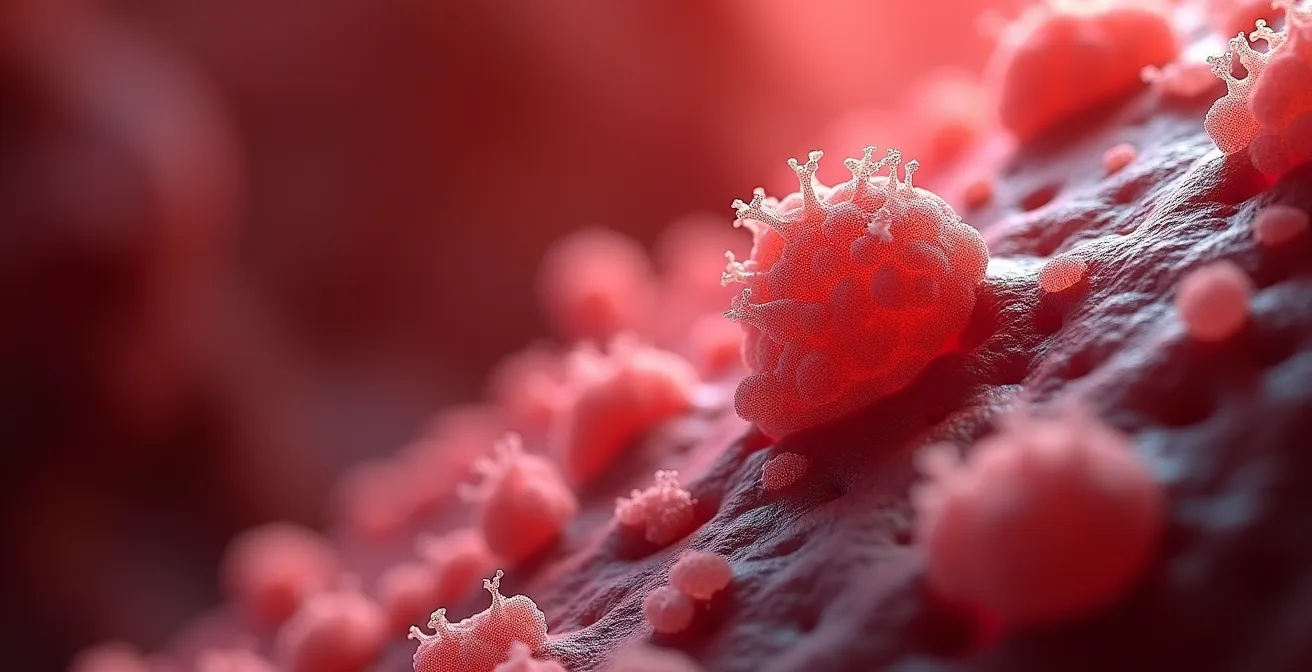
It’s not just bad breath; it’s a systemic crisis. Chronic oral infection is a primary, preventable trigger for multi-organ failure in pets.
- Bacteria from inflamed gums constantly enter the bloodstream, “seeding” vital organs like the kidneys, liver, and heart.
- This low-grade infection causes a body-wide inflammatory cascade, disrupting metabolic functions and accelerating organ decline.
Recommendation: The only effective treatment is a comprehensive oral health assessment and cleaning performed under anesthesia by a veterinarian. Anything less is purely cosmetic and leaves the source of the systemic siege active.
As a systemic internal medicine specialist, I frequently consult on cases where an organ system is failing. The owner is often confused, reporting that their pet seemed fine until recently. Yet, in many of these cases, the root cause isn’t a new, sudden disease. It’s a silent, years-long assault that began in the most overlooked place: the mouth. Many owners dismiss bad breath as a normal part of pet aging or believe that simply scraping visible tartar is enough. This misunderstanding is dangerous. The visible plaque is merely the tip of the iceberg; the real threat is the raging infection happening below the gumline.
But what if the true key to protecting your pet’s heart, kidneys, and liver wasn’t a complex medication, but a proactive approach to what’s happening in their mouth? This article will move beyond the common platitudes about dental health. We are not just talking about bad breath or even heart disease. We are going to follow the precise, destructive journey of oral bacteria as they launch a systemic siege on your pet’s body, organ by organ. Understanding this chain of events is the first critical step in shifting from reactive treatment to life-saving prevention.
This guide will deconstruct the specific ways oral bacteria compromise vital organs. By exploring the mechanisms of damage, you will gain a clear, evidence-based understanding of why comprehensive dental care is not optional, but a cornerstone of your pet’s overall health and longevity.
Summary: A Systemic View of Dental Disease
- The Filter Clog: How Chronic Infection Accelerates Renal Decline?
- Bacteremia: When Oral Bacteria Travel to the Liver
- The Insulin Resistance Link: Why Infection Makes Diabetes Hard to Control?
- Jaw Fractures: What Happens When the Jaw Bone Rots Away?
- Pulse Therapy: Why Antibiotics Are Not a Long-Term Cure for Tartar?
- Under the Gumline: Why Non-Anesthetic Cleaning Is Cosmetic Only?
- Why Bloodwork Before Surgery Is Mandatory even for Young Pets?
- Drinking and Urinating: Is It Diabetes or Cushing’s Disease?
The Filter Clog: How Chronic Infection Accelerates Renal Decline?
The kidneys function as the body’s sophisticated filtration system, diligently removing waste products from the blood. When periodontal disease is present, this system is placed under constant threat. It’s a widespread problem; according to Banfield Pet Hospital’s comprehensive health data, 73% of dogs and 64% of cats seen in 2023 were diagnosed with dental-related issues. Each time your pet chews with infected gums, a shower of bacteria enters the bloodstream. The immune system responds by creating antibodies, which bind to these bacteria, forming “immune complexes.”
These complexes are too large to be easily cleared and begin to circulate throughout the body. The delicate, microscopic filtering units in the kidneys, known as glomeruli, become an inadvertent trap. As blood passes through, these immune complexes get stuck, much like sediment clogging a fine-mesh filter. This process is detailed in veterinary pathology, where studies show that when bacteria invade the kidneys, they damage the glomerulus membranes, causing them to function improperly. This “filter clog” triggers chronic inflammation within the kidney itself, leading to scarring and a progressive, irreversible loss of function.

As you can see in this conceptual illustration, the accumulation of these deposits physically obstructs the filtration process. Over time, this damage leads to chronic kidney disease (CKD), a condition that is manageable but not curable. What began as a preventable oral infection insidiously transforms into a terminal diagnosis for a vital organ, highlighting the devastating reach of the systemic siege originating from the mouth.
Bacteremia: When Oral Bacteria Travel to the Liver
The term bacteremia describes the presence of bacteria in the bloodstream. In a pet with healthy gums, the oral tissues form a robust barrier. However, in the face of periodontal disease, the gums become inflamed, ulcerated, and bleed easily. This compromised tissue is no longer a barrier but an open gateway. Simple actions like eating or chewing a toy can push millions of bacteria directly into circulation, initiating a systemic invasion.
Once in the bloodstream, these bacteria don’t just float passively. They are foreign invaders that the body immediately tries to neutralize. The liver, a central organ for detoxification and metabolism, is one of the primary sites for filtering the blood and clearing these pathogens. However, a constant, low-grade bacteremia from an infected mouth overwhelms the liver’s capacity. This chronic exposure can lead to significant cellular stress and inflammation within the liver itself. As one expert source on pet wellness explains:
The bacteria breach into the bloodstream, setting off a domino effect of systemic stress and potential organ damage. This dissemination of pathogens through the circulatory system serves as a conduit for bacteria to anchor onto critical organs.
– NorthPoint Pets & Company, How Your Pet’s Dental Health Impacts the Entire Body
This “anchoring” is not benign. The liver’s response to this bacterial seeding can manifest as elevated liver enzymes on bloodwork, indicating hepatocellular damage. Furthermore, research indicates that oral bacteria can cause functional changes in the liver of dogs. Over time, this sustained inflammatory process can contribute to chronic hepatitis or impair the liver’s ability to perform its more than 500 vital functions, from producing proteins to metabolizing drugs. The liver becomes another casualty in the body-wide war against an infection that should have been stopped at the gumline.
The Insulin Resistance Link: Why Infection Makes Diabetes Hard to Control?
Diabetes mellitus is a condition where the body cannot effectively regulate blood sugar, either due to a lack of insulin production or a decreased response to it. For diabetic pets, maintaining stable blood glucose is a delicate balancing act. A chronic oral infection can completely disrupt this balance by inducing a state of insulin resistance. Inflammation is the key culprit in this dangerous link.
Periodontal disease is, at its core, a chronic inflammatory process. The body’s immune response to the constant bacterial challenge in the mouth releases a flood of inflammatory mediators (cytokines) into the bloodstream. These signaling molecules are part of the systemic siege and have a profound effect on how cells throughout the body respond to insulin. Specifically, they interfere with the insulin receptors on the surface of cells, making them less sensitive to insulin’s signal to absorb glucose from the blood.
As a result, the pancreas must work harder, producing more insulin to achieve the same effect. In a pre-diabetic pet, this can be the final push into full-blown disease. In a diagnosed diabetic pet, it makes the condition incredibly difficult to manage. Even with a consistent diet and insulin dosage, the underlying inflammation from dental disease creates unpredictable swings in blood sugar. Indeed, veterinary research shows that studies link periodontal disease to an increase in insulin resistance. Treating the dental disease is not just an ancillary benefit; it is a medical necessity to regain control over the pet’s metabolic state. In many cases, a thorough dental cleaning and resolution of the oral infection can dramatically reduce a pet’s insulin requirements.
Jaw Fractures: What Happens When the Jaw Bone Rots Away?
While the systemic effects of dental disease are insidious, the local damage can be just as catastrophic. The most devastating local consequence is a pathologic jaw fracture. This is not a fracture caused by major trauma, but one that occurs during normal activity—like eating kibble or jumping off the couch—because the bone itself has been eaten away by infection.
The process begins with periodontitis, the advanced stage of dental disease where the infection moves deep below the gumline and attacks the supporting structures of the tooth, including the alveolar bone of the jaw. The body’s own inflammatory response, aimed at fighting the bacteria, inadvertently contributes to the destruction. Enzymes released by immune cells break down not only the bacteria but also the surrounding bone tissue. Over years, this chronic infection hollows out the mandible (lower jaw), turning solid bone into a fragile, eggshell-thin structure. This is a clear example of a structural integrity failure caused by the unchecked oral infection.

This architectural metaphor of an eroded pillar illustrates the weakening process. Small and toy breeds are particularly vulnerable to this outcome. As veterinary dental specialists report, this condition is typically seen in toy breed dogs, mainly because their teeth are larger in proportion to their mandible. For a Yorkshire Terrier or a Miniature Poodle, the root of a single molar can occupy a significant portion of the jaw’s height. When that root becomes a focal point for infection, the bone loss can be swift and severe, leading to a spontaneous fracture that is complex and painful to repair.
Pulse Therapy: Why Antibiotics Are Not a Long-Term Cure for Tartar?
When a pet presents with a foul-smelling mouth and red gums, a common but misguided approach is to prescribe a course of antibiotics. While this may temporarily reduce the swelling and odor, it is crucial to understand that antibiotics are not a cure for periodontal disease. Using them as a sole treatment is like trying to silence a fire alarm while the building continues to burn. The relief is temporary and creates a dangerous false sense of security.
The fundamental reason antibiotics fail is the presence of biofilm. The bacteria in the mouth form a dense, sticky, and highly organized community on the tooth surface, which is what we call plaque. This biofilm creates a physical shield that antibiotics cannot effectively penetrate. While antibiotics in the bloodstream might kill some of the free-floating bacteria, they cannot reach the core infection thriving within the established plaque and calculus (tartar). This leads to several critical failures:
- Superficial Treatment: The drugs may reduce surface inflammation, making the gums look better, but the destructive process continues unabated beneath the gumline.
- Resistance Development: Repeatedly exposing bacteria to sub-lethal doses of antibiotics is a perfect recipe for creating antibiotic-resistant “superbugs,” complicating future medical treatments.
- Failure to Remove the Source: The calculus and plaque biofilm are the source of the infection. Without mechanically removing them through a professional cleaning, the infection will immediately return once the antibiotic course ends.
This is why authoritative veterinary sources are unequivocal. As VCA Animal Hospitals states:
Antibiotics alone are not sufficient to treat dental disease or its systemic effects. Antibiotics are intended only as an adjunct to more definitive treatment.
– VCA Animal Hospitals, Dental Disease and its Relation to Systemic Disease in Pets
The “definitive treatment” is the physical removal of plaque and calculus both above and below the gumline, a procedure that can only be done safely and effectively under anesthesia.
Under the Gumline: Why Non-Anesthetic Cleaning Is Cosmetic Only?
Anesthesia-free dental procedures have gained some popularity, often marketed as a “safer” and cheaper alternative. From a medical standpoint, this practice is not only ineffective but potentially harmful. It addresses only the cosmetic aspect of dental disease while completely ignoring the underlying medical problem, which resides under the gumline. This is a critical distinction, as the visible tartar on the crown of the tooth is not the primary driver of systemic disease; the infection festering in the subgingival space is.
Periodontal disease starts early. The American Veterinary Medical Association states that by the time your pet is 3 years old, he or she will very likely have some early evidence of periodontal disease. Without anesthesia, it is impossible for a veterinarian or technician to perform the essential steps of a true dental cleaning. An awake animal will not tolerate having sharp instruments placed under its gums, which is precisely where the disease-causing bacteria thrive. Furthermore, dental X-rays, which are critical for assessing bone loss and root health, cannot be performed on an awake patient. A non-anesthetic “cleaning” simply scrapes the visible tartar off, leaving the teeth looking white while the infection below continues its destructive path.
The global veterinary community’s consensus is clear on this matter. The World Small Animal Veterinary Association (WSAVA) has issued position statements concluding that anesthesia-free dentistry is “ineffective at best and damaging at worst.” It provides a false sense of security to the owner, who believes they have addressed the problem, while allowing the systemic siege to continue unchecked. The hidden infection continues to seed bacteria to the heart, kidneys, and liver.
Your 5-Point Checklist for True Periodontal Health
- Veterinary Assessment: Does the procedure begin with a thorough oral exam by a veterinarian to chart disease?
- Anesthesia: Is the procedure performed under general anesthesia with full anesthetic monitoring to ensure safety and allow access to all tooth surfaces?
- Subgingival Cleaning: Does the cleaning involve scaling and polishing all tooth surfaces both above and, crucially, below the gumline?
- Dental Radiographs (X-rays): Are full-mouth dental X-rays taken to evaluate the 60% of the tooth structure that is hidden below the gums?
- Professional Evaluation: Is every tooth probed and evaluated for pockets, mobility, and pathology, with a clear treatment plan for any diseased teeth?
Why Bloodwork Before Surgery Is Mandatory even for Young Pets?
The recommendation for pre-anesthetic bloodwork before a dental procedure is often met with a question from owners, especially if the pet is young and appears healthy: “Is it really necessary?” The answer, from a systemic medicine perspective, is an emphatic yes. This screening is not an arbitrary up-sell; it is a critical safety check that directly addresses the hidden risks posed by the very disease we are about to treat.
Even in a young pet, significant oral infection can already be causing subclinical—or hidden—damage to vital organs. As we’ve established, bacteremia from dental disease can impact the kidneys and liver. The purpose of pre-anesthetic bloodwork is to assess the function of these organs *before* administering anesthetic drugs, which are metabolized and cleared by them. Discovering elevated kidney or liver values allows the veterinary team to adjust the anesthetic protocol, provide IV fluid support, and tailor the plan to the patient’s specific needs, dramatically increasing the safety margin. As veterinary studies show, health problems found in association with periodontal disease include kidney, liver, and heart muscle changes.
A comprehensive physical exam and preanesthetic bloodwork may reveal that a pet has a heightened anesthetic risk, even at a young age, necessitating additional support or diagnostics. For instance, chronic oral infections can cause elevated liver enzymes (ALT), increased kidney values (BUN, Creatinine), or a high white blood cell count, all of which are vital pieces of information. This bloodwork provides a baseline, uncovers congenital issues, and reveals the silent systemic impact of the dental disease. It turns the anesthetic event from a potential risk into a carefully managed and much safer procedure, making the dental cleaning not just preventative but therapeutically urgent.
Key Takeaways
- Dental disease is not a cosmetic issue but a chronic infection that seeds bacteria into the bloodstream (bacteremia).
- This systemic siege causes an inflammatory cascade that directly damages the heart, kidneys, and liver, and can complicate metabolic diseases like diabetes.
- Antibiotics and anesthesia-free cleanings are ineffective because they fail to remove the protected bacterial biofilm under the gumline, which is the source of the infection.
Drinking and Urinating: Is It Diabetes or Cushing’s Disease?
An increase in drinking and urination, a symptom known as polyuria/polydipsia (PU/PD), is a common reason for a veterinary visit and a major red flag for several serious systemic diseases. Owners often suspect diabetes or Cushing’s disease, and they are right to be concerned. However, it’s crucial for owners to understand that severe, chronic kidney disease—a condition directly linked to periodontal disease—is also a primary cause of these signs.
When the kidneys are damaged by the “filter clog” of immune complexes from oral bacteria, they lose their ability to concentrate urine. The body tries to flush out toxins, but the damaged kidneys cannot retain water effectively. The result is the production of large volumes of dilute urine (polyuria). To compensate for this massive fluid loss and prevent dehydration, the pet is driven to drink excessive amounts of water (polydipsia). This mechanism is distinct from that of diabetes or Cushing’s, but the outward sign is identical.
The following table helps differentiate how these conditions can lead to the same symptom, highlighting the critical role dental disease can play. A veterinarian will use bloodwork, urinalysis, and other diagnostics to determine the true underlying cause.
| Condition | Mechanism of PU/PD | Connection to Dental Disease |
|---|---|---|
| Diabetes | Excess glucose in urine pulls water | Bacteria from dental diseases can impact insulin resistance |
| Cushing’s Disease | High cortisol interferes with urine concentration | No direct link, but stress from chronic pain may affect cortisol |
| Kidney Disease | Damaged kidneys cannot concentrate urine | When bacteria infiltrate the kidneys, they harm the glomerulus membranes, compromising functionality |
This overlap underscores why a “wait and see” approach to dental health is so risky. By the time a symptom like PU/PD appears due to kidney failure, a significant amount of irreversible damage has already occurred. Proactive, preventative dental care is not only about saving teeth; it’s about preserving the function of the body’s most vital organs and preventing the cascade of events that leads to these serious systemic diseases.
To prevent this cascade of systemic damage, the next logical step is to schedule a comprehensive oral health assessment with your veterinarian. This is the single most effective action you can take to protect not just your pet’s teeth, but their heart, kidneys, liver, and overall longevity.