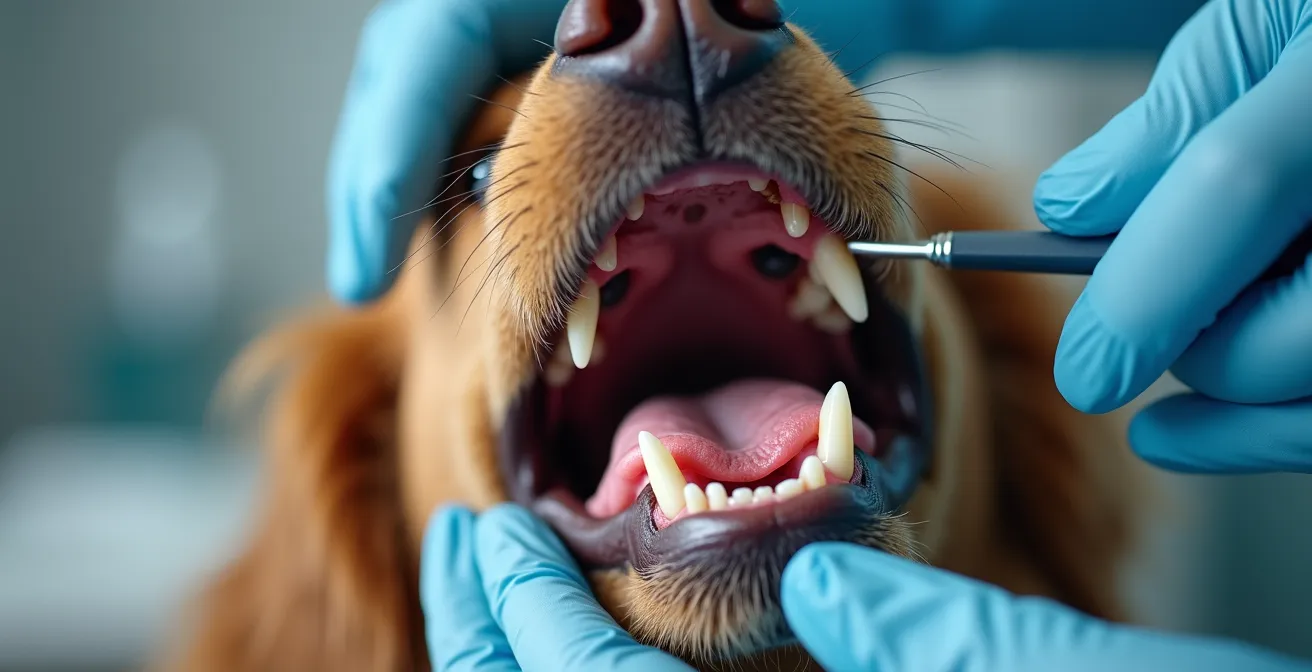
Contrary to popular belief, chronic “doggy breath” is not a normal part of pet ownership; it is the primary symptom of periodontal disease, a progressive infection that leads to irreversible bone loss and systemic organ damage.
- The disease process begins invisibly below the gumline, making non-anesthetic cleanings purely cosmetic and ineffective at treating the root cause.
- Without intervention, bacteria from the mouth enter the bloodstream (bacteremia), seeding infection in the heart, kidneys, and liver, directly impacting lifespan.
Recommendation: Do not mask the symptom. The only responsible course of action is a comprehensive, anesthetized oral health examination by a veterinarian to diagnose the stage of the disease and prevent catastrophic failure.
The odor is unmistakable and often accepted as an unavoidable aspect of canine companionship: “doggy breath.” Owners may try dental chews, water additives, or special treats, approaching the problem as a simple matter of hygiene. This fundamental misunderstanding is where a preventable pathology begins its destructive march. That smell is not an inconvenience; it is the scent of active tissue decay. It is the clinical sign of periodontal disease, a silent, progressive infection that systematically destroys the supportive structures of the teeth and seeds bacteria throughout the body.
The vast majority of pet owners are unaware of the severity of this condition. Anesthetized dental procedures are often viewed as an expensive, optional “cleaning” rather than a non-negotiable medical necessity. This perspective fails to grasp the core truth: the most significant damage occurs in the subgingival space, an area completely inaccessible to toothbrushes, chews, and awake scaling. According to the MSD Veterinary Manual, a staggering 80% of dogs have some level of periodontal disease by age 2. This is not a problem of old age; it is a near-ubiquitous pediatric disease that, left unmanaged, guarantees a future of chronic pain, tooth loss, and systemic illness.
This article will deconstruct the clinical progression of periodontal disease from a pathologist’s perspective. We will move beyond superficial advice to dissect the mechanisms of biofilm formation, expose the futility of cosmetic dental care, and trace the path of oral bacteria as they compromise vital organs. The goal is to reframe your understanding: this is not about fresh breath, but about preventing irreversible bone rot and preserving your pet’s overall health and longevity.
To fully grasp the critical nature of this disease, this guide breaks down the pathology from its initial stages to its most severe systemic consequences. The following sections will explore the mechanisms of decay, the limitations of common remedies, and the life-threatening realities of an unmanaged oral infection.
Summary: The Pathological Cascade of Periodontal Disease
- Stage 1 vs. Stage 4:Why Interactive Toys Reduce Destructive Chewing in 90% of Cases?
- Chews vs. Brushing: Can a Green Bone Replace a Toothbrush?
- Under the Gumline: Why Non-Anesthetic Cleaning Is Cosmetic Only?
- Root Exposure: Why Is Your Pet Suddenly Head Shy?
- Greyhounds and Yorkies: Why Some Breeds Rot Faster?
- Glucose Oxidase: How Chemistry Breaks Down Plaque?
- Jaw Fractures: What Happens When the Jaw Bone Rots Away?
- How Bacteria from the Mouth Cause Heart Valve Damage?
Stage 1 vs. Stage 4:Why Interactive Toys Reduce Destructive Chewing in 90% of Cases?
Periodontal disease is not a singular event but a four-stage pathological process. Stage 1, gingivitis, is characterized by inflammation of the gums and is the only stage that is fully reversible with professional treatment and home care. By Stage 4, there is over 50% bone loss, and the teeth are mobile, held in place only by diseased tissue. The question is not just how to manage this progression, but how to recognize it. The title’s mention of interactive toys hints at a behavioral aspect; while toys can redirect chewing, they do not treat the underlying disease. The more critical question is what behavioral changes signal the progression from manageable inflammation to irreversible destruction.
As the disease advances, pain becomes a significant factor, leading to subtle but observable changes in behavior. An owner may misinterpret these signs as quirks or aging. According to findings from Cornell University’s College of Veterinary Medicine, these clinical signs of pain are crucial indicators. An animal in oral pain may exhibit pawing or rubbing at the mouth, changes in eating habits like dropping food, taking longer to eat, or a reluctance to chew on favorite toys. They may show uncharacteristic aggression or social withdrawal. These are not behavioral problems; they are desperate communications of chronic, severe pain as the bone supporting the teeth erodes.
Understanding the stages is critical. Stage 1 (Gingivitis) is reversible. Stages 2, 3, and 4 involve progressive, irreversible bone loss (osteolysis). The goal of veterinary dentistry is to halt this progression. The behavioral changes are often the only clue an owner has that their pet has crossed the threshold from the reversible stage into a state of permanent structural damage. Recognizing these signs early is paramount to intervening before the pathology becomes catastrophic.
Chews vs. Brushing: Can a Green Bone Replace a Toothbrush?
The marketplace is saturated with products promising to clean a dog’s teeth and freshen their breath. Dental chews, bones, and treats are often presented as an easy alternative to the perceived chore of toothbrushing. From a pathological standpoint, this is a dangerous equivalency. While the abrasive action of a chew can help reduce some plaque and calculus on the crown of the tooth (the visible part), it fundamentally fails to address the area where periodontal disease begins: the subgingival space.
Periodontal disease is an infection of the tissues below the gumline. A toothbrush, with its soft bristles, is designed to be angled and gently worked into this sulcus to disrupt the bacterial biofilm before it can mineralize. A dental chew cannot do this. Its action is limited to the surfaces it can scrape against. This provides a cosmetic benefit at best, making the crowns appear cleaner while the destructive process continues unabated in the unseen subgingival space.
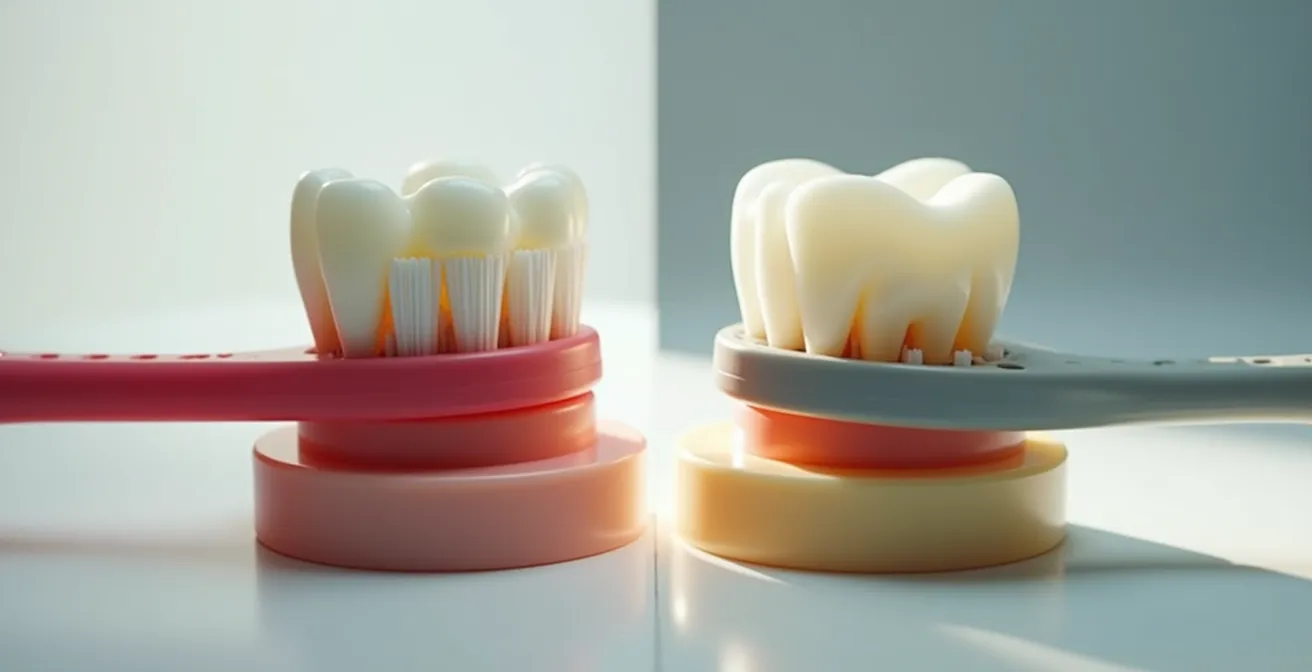
The speed at which this process occurs underscores the inadequacy of intermittent chewing. Research confirms that plaque forms on tooth surfaces within 24 hours after a complete professional cleaning. This sticky bacterial biofilm must be mechanically disrupted daily. Relying on a dental chew is akin to polishing the brass on a sinking ship; it ignores the fundamental structural failure happening out of sight. A dental chew can be a supplementary part of a comprehensive oral health plan, but it can never replace the clinical necessity of daily brushing.
Under the Gumline: Why Non-Anesthetic Cleaning Is Cosmetic Only?
The concept of “anesthesia-free dentistry” appeals to owners concerned about the risks and costs of general anesthesia. However, this practice is not just suboptimal; it is actively misleading and dangerous. It perpetuates the myth that the visible part of the tooth is the only part that matters. From a clinical perspective, any procedure performed on an awake animal is purely cosmetic and fails to address, diagnose, or treat the actual disease.
The pathology of periodontal disease is rooted in the subgingival space. Veterinary dental experts note that 40% of a dog’s dental disease is under the gumline and can only be identified with dental X-rays, which are impossible to perform on an awake patient. Without anesthesia, a veterinarian cannot use a periodontal probe to measure pocket depths around each tooth, assess bone loss, or perform the critical subgingival scaling and root planing required to remove the bacterial calculus that drives the infection. Scaling the visible crowns of the teeth on an awake dog—a process called “hand scaling”—leaves the subgingival infection to fester, giving the owner a false sense of security while the bone continues to rot away.
The position of veterinary authorities is unequivocal. As stated by the experts at VCA Animal Hospitals, this approach is fundamentally flawed:
A full general anesthetic is required for dentistry. While some tartar may be removed with scaling on a cooperative, awake animal, it is cosmetic only and does not diagnose or treat any dental disease present.
– VCA Animal Hospitals, VCA Veterinary Guidelines on Dental Procedures
Modern anesthetic protocols are extremely safe and tailored to the individual patient, including seniors. The risk of untreated periodontal disease leading to systemic infection and chronic pain is vastly greater than the manageable risk of a properly monitored anesthetic procedure.
Root Exposure: Why Is Your Pet Suddenly Head Shy?
A sudden reluctance to be petted on the head, or “head shyness,” is a classic but often misinterpreted sign of advanced dental pain. As periodontal disease progresses, the gum tissue recedes and the alveolar bone that anchors the tooth is destroyed. This process, known as bone lysis, exposes the sensitive root surfaces of the teeth. Unlike the crown, which is protected by a hard layer of enamel, the root surface is covered by cementum, a much softer and more sensitive tissue that is rich with nerve endings.
When these roots are exposed, even the slight touch of a hand near the muzzle, the movement of air, or contact with food or water can cause sharp, intense pain. The dog learns to anticipate this pain and reacts defensively by flinching, turning away, or even snapping when someone reaches for its head. This is not a behavioral issue; it is a predictable, learned response to a constant and severe source of pain. The animal is not being “difficult”; it is suffering.
Observing and correctly interpreting these signs is crucial for identifying the severity of the underlying pathology. A systematic check for related symptoms can help confirm that oral pain is the likely culprit, rather than an ear infection or neurological issue. A differential diagnosis should be the first step.
Checklist for Investigating Head Shyness
- Check if the head shyness is new and sudden onset. A sudden change is a strong indicator of a new source of pain.
- Observe if the dog drops food or consistently chews on only one side of its mouth, which suggests it is avoiding a painful area.
- Note any refusal of previously enjoyed hard treats or toys, as biting down can trigger intense pain from exposed roots.
- Look for secondary signs like facial swelling, pawing at the face, or rubbing the mouth against furniture.
- Monitor for changes in interaction with favorite toys, particularly a reluctance to engage in games of tug-of-war.
The appearance of head shyness is a red flag signaling that periodontal disease has likely progressed to a severe stage involving significant bone loss and root exposure. At this point, intervention is not just about saving teeth but about alleviating chronic, debilitating pain.
Greyhounds and Yorkies: Why Some Breeds Rot Faster?
While periodontal disease can affect any dog, certain breeds exhibit a dramatically higher predisposition to rapid and severe decay. Small and toy breeds, such as Yorkshire Terriers, Chihuahuas, and Dachshunds, as well as brachycephalic (short-nosed) breeds and sighthounds like Greyhounds, are poster children for advanced periodontal pathology. This is not a coincidence; it is a direct result of their skull and jaw anatomy.
The primary anatomical flaw is dental crowding. Small breeds have been selectively bred for miniaturization, but their teeth have not been reduced in size proportionally to their jaws. This results in teeth that are too large for the mandible and maxilla, causing them to be tightly packed, rotated, or overlapping. This crowding eliminates the natural, self-cleaning spaces between teeth, creating perfect traps for food, hair, and bacteria. The result is an accelerated formation of plaque and calculus, leading to a much faster progression of periodontal disease compared to a large breed dog with well-spaced teeth.
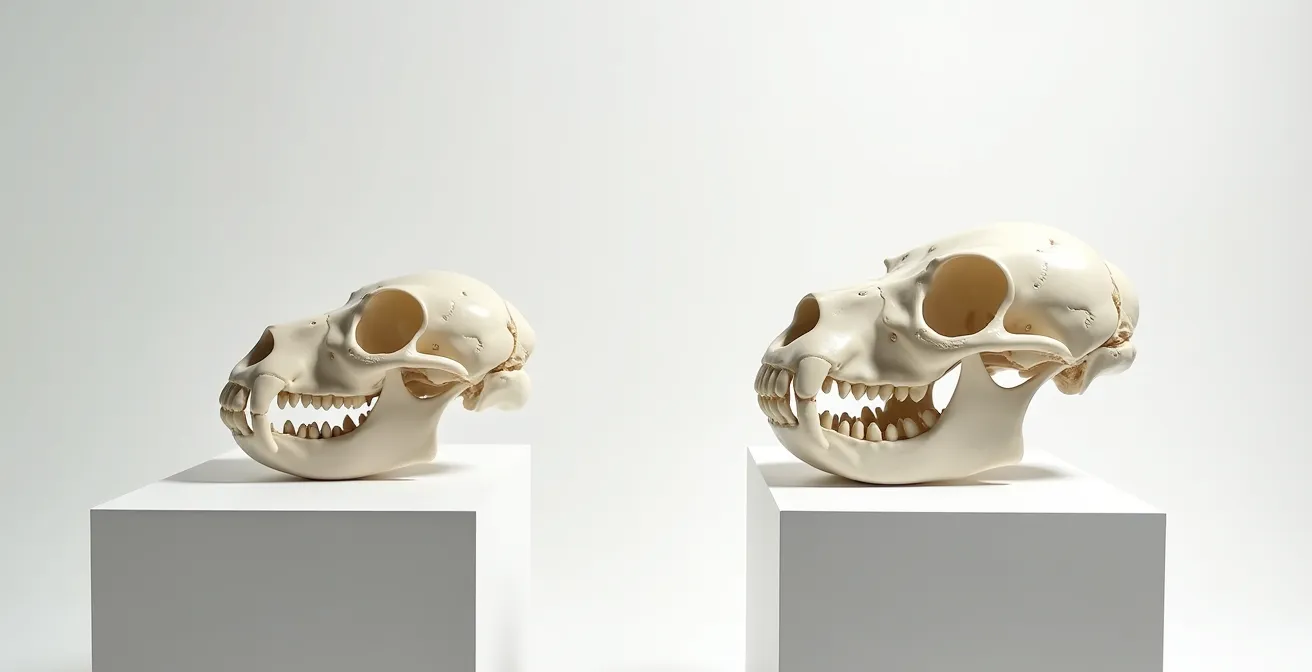
This anatomical predisposition has severe clinical consequences. As experts in veterinary dentistry explain, the large tooth-to-jaw ratio in these breeds makes them uniquely vulnerable to pathologic fractures. The mandibular first molars and canines, in particular, have roots that can occupy a huge percentage of the jaw’s height. As periodontal disease destroys the supporting bone around these massive roots, the jaw itself becomes critically weakened and can fracture from something as simple as chewing on a piece of kibble. This is not a traumatic injury but a pathologic fracture—a bone breaking because it has been rotted from within by disease.
Glucose Oxidase: How Chemistry Breaks Down Plaque?
Understanding the speed of plaque formation is key to appreciating the role of preventative chemistry. The initial layer of plaque, known as a biofilm, is a soft, sticky colony of bacteria that adheres to the tooth surface. As we’ve established, it begins forming within hours of a cleaning. If this biofilm is not disrupted, it starts to mineralize, incorporating calcium from saliva to become hard calculus (tartar). Veterinary dental research confirms that plaque mineralizes to form calculus that cannot be removed by brushing after remaining on the tooth surface for more than 2 days. This creates a very narrow window for effective intervention.
This is where enzymatic toothpastes offer a significant clinical advantage over non-enzymatic options. Many veterinary dental toothpastes contain a glucose oxidase system. This enzyme is not an abrasive; it works through a chemical reaction. When the glucose oxidase in the toothpaste comes into contact with the glucose present in the mouth, it produces hydrogen peroxide. This reaction serves two critical functions in disrupting the biofilm.
First, the release of hydrogen peroxide has a direct antibacterial effect, killing the bacteria that form the plaque matrix. Second, the effervescent action helps to break down the structure of the biofilm, making it less adherent and easier to remove mechanically with the bristles of a toothbrush. This chemical action provides a powerful adjunct to the physical scrubbing, attacking the biofilm before it can mineralize into intractable calculus. It is a proactive chemical strike against the very foundation of periodontal disease, making daily brushing significantly more effective.
Key Takeaways
- “Doggy breath” is a clinical sign of active infection and tissue decay, not a normal trait.
- The most severe damage occurs below the gumline, rendering non-anesthetic cleanings ineffective and purely cosmetic.
- Untreated periodontal disease leads to bacteremia, seeding infection in the heart, kidneys, and liver, and can reduce a pet’s lifespan by up to two years.
Jaw Fractures: What Happens When the Jaw Bone Rots Away?
The endpoint of localized, untreated periodontal disease is catastrophic structural failure. A pathologic jaw fracture is one of the most devastating consequences, representing the complete erosion of the mandible or maxilla by chronic infection. This is not a result of major trauma, but the culmination of years of osteolysis, where the bone is literally eaten away by the body’s inflammatory response to the deep bacterial infection around the tooth roots. As the bone recedes, the jaw becomes as fragile as a piece of chalk.
This condition is overwhelmingly seen in small and toy breed dogs, a fact directly supported by clinical data. Epidemiological studies demonstrate that dogs with periodontal disease had a median adult bodyweight of 10.33 kg, over 4 kg lighter than dogs without the disease (14.90 kg). This highlights the intense predisposition of smaller animals. Their disproportionately large teeth relative to their jaw size mean that even a moderate amount of bone loss can compromise the structural integrity of the entire mandible. The roots of the lower canines and first molars can extend almost the full height of the jawbone, leaving very little bone to begin with.
When a pathologic fracture occurs, the treatment is complex, painful, and costly. It often involves surgical repair with wires, plates, and screws, and almost always requires the extraction of the associated diseased teeth. In many severe cases, the bone is too diseased and necrotic to even hold sutures or implants, leading to permanent disfigurement and a severely compromised ability to eat. This entire tragic cascade begins with something as seemingly innocuous as plaque on the teeth. It is the logical, predictable conclusion of allowing periodontal infection to proceed unmanaged.
How Bacteria from the Mouth Cause Heart Valve Damage?
The most dangerous fallacy regarding periodontal disease is the belief that it is “just a mouth problem.” The oral cavity is a highly vascular area, and a diseased mouth serves as a constant, open gateway for bacteria to enter the bloodstream. This process, known as bacteremia, transforms a localized oral infection into a systemic disease with life-threatening consequences for vital organs, particularly the heart, kidneys, and liver.
When the protective barrier of the gums is breached by inflammation, bacteria from the dental biofilm pour directly into the circulation. These bacteria, along with the inflammatory toxins they produce, travel throughout the body. The heart valves are particularly susceptible. The bacteria can colonize the valve leaflets, leading to a condition called endocarditis—an infection of the heart valves. This causes the valve surfaces to become rough and deformed, impairing their ability to close properly. The result is turbulent blood flow, heart murmurs, and eventual congestive heart failure. This is not a theoretical risk; it is a well-documented pathological pathway.
This systemic assault directly impacts an animal’s longevity. As the Animal Dental Specialist Team notes, the link between oral health and overall health is scientifically proven: “Chronic inflammation caused by bacteria in the mouth can significantly impact overall health and longevity. Periodontal disease has been scientifically shown to be associated with diabetes, kidney disease, liver disease, heart disease, lung disease.” This is why veterinary health statistics reveal that pets with chronic dental disease have a life expectancy that is two years shorter than pets without it. Those are not two years lost to old age; they are two years stolen by a preventable, chronic infection originating in the mouth.
The evidence is conclusive. Ignoring the clinical signs of periodontal disease is a decision with severe, and at times fatal, consequences. The only responsible action is to schedule a comprehensive oral health examination with your veterinarian to assess the true extent of the damage and establish a clinical treatment plan.