Training & Behavior
The relationship between humans and their companion animals rests on a foundation of mutual understanding and clear communication. Whether you’ve just welcomed a playful puppy, adopted a cautious rescue cat, or simply want to deepen your bond with a longtime companion, understanding the principles of animal learning and behavior is transformative. Training isn’t about dominance or control—it’s about building a shared language that creates safety, confidence, and joy for both of you.
This comprehensive resource explores the science-backed methods that shape behavior, the critical developmental windows that influence temperament, and the subtle signals your pet uses to communicate their emotional state. From the mechanics of positive reinforcement to species-specific instincts like feline scratching behavior, you’ll discover how thoughtful training creates not just obedience, but a genuine partnership built on trust.
Understanding the Foundations of Animal Learning
All successful training—whether teaching a simple “sit” or addressing complex behavioral challenges—relies on principles of operant conditioning. This scientific framework, which explains how consequences shape future behavior, forms the backbone of modern, humane training methods. Unlike outdated punishment-based approaches, operant conditioning allows you to communicate clearly with your pet without damaging the bond you share.
The core concept is elegantly simple: behaviors that produce pleasant outcomes increase in frequency, while those that produce neutral or unpleasant outcomes diminish. When your dog sits and receives a treat, you’ve created a positive association that makes sitting more likely in the future. When your cat approaches the scratching post and experiences the satisfying sensation of stretching and marking, that behavior becomes self-reinforcing.
Think of learning as occurring in distinct phases, each with its own characteristics. The acquisition phase is when your pet first grasps what you’re asking—this requires high-value rewards, clear communication, and minimal distractions. The fluency phase follows, where the behavior becomes smoother and more reliable. Finally, the generalization phase extends that behavior to new environments and situations. Understanding these phases helps you recognize that regression isn’t failure—it’s a normal part of the learning process that signals the need to temporarily reduce difficulty or increase support.
Why Socialization Shapes Lifelong Behavior
The experiences your pet encounters during critical developmental windows create lasting neural pathways that influence how they perceive the world. For puppies, this sensitive period typically extends until around 14-16 weeks of age, though learning continues well beyond. During this time, their brains are primed to absorb information about what’s safe, what’s threatening, and how to interact with their environment.
The quality of these experiences matters far more than quantity. A single traumatic encounter can create fear associations that persist for years, while a dozen positive, controlled exposures build confidence and resilience. This is why thoughtful socialization involves careful orchestration rather than overwhelming immersion.
Strategic Exposure for Confident Adults
Effective socialization targets the specific stimuli your pet will encounter in their daily life. Urban dogs benefit from desensitization to city sounds—garbage trucks, sirens, construction noise—through gradual, positive exposure at distances where they remain calm. Cats who will require veterinary care throughout their lives need gentle handling exercises that make restraint and examination feel safe rather than threatening.
Consider these priority exposures for well-rounded socialization:
- Various surfaces and textures (grass, gravel, slippery floors, metal grates)
- Different types of people (children, elderly, people with mobility aids, wearing hats or sunglasses)
- Common environmental sounds at gradually increasing volumes
- Gentle restraint and handling exercises mimicking veterinary procedures
- Controlled interactions with calm, well-socialized animals
The Reality of Dog Parks and Group Settings
While dog parks seem like ideal socialization venues, they actually present significant risks for young or under-socialized dogs. The uncontrolled environment, varying play styles, and potential for overwhelming or negative interactions can create fear or reactivity rather than confidence. Structured puppy classes with screened participants and controlled play sessions offer far more beneficial socialization opportunities.
For dogs who missed their optimal socialization window, patience and systematic desensitization can still build confidence, though the process requires more time and careful management than early intervention would have.
Positive Reinforcement: The Science Behind Effective Training
Modern training methods prioritize reinforcement over correction, building behaviors you want rather than simply suppressing those you don’t. This approach proves more effective because it gives your pet clear information about correct choices while strengthening your relationship rather than introducing fear or confusion.
Marker Training and Timing Precision
Marker training, often implemented with a clicker, solves one of training’s biggest challenges: the communication gap between action and consequence. Animals learn through immediate associations—when the reward arrives several seconds after the behavior, the connection weakens. A marker (a distinct click sound or a verbal cue like “yes”) acts as a bridge, instantly identifying the exact moment your pet made the right choice.
The process begins with “charging the mark”—creating a strong association between the sound and the reward. After 20-30 pairings of click-then-treat, the marker itself becomes a conditioned reinforcer that carries meaning. You can then mark desirable behaviors with perfect timing, even when physical reinforcement requires a few seconds to deliver.
Strategic Reward Selection and Delivery
Not all rewards carry equal weight in your pet’s hierarchy of desires. High-value rewards—small pieces of real chicken, cheese, or freeze-dried liver for most dogs—compete successfully with environmental distractions. Lower-value rewards like kibble work well in familiar settings with minimal temptation. Understanding this hierarchy allows you to match reinforcement intensity to difficulty level.
The Jackpot technique leverages variability to maintain motivation. When your pet performs exceptionally well or achieves a breakthrough, delivering an unexpected bonanza of treats (5-10 rapid-fire rewards instead of the usual single piece) creates excitement and marks that moment as particularly significant. This unpredictability keeps training engaging rather than routine.
Functional rewards, grounded in the Premack Principle, use life’s natural reinforcers rather than food. The opportunity to sniff, to greet another dog, or to chase a ball can serve as powerful rewards when structured properly. “You get to do what you want after you do what I want” becomes a framework for cooperation throughout daily life.
Essential Obedience Skills for Safety and Freedom
Reliable obedience commands aren’t about control for its own sake—they’re safety tools that allow your dog greater freedom. A dog with a solid recall can enjoy off-leash hiking; one with a reliable “place” command can accompany you to outdoor cafes; emergency stop commands can literally save their life in dangerous situations.
The Three Ds of Progressive Training
The framework known as the 3 Ds—Duration, Distance, and Distraction—provides a systematic roadmap for building reliability. You increase only one variable at a time while keeping the others easy. A dog learning “stay” might first hold the position for 5 seconds (duration) while you stand directly beside them (minimal distance) in your quiet living room (no distraction). Once that’s solid, you might increase duration to 15 seconds while maintaining proximity and environment.
Rushing through these progressions is the most common training mistake. Each increment should achieve 80% success before advancing. This approach feels slower initially but builds genuine understanding rather than fragile performance that crumbles under real-world conditions.
Foundation Commands Worth Mastering
Certain commands offer disproportionate value in daily life. The “place” command—sending your dog to a designated spot to settle—prevents door-dashing, creates calm during meals, and provides an alternative to jumping on guests. Emergency stop commands like “freeze” or a well-trained “down” can halt forward movement when your dog spots a squirrel near a busy street.
Heelwork, often perceived as formal obedience, actually creates pleasant walks where neither of you is frustrated by pulling. When your dog understands that staying near your side produces forward movement while pulling produces stillness, walks become collaborative rather than combative.
Reading Your Pet’s Body Language
Your pet communicates constantly through subtle physical signals, but these messages often go unnoticed until a situation escalates. Literacy in canine body language prevents bites, reduces stress, and deepens your understanding of your dog’s emotional state. Many signals that humans interpret as friendly actually indicate discomfort or anxiety.
Common Misinterpretations That Create Risk
The tail wag myth—that all wagging indicates happiness—leads to countless misunderstandings. Tail position, speed, and the direction of the wag all carry meaning. A high, stiff, rapid wag often signals arousal and potential aggression, while a low, sweeping wag truly indicates friendliness. The piloerection reflex (raised hackles) indicates arousal—which might mean fear, excitement, or aggression depending on context—rather than exclusively signaling threat.
Distinguishing between play bows and stalking postures requires attention to subtle details. Both involve a lowered front end, but play bows include loose, wiggly body language and frequent breaks in intensity, while stalking features frozen stillness, fixed staring, and tense muscles primed for explosive movement.
Calming Signals and Displacement Behaviors
Dogs use calming signals—subtle behaviors like lip licking, yawning, turning the head away, or moving slowly—to communicate peaceful intent or request reduced intensity. Recognizing these signals allows you to intervene before stress escalates. When your dog yawns during a training session, they’re not bored—they’re signaling that the pressure feels too high.
Displacement behaviors—scratching, sniffing the ground, or shaking off when not wet—occur when a dog experiences conflicting motivations or mild stress. These aren’t random; they’re visible evidence of internal emotional processing that deserves acknowledgment and response.
Species-Specific Behavioral Needs
While training principles apply across species, certain behaviors stem from deep evolutionary drives that require management rather than elimination. Feline scratching behavior exemplifies this perfectly—it’s not destructive misbehavior but essential maintenance and communication that needs appropriate outlets.
Understanding Natural Scratching Instincts
Cats scratch for multiple critical reasons: to remove the dead outer sheath from their claws, to stretch their spine and shoulder muscles, to mark territory both visually and through scent glands in their paws, and to express emotional arousal. Attempting to eliminate this behavior entirely creates frustration and often leads to inappropriate surfaces becoming targets.
The solution lies in redirecting this natural instinct to appropriate surfaces. This requires understanding individual preferences—some cats strongly prefer vertical posts for their full-length stretches, while others favor horizontal scratchers that allow different muscle engagement. Stability matters enormously; wobbly posts get abandoned immediately because cats need secure resistance to achieve satisfying stretches.
Strategic Placement and Training
Location strategy determines usage rates more than any other factor. Posts placed in high-traffic areas where cats naturally pass, near sleeping spots where morning stretches occur, and by windows where territorial marking feels relevant see dramatically higher use than those tucked in corners. Cats often scratch immediately after waking or when greeting their humans—positioning posts to intercept these moments creates natural training opportunities.
For cats already targeting furniture, training techniques combine making preferred surfaces less appealing (temporary deterrents like double-sided tape) with making appropriate surfaces irresistible (catnip, treats, engaging play sessions near the post). The key is ensuring the acceptable alternative is more rewarding than the original target.
Advanced Training Methods for Mental Enrichment
Beyond basic obedience, physical and cognitive challenges provide mental stimulation that prevents boredom-related behavioral problems while deepening communication. Activities like agility training, scent work, and advanced marker training build problem-solving skills and frustration tolerance while creating opportunities for relationship-based engagement.
Foundation skills—targeting, impulse control, body awareness—should precede specialized equipment. A dog learning to navigate obstacles benefits from first understanding how to consciously control their rear feet, to wait for a release cue despite excitement, and to look to you for guidance in novel situations. These building blocks accelerate later learning and prevent safety issues.
Safety protocols matter especially for growing dogs whose growth plates haven’t closed. High-impact activities need delayed introduction, while warming up and cooling down prevent injury just as they do for human athletes. These practices establish patterns that protect joint health throughout your dog’s life.
The generalization of concepts—understanding that “wait” means the same thing at doorways, before meals, and at the park entrance—represents sophisticated cognitive processing. Each context initially feels like a new cue to your pet, requiring deliberate training in varied settings. This investment pays dividends in truly reliable behaviors that transfer across your shared life.
By understanding these interconnected elements—how animals learn, what shapes their emotional development, how to communicate clearly through reinforcement, and which behaviors stem from essential species-specific needs—you build not just a well-trained pet, but a genuine partnership characterized by mutual understanding and respect. Every interaction becomes an opportunity to strengthen that bond through clear, compassionate communication.

The Whale Eye: Recognizing Stress Before the Growl
A dog’s snap is rarely a surprise; it’s the final sentence in a long story we failed to read. Common behaviors like yawning, sniffing, or even a certain type of tail wag are often misread signs of high stress, not…
Read more
Liver vs. Kibble: Matching the Payment to the Difficulty of the Job
A reliable recall isn’t about being “alpha,” it’s about being the best economic option available to your dog at any given moment. Your dry kibble is a low-value currency that is worthless in the highly competitive “market” of a dog…
Read more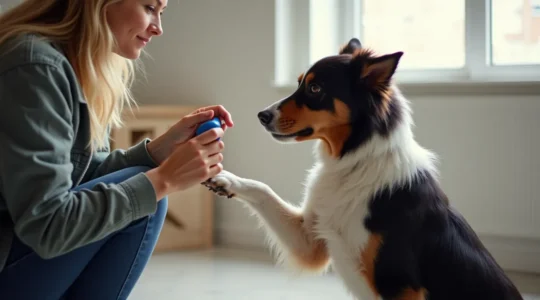
Why the Clicker Is Faster Than Voice for Teaching New Skills?
The clicker’s speed advantage isn’t philosophy; it’s pure mechanics, delivering a cleaner, faster data signal than the human voice. A click provides an instantaneous, unambiguous “yes” signal, eliminating the cognitive delay a dog experiences trying to interpret vocal tone and…
Read more
Why “Command Training” Is Less Effective Than “Concept Training”?
True training is not about achieving perfect obedience, but about unlocking your dog’s innate ability to think and problem-solve independently. Command-based training creates context-dependent actions; concept training builds transferable life skills like emotional regulation and focus. This shift transforms the…
Read more
Why “Recall” Is the Only Command That Truly Saves Lives?
A reliable recall isn’t taught; it’s built upon a foundation of other, more critical obedience skills that manage impulse control. True off-leash safety comes from mastering impulse control via “Stay” and “Place,” not just yelling “come.” The “Emergency Down” is…
Read more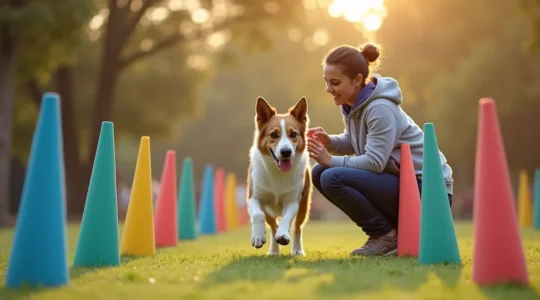
How Agility Training Builds Confidence in Fearful Rescue Dogs?
Agility is not about speed or obstacles; it is a structured communication system that gives a fearful dog a sense of control and rewires their confidence from the inside out. Foundation skills like targeting and body awareness teach a dog…
Read more
Why “Alpha Theory” Is Obsolete in Modern Dog Training?
The belief that you must be the “alpha” to have a well-behaved dog is one of the most persistent and damaging myths in training. Modern science shows dog behavior is driven by learning and resource acquisition, not a rigid quest…
Read more
Why the Puppy Socialization Window Closes Forever at 16 Weeks
The 16-week mark isn’t a guideline for puppy socialization; it’s a non-negotiable neurological deadline. Positive experiences before 16 weeks build lifelong resilience; negative or overwhelming ones can create permanent fear. The risk of behavioral euthanasia from poor socialization far outweighs…
Read more
Your Cat Has a Scratching Post but Still Shreds the Sofa? Here’s the Real Reason Why
It’s a common belief that a cat scratching furniture despite having a post is an act of defiance. The reality is far more practical: your sofa is simply a better tool for the job. This isn’t a training problem; it’s…
Read more