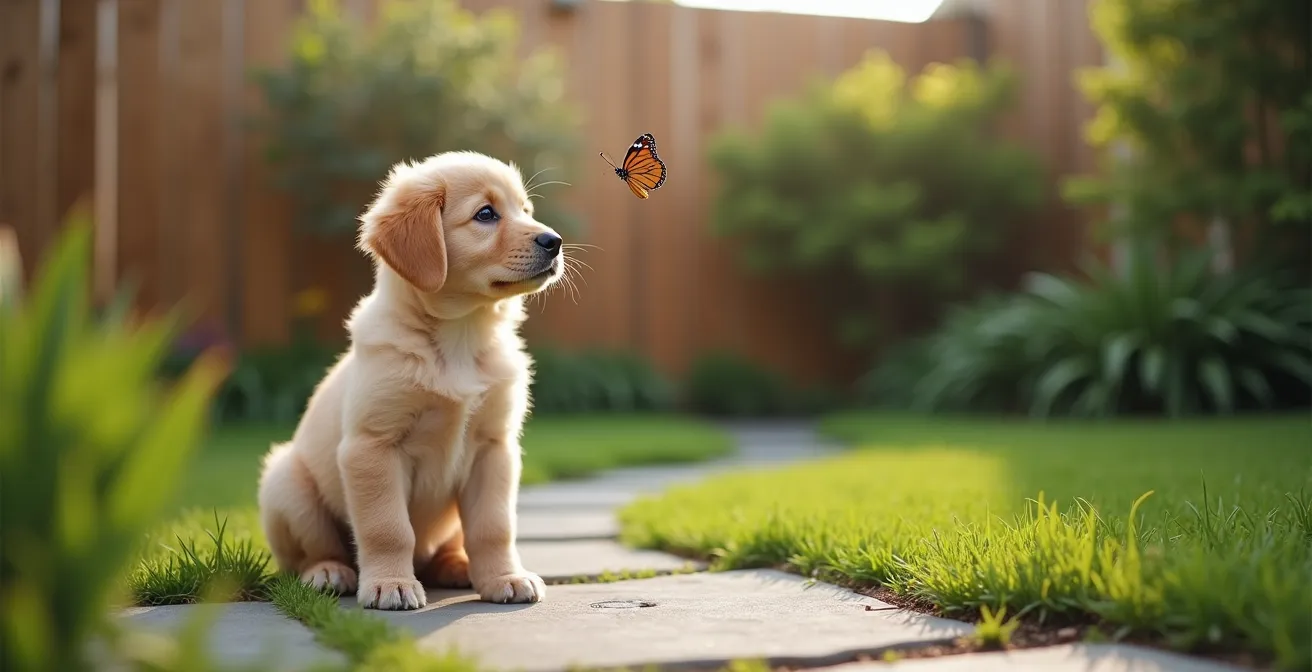
The 16-week mark isn’t a guideline for puppy socialization; it’s a non-negotiable neurological deadline.
- Positive experiences before 16 weeks build lifelong resilience; negative or overwhelming ones can create permanent fear.
- The risk of behavioral euthanasia from poor socialization far outweighs the risk of disease from controlled, safe exposure.
Recommendation: Prioritize quality over quantity. Focus on creating calm, positive associations with new sights, sounds, and handling, treating it as a critical form of behavioral inoculation.
As a developmental ethologist, I must deliver an urgent and uncomfortable truth: the advice you may have received to “wait until all shots are done” to socialize your puppy is not just outdated, it is dangerous. You do not have months. You have a few short weeks. The period between 3 and 16 weeks of age is not just a “good time” for socialization; it is the only time the neurological window is fully open to build a resilient, confident adult dog.
Many new owners believe socialization is about teaching a puppy to be friendly with other dogs at the park. This is a profound misunderstanding. True socialization is a process of behavioral inoculation. It’s the controlled exposure to the vast array of sights, sounds, surfaces, and experiences of human life, teaching the developing brain that “new” does not equal “dangerous.” Missing this window doesn’t mean you’ll have a slightly shy dog; it means you are actively increasing the risk of creating an adult dog crippled by fear, anxiety, and the potential for aggression that often follows.
The brain’s plasticity during this period is a one-time offer. Experiences—or the lack thereof—carve neural pathways that become the default for the rest of the dog’s life. After 16 weeks, you are no longer socializing; you are undertaking the much more difficult, and often less successful, task of desensitization and counter-conditioning against fears that have already taken root.
This guide will dismantle the myths, provide a science-backed framework for what you must do, and explain why the greatest risk to your puppy is not a germ, but a lack of properly managed experience. We will navigate the delicate balance between safety and exposure, turning your puppy into a well-adjusted companion for life.
This article provides a clear roadmap to navigate this critical developmental stage. You’ll learn not just what to do, but the scientific ‘why’ behind each urgent recommendation, ensuring you can act with confidence.
Summary: Why Puppy Socialization Ends at 16 Weeks
- 100 People vs. 1 Positive Encounter: The Socialization Myth
- How to introduce City Noises to a Country Puppy?
- Touching Paws and Ears: The Daily Drill for Future Vet Visits
- Why Dog Parks Are the Worst Place for a 12-Week-Old Puppy?
- Can You “Socialize” a 2-Year-Old Fearful Dog?
- The Maternal Antibody Gap: Why the 16-Week Shot Is the Most Critical?
- Targeting and Body Awareness: What to Teach Before the First Jump?
- The Whale Eye: Recognizing Stress Before the Growl
100 People vs. 1 Positive Encounter: The Socialization Myth
The most pervasive myth in puppy raising is that socialization is a numbers game—meet 100 people, see 100 dogs, visit 100 places. This approach is not only wrong, it’s actively harmful. The goal is not quantity of exposure, but quality of association. A single overwhelming or frightening experience can undo weeks of positive work. The puppy’s brain is not making a tally mark for each new thing; it’s filing each experience as either “safe/good” or “dangerous/bad.”
Your mission is to engineer success. This means creating controlled, brief, and overwhelmingly positive encounters. One calm, vetted adult dog who ignores your puppy is worth more than a dozen boisterous, unknown dogs at a park. One stranger who gently offers a high-value treat without looming is better than a crowd of people trying to pat your puppy on the head. The brain learns through association, and we must ensure the associations are positive ones, especially as research confirms the socialization window begins closing around 14-16 weeks.
Think of it as a “sensory diet.” You wouldn’t feed a baby an entire cake. Likewise, you don’t flood a puppy’s developing nervous system with chaotic stimuli. You provide small, “nutritionally-dense” experiences that build confidence, not terror. The focus must shift from a checklist of exposures to a careful curation of positive life lessons, one at a time.
Action Plan: The Quality-Over-Quantity Protocol
- Identify Baseline: Observe your puppy’s comfort level. Are they curious or hesitant? Start from a place where they feel secure.
- Create ‘Dense’ Encounters: Arrange one short, controlled, positive interaction. Example: meeting one calm, dog-savvy friend for two minutes.
- Monitor Body Language: Watch for stress signals (lip licking, yawning, turning away) before, during, and after. End the encounter *before* stress appears.
- Allow for Processing: Give your puppy 24-48 hours of downtime between significant new experiences. The brain needs time to consolidate the learning.
- Keep a Journal: Note the quality of the interaction, not just that it happened. “Met a calm person, puppy leaned in for treat” is a win. “Crowd approached, puppy hid” is a warning.
How to introduce City Noises to a Country Puppy?
For a puppy raised in a quiet, rural environment, the sudden cacophony of a city—sirens, air brakes, rattling skateboards—can be profoundly terrifying. Directly exposing them to this chaos is a recipe for creating noise phobias. The key is systematic desensitization and counter-conditioning, introducing these sounds at a level that doesn’t trigger a fear response.
The goal is to teach the puppy that these novel sounds are irrelevant background noise. This is achieved by pairing the sound with something the puppy loves, like high-value treats or a favorite meal. The sound predicts the good thing. Crucially, the process must start at a barely perceptible volume and only increase as the puppy shows relaxed, happy body language.

As the image suggests, a safe starting point can be simply observing the world from the security of a parked car. The puppy is contained, not forced to interact, and can watch the world go by from a distance. This creates exposure without the overwhelming pressure of direct engagement. From there, you can progress to walks during quiet times of the day, gradually increasing the proximity to the source of the noise over many sessions.
Case Study: The Wisconsin Humane Society’s Sound Protocol
The Wisconsin Humane Society champions a highly effective method using sound clips. Their protocol involves using YouTube albums of city sounds, traffic, or fireworks. The process is simple but precise: play the sounds at the absolute quietest volume while continuously feeding high-value treats. When the sound stops, the food immediately stops. This creates a powerful, positive classical association: the siren doesn’t just happen, it *makes chicken appear*. They advise daily, short sessions, teaching the puppy’s brain to recategorize these potentially scary noises as predictors of wonderful things.
Touching Paws and Ears: The Daily Drill for Future Vet Visits
Puppies that are stimulated and handled from birth to five weeks of age are more confident and more likely to be social. Early stimulation may also positively affect a puppy’s brain development and ability to tolerate stress.
– VCA Animal Hospitals, Puppy Behavior and Training – Socialization and Fear Prevention
Every future vet visit, grooming appointment, and nail trim will hinge on the work you do in these first few weeks. A puppy that learns handling is pleasant and predictable will be a cooperative patient for life. A puppy forced into uncomfortable handling will learn to fear and resist it, turning routine care into a stressful battle. The goal is to build a “consent-based handling” routine.
This isn’t about simply grabbing your puppy’s paws. It’s a dialogue. You teach your puppy a “start button” behavior—a signal they give to say “I’m ready.” A common example is teaching the puppy to place their chin in your open hand. As long as their chin is there, handling continues. The moment they lift their chin, handling stops instantly. This gives the puppy agency and control, which dramatically reduces anxiety.
The process should be progressive and paired with high-value rewards. Start with what your puppy easily tolerates and build from there in tiny increments.
- Week 1: Establish the ‘chin-in-hand’ start button. Reward heavily for voluntary participation.
- Week 2: With the chin in your hand, gently touch a paw for one second, then reward. Release before they show any discomfort.
- Week 3: Gradually increase duration and add other elements: looking in an ear for two seconds, lifting a lip to see teeth, running a hand down their back.
- Week 4: Introduce mock procedures, like pressing a pen cap (cap on!) against their side to simulate an injection, followed by a jackpot of treats.
This daily drill, lasting no more than a few minutes, is a profound investment. You are teaching your puppy that human hands are safe and that they have a voice in their own care. This foundation of trust is essential, especially when compared to the uncontrolled chaos of environments like dog parks.
Why Dog Parks Are the Worst Place for a 12-Week-Old Puppy?
Taking a 12-week-old puppy to a dog park is the equivalent of dropping a toddler into the middle of a rowdy nightclub. It is an unpredictable, high-arousal environment full of unknown dogs with unknown histories and temperaments. It is the antithesis of the controlled, positive exposure your puppy needs. While intentions are good, the potential for a single traumatic event that causes lifelong fear is exceptionally high. In fact, most professional trainers recommend no dog park until the dog is at least 6 months old and has a solid recall.
There are two primary dangers. The first is physical: a small, fragile puppy can be easily and unintentionally injured by a larger, boisterous adult dog. The second, more insidious danger, is psychological. A puppy can be bullied, pinned, or simply overwhelmed by the intensity of the environment. This is where the concept of trigger stacking comes into play.
A single stressor (a new dog) might be manageable. But at a dog park, triggers stack rapidly: new dogs, new people, loud noises, high-speed chasing, a lack of an easy escape route. Each trigger adds a layer of stress hormones until the puppy’s nervous system is completely overwhelmed. Even if no fight occurs, the experience is filed away as terrifying, poisoning their perception of other dogs.
Case Study: Trigger Stacking in High-Stimulation Environments
Bella+Duke’s research on trigger stacking highlights how dog parks create a rapid succession of stressors with no time for recovery. When multiple triggers—like an unknown dog approaching too quickly, another dog barking loudly, and feeling cornered—occur in sequence, they push a puppy far over their stress threshold. This flood of cortisol can create a negative association with the entire context (i.e., “other dogs are scary”). The research notes that even after a single overwhelming event without any physical altercation, it can take up to 72 hours for a dog’s cortisol levels to return to baseline.
Instead of dog parks, opt for one-on-one playdates with a known, vaccinated, gentle, and well-socialized adult dog or another puppy of similar size and age. This controlled setting allows for appropriate play and positive learning, not a survival-of-the-fittest free-for-all.
Can You “Socialize” a 2-Year-Old Fearful Dog?
This question contains a difficult but necessary truth. The term “socialize” is, in a strict developmental sense, inaccurate for an adult dog. The neurological window for effortless socialization closes around 16 weeks. You cannot go back in time and “socialize” a 2-year-old fearful dog. What you can do is begin the long, patient process of management, desensitization, and counter-conditioning.
The goal shifts from building a foundation of confidence to carefully dismantling a foundation of fear. While a puppy learns “new things are fun,” a fearful adult dog must un-learn “new things are terrifying.” This is a much taller order and requires a significant commitment of time, patience, and often, professional guidance from a certified behavior consultant.
The critical social development period for dogs is approximately between 3 and 14 weeks. Even though socialization can occur at any age, it will be a slower process requiring more patience and repetition in adult dogs.
– UC Davis School of Veterinary Medicine
The process involves identifying the dog’s triggers (e.g., strangers, other dogs, loud noises) and working with them at a “sub-threshold” distance—a distance where they can see the trigger but are not reacting fearfully. From that safe distance, the trigger is paired with something extremely positive, like roasted chicken. Over many, many sessions, the distance is slowly decreased. You are not teaching them to love strangers; you are teaching them that the presence of strangers predicts chicken, making their presence tolerable.
This is not a failure, but it is a different reality. The dog may never be a social butterfly who enjoys crowded patios, and that’s okay. The goal becomes giving them the skills to cope with the world without constant anxiety. It underscores the profound importance of doing the work upfront, during that magical, irreplaceable window.
The Maternal Antibody Gap: Why the 16-Week Shot Is the Most Critical?
The most common and understandable reason new owners keep their puppies isolated is the fear of deadly diseases like parvovirus and distemper. This fear is valid, but it must be weighed against a more statistically probable threat. The key to this risk assessment lies in understanding Maternal Derived Antibodies (MDAs).
A puppy receives temporary immunity from their mother through her colostrum. These MDAs protect them for the first several weeks of life, but they also interfere with vaccines, rendering them less effective. As these maternal antibodies wane, there is a “window of susceptibility” where the puppy is not yet fully protected by their own vaccinations but is no longer protected by their mother. This gap typically occurs between 8 and 16 weeks—the exact same time as the critical socialization window.
This creates a conflict: protecting from disease versus protecting from lifelong behavioral problems. However, leading veterinary behaviorists are unequivocal. The American Veterinary Society of Animal Behavior (AVSAB) states that “behavioral problems are the biggest reason for owner relinquishment of dogs, early socialization and training are essential and can help save the lives of many dogs.” The risk of death from a behavioral issue (euthanasia due to aggression or severe anxiety) is statistically far greater than the risk of contracting a fatal disease if proper precautions are taken.
| Risk Factor | Disease Risk (Parvo/Distemper) | Behavioral Euthanasia Risk |
|---|---|---|
| Peak Risk Period | 8-16 weeks (before full vaccination) | After 16 weeks (missed socialization) |
| Prevention Method | Vaccination series + controlled exposure | Early socialization (3-16 weeks) |
| Long-term Impact | Treatable if caught early | Often permanent behavioral issues |
| AVSAB Position | Manageable with precautions | Leading cause of death under 3 years |
Managing the risk means being smart: avoid areas with high concentrations of unknown dogs (like dog parks or public pet relief areas), carry your puppy in high-traffic zones, and stick to playdates with known, healthy, vaccinated dogs. The 16-week vaccination is critical because it generally marks the end of the initial series and provides robust protection, but waiting until then to *start* socializing is a catastrophic mistake.
Targeting and Body Awareness: What to Teach Before the First Jump?
Before a puppy is ready for agility, hiking, or even just safely navigating a slippery floor, they need to learn a fundamental skill: proprioception, or body awareness. Puppies are often clumsy; they don’t have an innate understanding of where their back feet are. Teaching body awareness is a form of physical socialization that builds confidence and dramatically reduces the risk of injury later in life.
This training isn’t about strenuous exercise, which can be harmful to developing joints. It’s about low-impact exercises that encourage the puppy to think about how they use their body. A foundational skill is hand targeting, where the puppy learns to touch their nose to your hand for a reward. This simple behavior becomes a powerful communication tool, allowing you to guide your puppy’s movement without physical force.
Once targeting is established, you can build a series of exercises that challenge the puppy’s brain and body in safe ways.
- Paw Pods or Textures: Teaching a puppy to intentionally place their paws on different, slightly unstable surfaces (like a wobble cushion or even a folded towel) helps them learn to balance and engage their core.
- Cavaletti Rails: Using very low poles (or even pool noodles) laid on the ground for the puppy to walk over teaches them to lift their feet, rather than shuffling.
- Rear-End Awareness: Encouraging a puppy to back up between two objects or place their back feet onto a low platform (like a thick book) makes them conscious of their hindquarters.
- Weight Shifting: With the puppy standing, use a treat to lure their head to one side, then the other, encouraging them to shift their weight without moving their feet.
These exercises, practiced for just a few minutes a day, are mental puzzles that forge a stronger mind-body connection. A puppy that knows where its feet are is a puppy that moves through the world with more confidence and safety. This internal confidence is the best defense against external stress.
Key Takeaways
- The socialization window is a biological deadline, not a flexible guideline. Meaningful work must happen before 16 weeks.
- Focus on quality, not quantity. One calm, positive experience is infinitely better than 100 overwhelming ones.
- The risk of behavioral problems from under-socialization is a greater threat to a puppy’s life than the risk of disease from controlled, safe exposure.
The Whale Eye: Recognizing Stress Before the Growl
A growl is not the beginning of a problem; it is the end of a long, silent conversation you missed. Before a puppy ever growls or snaps, they offer a cascade of subtle stress signals, often called “calming signals” or the “ladder of aggression.” Learning to recognize these is perhaps the most critical skill for a puppy owner. It allows you to intervene and remove your puppy from a situation *before* it becomes overwhelming, thereby preventing a negative experience.
One of the most telling, and often missed, signals is the “whale eye.” This is when a dog turns its head slightly away from a trigger but keeps its eyes fixed on it, showing the white of the eye (sclera) in a half-moon shape. It is a clear sign of anxiety and discomfort. It says, “I am worried about that, and I would like to leave.” Ignoring this signal forces the puppy to escalate their communication.
Case Study: The Canine Ladder of Aggression in a Fear Period
Nutrena’s analysis of puppy fear periods (which often occur between 8-11 weeks) shows that fear-based learning at this age is often permanent. Their work documents the predictable escalation of signals puppies use to communicate distress. The ladder begins with subtle signs like yawning when not tired or blinking. It progresses to nose licking and turning the head away. If these are ignored, the puppy may try to walk away or creep with ears back. The “whale eye” and freezing in place are more serious signs that the puppy is nearing their limit. A growl is one of the last warning signals before a snap or bite. A single traumatic event during this fear period, where these signals were ignored, can result in lifelong reactivity.
Your job is to become a fluent reader of this language. Watch for yawning, lip licking, frantic sniffing of the ground, a suddenly closed mouth, or body stiffness. When you see these signs, it’s not a moment for “tough love.” It is a signal to create distance, de-escalate the situation, and support your puppy. Recognizing the whisper of a whale eye prevents you from ever having to hear the shout of a growl.
During this particular developmental stage, your dog’s brain is on a hair trigger, exquisitely sensitive to anything ‘bad’ that may happen. A single frightening or painful experience during the fear period can have a lasting impact for the rest of your dog’s life.
– Dr. Jen Summerfield, The Dark Side of Socialization: Fear Periods and Single Event Learning
The evidence is clear and the timeline is unforgiving. The work you do in the next few weeks will define your dog’s emotional well-being for the next 10 to 15 years. This is not a task to be delegated or delayed. It is the most important promise you can keep to your new companion.