Forcing a cat onto a vegan diet is a catastrophic failure of animal welfare, rooted in a fundamental misunderstanding of their biology.
- Cats are obligate carnivores; their metabolism cannot synthesize essential nutrients like taurine, retinol (Vitamin A), and arachidonic acid from plant sources.
- A deficiency in taurine, which is absent in plants, directly leads to irreversible blindness and fatal heart disease (Dilated Cardiomyopathy).
Recommendation: To ensure your cat’s health and survival, you must provide a meat-based diet that respects its non-negotiable physiological requirements. There is no ethical or biological alternative.
The intention is often pure: a deep-seated ethical commitment to reducing animal suffering leads many to adopt a plant-based lifestyle. In a moment of compassionate consideration, the question arises: can my cat join me on this path? The internet offers a hopeful mirage of “complete” vegan cat foods and supplements, suggesting that with careful planning, it is possible. This is a dangerous and fundamentally flawed premise. A cat is not a small dog or a flexible human. It is an obligate carnivore, an evolutionary masterpiece of predation whose entire biology is hard-wired for the consumption of animal tissue.
Attempting to feed a cat a vegan diet is not an extension of ethical living; it is an imposition of human ideology against an animal’s absolute biological imperatives. The consequences are not minor digestive upsets but a silent, systemic unraveling that leads to catastrophic organ failure. Nutrients like taurine, arginine, arachidonic acid, and true Vitamin A are not simply “better” from animal sources—for a cat, they are often the *only* bioavailable sources. Plant matter does not contain them in a form their body can use, if at all. This is not a matter of debate or dietary preference, but a stark physiological fact.
This guide does not seek to judge your ethical framework. It seeks to align it with scientific reality for the protection of the animal in your care. We will dissect the precise biological reasons why a plant-based diet is a metabolic dead end for a feline. We will explore the critical roles of water, protein, mineral balances, and the specific, life-sustaining compounds that plants simply cannot provide. Understanding these non-negotiable truths is the first and most crucial step in providing genuinely responsible and humane care.
To fully grasp the severe risks involved, this article breaks down the core physiological needs of a cat. The following sections will provide a clear, evidence-based look at why a meat-based diet is the only appropriate choice for feline health and survival.
Summary: The Biological Case Against Vegan Diets for Cats
- Wet vs. Dry: How Much Water Does a Cat Need from Food?
- High Protein or Moderate Fat: What Does an Indoor Cat Need?
- Chicken or Fish: Which Is the Top Allergen for Itchy Cats?
- Hepatic Lipidosis: The Risk of Starving a Fat Cat Too Quickly
- Calcium to Phosphorus Ratio: The Math for Raw Feeders
- Blocking Absorption: How Lentils Affect Heart Health?
- Why “Chicken Meal” Can Be Superior to “Fresh Chicken” by Weight?
- Why Wet Food Is Superior to Dry for Preventing Male Cat Blockages?
Wet vs. Dry: How Much Water Does a Cat Need from Food?
A cat’s ancestral origins are in the desert, where their prey provided the majority of their hydration. This evolutionary history has resulted in a naturally low thirst drive. Unlike dogs, cats do not instinctively drink enough water to compensate for a dry diet. This makes the water content of their food a matter of clinical importance, not a minor detail. The difference between wet and dry food is stark; according to an analysis by the World Animal Foundation, wet food contains 70-80% water, while dry food may contain as little as 6-10%. Forcing a cat to get its hydration from a water bowl alone puts immense, chronic strain on its kidneys and urinary system.
This state of low-level, continuous dehydration is a primary risk factor for developing urinary crystals, bladder inflammation (cystitis), and life-threatening urethral blockages, particularly in male cats. A diet devoid of the moisture found in animal tissue is fundamentally at odds with their physiological design. While a vegan diet might be formulated as “wet,” it often lacks the palatability to encourage sufficient intake, and as we will see, its nutritional composition presents far greater dangers. The principle remains: a cat is designed to eat its water, a need that a dry, plant-based kibble can never fulfill.
Relying on a cat to drink its way to proper hydration is a dangerous gamble. Providing a moisture-rich, meat-based diet is the single most effective way to support urinary health and prevent the painful and costly diseases that arise from chronic dehydration. It is the first and most basic requirement of respecting their carnivorous nature.
High Protein or Moderate Fat: What Does an Indoor Cat Need?
The debate between protein and fat levels is secondary to a more critical question: what is the source of that protein? As obligate carnivores, cats have an extremely high requirement for protein derived from animal tissue. Their digestive systems are short and acidic, designed for the efficient breakdown of meat, not the fibrous, complex carbohydrates found in plants. Plant proteins from sources like soy, corn, or peas are poorly digested and lack the complete amino acid profile cats require to live.
As the ASPCA’s veterinary experts state, this is a matter of biological fact. Their position is unequivocal:
Cats require a diet high in protein. Plants simply don’t have high enough levels of high-quality, highly digestible protein to meet a cat’s dietary requirements.
– ASPCA Animal Poison Control Center, ASPCA Official Statement on Vegan Diets for Cats
The molecular structure of animal protein is fundamentally different from that of plant protein. A cat’s metabolism is built to dismantle and utilize the specific building blocks found only in muscle and organ tissue. To deny them this is to starve their body at a cellular level, even if their stomach is full. The perceived protein content on a vegan cat food label is misleading, as it fails to account for this critical difference in bioavailability.
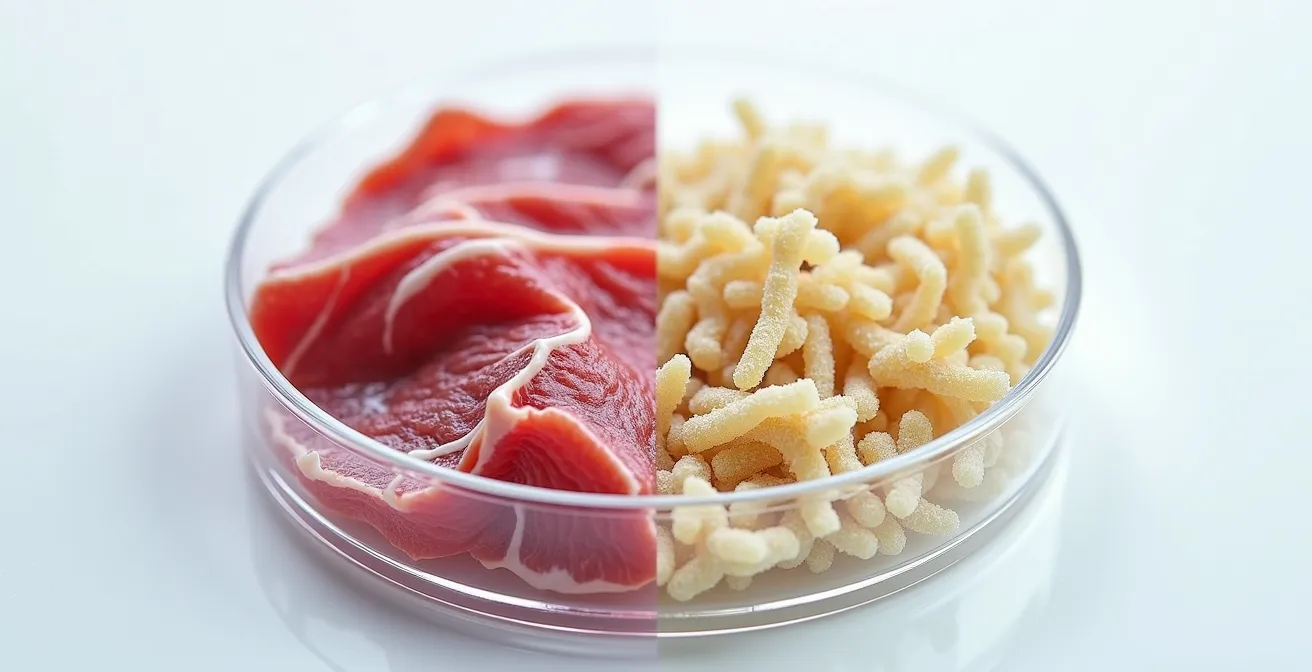
For an indoor cat with a more sedentary lifestyle, the key is not simply “high protein” but highly digestible, species-appropriate protein. This provides the necessary energy and amino acids without the metabolic stress of processing inappropriate ingredients. Moderate fat from animal sources provides essential fatty acids and energy, but the cornerstone of their health is, and always will be, animal-based protein.
Chicken or Fish: Which Is the Top Allergen for Itchy Cats?
When a cat develops chronic itching, gastrointestinal upset, or skin inflammation, owners often suspect a food allergy. It is a common misconception that grains are the primary culprit. In reality, the most frequent triggers for true feline food allergies are the proteins they are most commonly exposed to. Beef, fish, and chicken consistently rank as the top allergens in veterinary medicine. However, the solution is not to eliminate animal protein entirely—an act that would be a death sentence—but to identify the specific offending protein and remove it from the diet.
This is achieved through a strict diagnostic process known as an elimination diet. This process must be conducted under veterinary supervision. It involves switching the cat to a “novel” protein source—one it has never been exposed to before, such as rabbit, venison, or even kangaroo—for a minimum of 8-12 weeks. If the symptoms resolve, it confirms a food allergy. The old proteins are then reintroduced one by one to pinpoint the exact trigger. This methodical approach allows the owner to provide a safe, nutritious, meat-based diet that the cat can thrive on.
Abandoning all animal protein because of a suspected allergy to one type is a catastrophic overreaction. It is akin to demolishing a house because of a leaky faucet. The correct, responsible, and humane approach is a diagnostic one, not an ideological one.
Action Plan: Conducting a Veterinary-Supervised Elimination Diet
- Consult with a veterinarian before starting any elimination diet to rule out other causes of symptoms.
- Select a novel protein source your cat has never eaten before, often in a prescription hydrolysed or limited-ingredient diet.
- Feed this new diet exclusively for a minimum of 8-12 weeks, with no other treats, table scraps, or flavored medications.
- Monitor for improvements in skin, coat, and digestive symptoms throughout the trial.
- If symptoms resolve, gradually reintroduce suspected allergens one at a time, every two weeks, to identify the specific trigger(s).
Hepatic Lipidosis: The Risk of Starving a Fat Cat Too Quickly
One of the most immediate dangers of offering a cat an unpalatable vegan diet is anorexia. A cat that refuses to eat is at high risk for a deadly condition called hepatic lipidosis, or fatty liver disease. When a cat, particularly an overweight one, stops eating, its body begins to rapidly move fat from its reserves to the liver to be converted into energy. The feline liver is not equipped to handle this massive influx of fat. It becomes overwhelmed, swollen, and begins to fail. Jaundice (yellowing of the skin and eyes), vomiting, lethargy, and death can follow quickly without aggressive and expensive veterinary intervention.
This risk highlights a cruel paradox of vegan diets for cats. If the cat eats the inappropriate food, it develops long-term, systemic deficiencies. If it refuses the food, it faces short-term, acute liver failure. There is no safe outcome. This is before even considering the core nutrient deficiencies that a plant-based diet guarantees. As veterinary resources like PetMD clarify, the consequences of just one of these deficiencies—taurine—are grim. The data is clear: when taurine is deficient, heart disease, blindness, and reproductive failure are inevitable.
A well-meaning owner, seeing their cat refuse a new vegan food, might think the cat is merely being “picky.” They are not. Their biological instincts are screaming that the food is inappropriate and lacks the life-sustaining nutrients they require. Ignoring this instinct and allowing the cat to go without food for even a couple of days can trigger this fatal cascade in the liver. It’s a stark reminder that a cat’s appetite is directly linked to its survival mechanisms.
Calcium to Phosphorus Ratio: The Math for Raw Feeders
Beyond macronutrients, the precise balance of minerals is critical for a cat’s skeletal and metabolic health. The calcium to phosphorus (Ca:P) ratio is one of the most important. In the wild, a cat consumes the bones of its prey along with the meat, naturally providing a perfect balance. Calcium is essential for bone structure, muscle contraction, and nerve function, while phosphorus is vital for energy metabolism. The two minerals work in a delicate harmony. If phosphorus levels are too high relative to calcium, the body will pull calcium directly from the bones to compensate, leading to brittle bones, fractures, and severe metabolic disease (nutritional secondary hyperparathyroidism).
Commercially prepared, meat-based cat foods are formulated to maintain an optimal Ca:P ratio, typically around 1.2:1. For those feeding a homemade raw diet, this ratio must be meticulously calculated, usually by grinding bone into the food. For a vegan diet, achieving this balance is a chemical tightrope walk. Plant ingredients are often high in phosphorus and low in calcium, creating a dangerously imbalanced foundation that requires precise, synthetic supplementation. An error in this calculation can have devastating long-term consequences for the cat’s skeletal integrity.
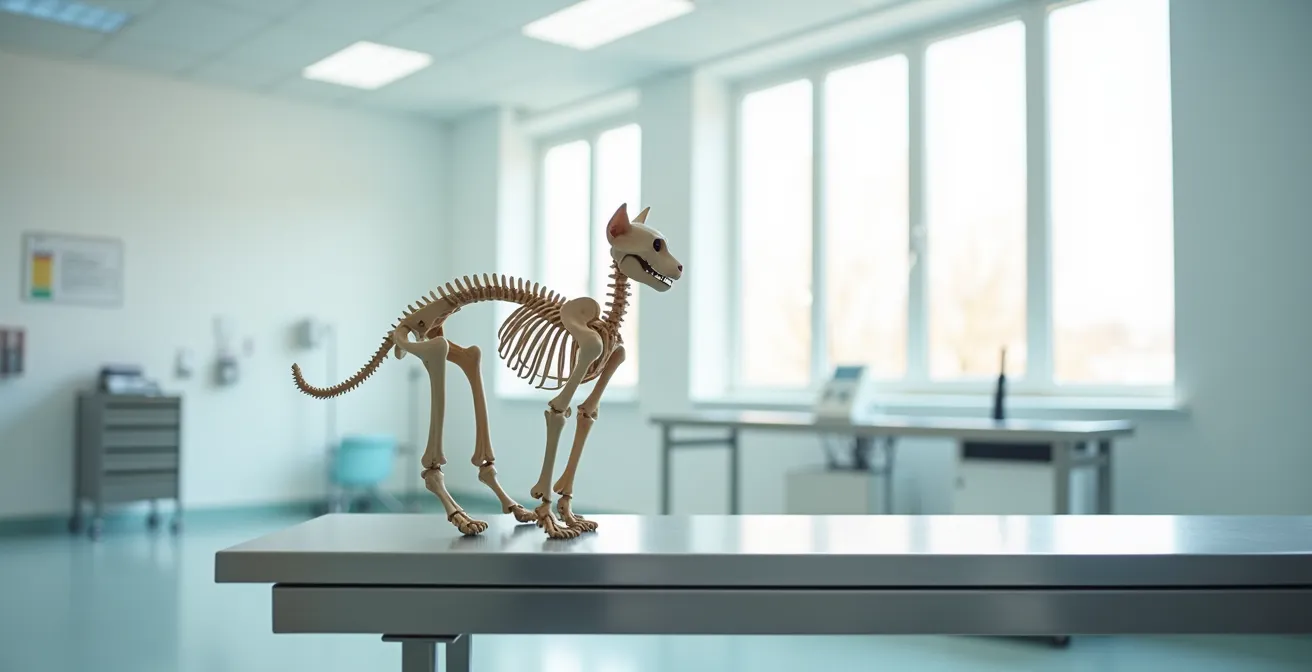
The challenge of mineral balancing in plant-based formulas is a clear indicator of their inherent unsuitability. As data from veterinary nutritionists shows, the risk of imbalance is dangerously high in these diets.
| Diet Type | Ca:P Ratio | Risk Level |
|---|---|---|
| Commercial Meat-Based | 1.2:1 – 1.5:1 | Optimal |
| Raw with Bone | 1.0:1 – 1.3:1 | Low if balanced |
| Plant-Based | Variable | High – requires precise supplementation |
| Homemade Vegan | Often imbalanced | Very High |
This table, based on information highlighted by publications like The Veterinary Nurse, demonstrates that attempting to construct a cat’s diet from plants requires overcoming fundamental mineral imbalances that simply do not exist in their natural, carnivorous diet.
Blocking Absorption: How Lentils Affect Heart Health?
In the quest to create a “complete” plant-based cat food, manufacturers often turn to legumes like peas, lentils, and chickpeas as primary protein sources. This strategy is not only insufficient, but it appears to be actively harmful. In recent years, veterinary cardiologists have noted a disturbing rise in a specific form of heart disease, Dilated Cardiomyopathy (DCM), in both dogs and cats fed “BEG” (Boutique, Exotic ingredient, Grain-free) diets, which are often high in these pulse ingredients.
DCM is a condition where the heart muscle weakens and becomes enlarged, losing its ability to pump blood effectively. In cats, DCM was historically linked almost exclusively to taurine deficiency. While many of these new vegan diets are supplemented with synthetic taurine, the problem persists. This suggests a more complex and sinister mechanism is at play. The leading hypothesis is that certain compounds within lentils and peas may act as “anti-nutrients,” actively interfering with the absorption or metabolic use of taurine and other critical nutrients, even when they are present in the food.
Research from leading institutions like Tufts University’s Cummings School of Veterinary Medicine is investigating this link. While the exact cause remains elusive, the correlation is strong. Their current working theory, as stated on their Petfoodology blog, is that compounds in these ingredients may have toxic effects on the heart. This means that even a perfectly calculated vegan formula on paper could be failing inside the cat’s body, leading to the very heart failure it was supposedly designed to prevent. It is a terrifying example of how substituting species-inappropriate ingredients can have unforeseen and fatal consequences.
Why “Chicken Meal” Can Be Superior to “Fresh Chicken” by Weight?
Pet food labels can be confusing, often leading well-intentioned consumers to make poor choices. The term “fresh chicken” sounds far more appealing than “chicken meal,” but in the context of a dry kibble, the meal is often a more concentrated and superior source of protein. “Fresh chicken” is composed of roughly 70-80% water. During the high-heat extrusion process used to make kibble, this water is cooked off. The ingredient list is ordered by pre-cooking weight, so “fresh chicken” may be listed first, but its actual contribution to the final product’s protein content is significantly diminished.
Conversely, chicken meal is fresh chicken that has already had the water and some fat rendered out, creating a highly concentrated protein powder. When chicken meal is the first ingredient, you are guaranteed a much higher percentage of animal protein in the final kibble. This is a crucial distinction for an obligate carnivore. It demonstrates that evaluating a food requires looking past marketing terms and understanding the manufacturing process.
This discussion of protein concentration ultimately leads back to the most critical, non-negotiable nutrient: taurine. This essential amino sulfonic acid is vital for vision, heart function, digestion, and a healthy immune system. As the veterinary editors at PetMD state with absolute clarity:
Most animal protein tissues such as muscle, heart, brain, and internal organs have high levels of taurine. Unfortunately, taurine is not found in plants.
– PetMD Veterinary Editorial Team, Taurine Deficiency in Cats
This single fact is the definitive argument against vegan diets for cats. No amount of supplementation with synthetic taurine can reliably overcome the potential absorption issues or replace the complex matrix of other life-sustaining nutrients found only in animal tissue. The choice between “chicken” and “chicken meal” is a fine point of optimization; the choice between meat and plants is a choice between life and death.
Key Takeaways
- A cat’s entire physiology, from its low thirst drive to its short digestive tract, is adapted for a moisture-rich, meat-based diet.
- Essential nutrients like taurine, arachidonic acid, and active Vitamin A are not bioavailable from plant sources for cats, leading to blindness and fatal heart conditions.
- Even “complete” vegan formulas with synthetic supplements carry extreme risks, as plant ingredients can interfere with nutrient absorption and create dangerous mineral imbalances.
Why Wet Food Is Superior to Dry for Preventing Male Cat Blockages?
For male cats, the superiority of wet food is a matter of life and death. Their long, narrow urethra makes them uniquely susceptible to urethral obstruction, a condition where crystals, inflammatory debris, or spasms block the passage of urine. This is a true medical emergency. A blocked cat cannot empty its bladder, causing toxins to build up in the bloodstream and leading to excruciating pain, kidney failure, and death within 24-48 hours if not treated.
The single most important factor in preventing this condition is hydration. A well-hydrated cat produces more dilute urine, which is less likely to form dangerous crystals (struvite or calcium oxalate) and helps flush the bladder regularly. As established, cats have a poor thirst drive and are designed to get moisture from their food. A cat on a 100% wet food diet consumes significantly more total water than a cat on a dry food diet, even if the dry-fed cat is seen drinking from its bowl. This high water throughput is the best defense against urinary tract disease.
According to Cornell University’s Feline Health Center, cats need to consume about 4 ounces of water per five pounds of lean body weight daily. A wet, meat-based food effortlessly provides this, supporting not only urinary health but also kidney function and overall well-being. A dry, plant-based diet is a recipe for chronic dehydration and puts male cats at an exceptionally high risk for this agonizing and fatal condition. Promoting wet food is not a preference; it is a critical animal welfare measure.
The biological evidence is overwhelming and unequivocal. To be a responsible and ethical cat owner, you must set aside human dietary ideologies and honor the profound, unchangeable nature of the animal in your care. Providing a species-appropriate, meat-based diet is not simply the best option; it is the only option for a healthy life.