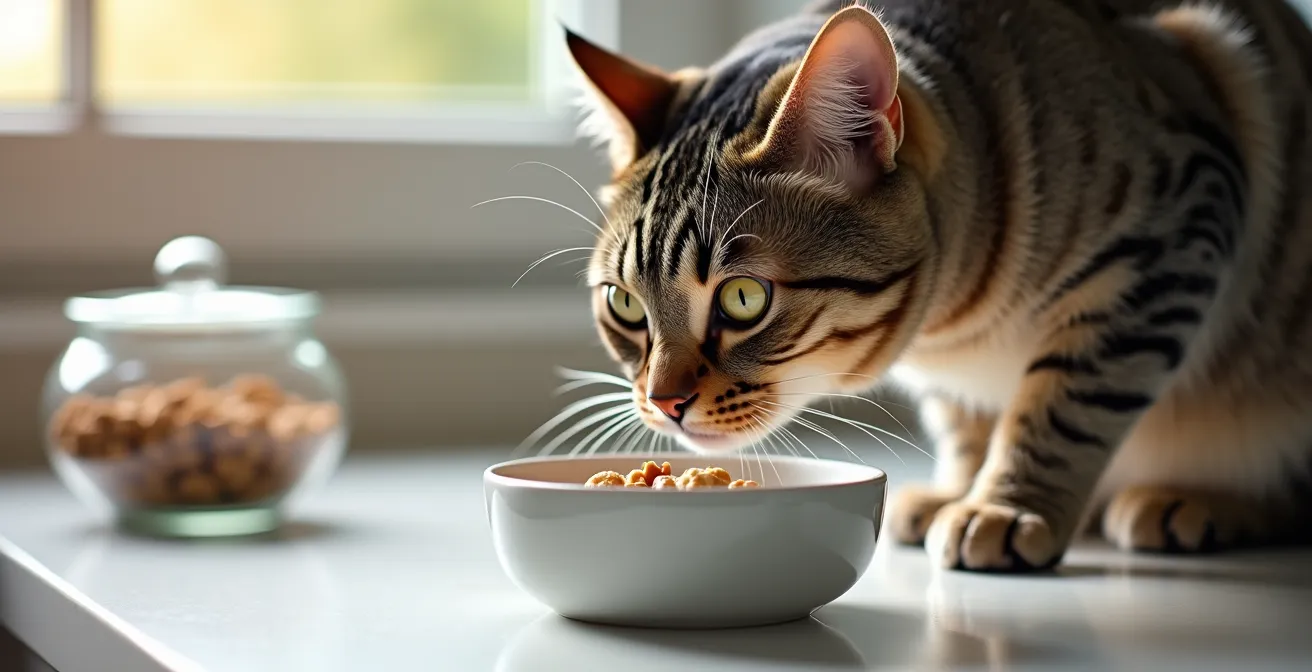
Contrary to the convenience-driven belief that dry food is sufficient, the science is clear: relying on kibble places a male cat’s urinary system under constant metabolic stress.
- Wet food provides essential hydration that cats are biologically programmed to get from their prey, keeping urine dilute and hostile to crystal formation.
- Dry foods, including “grain-free” varieties, are often high in carbohydrates and plant proteins that can increase urine pH and contribute to the very blockages they claim to prevent.
Recommendation: Prioritizing a high-protein, low-carbohydrate wet food diet is the single most effective nutritional strategy to safeguard your cat’s long-term urological health.
The sight of a male cat straining in the litter box is a fear that haunts many owners. A urinary blockage is a life-threatening emergency, and the anxiety surrounding its prevention is immense. Well-meaning advice often focuses on encouraging drinking with water fountains or adding ice cubes to a bowl. While any extra water is good, this approach misses the fundamental, biological truth of feline health: cats are desert animals with a naturally low thirst drive, designed to get the vast majority of their hydration directly from their food.
This biological imperative is where the superiority of wet food becomes undeniable. Shifting the focus from the water bowl to the food bowl is the most critical step in preventative urological care. The problem isn’t just a lack of water; it’s the entire nutritional matrix of the typical dry food diet—low in moisture, high in carbohydrates, and often filled with plant-based proteins—that creates a favorable biochemical environment for crystal formation. A kibble-based diet puts a cat’s urinary system under a state of chronic, low-level dehydration and metabolic stress.
This guide moves beyond the simplistic “wet food has more water” argument. As a urology-focused nutritionist, we will deconstruct the physiological reasons why a species-appropriate, high-moisture diet is a non-negotiable medical necessity for at-risk male cats. We will explore how to read a label to uncover hidden nutritional risks, why certain “healthy” ingredients can be detrimental, and how to overcome the practical barriers of cost and pickiness to protect your cat’s urinary health for life.
To fully understand this preventative approach, this article breaks down the core scientific principles and provides actionable strategies for implementation. The following sections will guide you through the crucial differences in hydration, the hidden dangers in food labels, and the practical steps to successfully transition and maintain a urinary-safe diet.
Summary: Why Wet Food Is Non-Negotiable for Preventing Male Cat Urinary Blockages
- Wet vs. Dry: How Much Water Does a Cat Need from Food?
- The Label Mistake That Leads to Nutritional Deficiencies in 3 Months
- Blocking Absorption: How Lentils Affect Heart Health?
- Why Vegan Diets Are Fatal for Cats: The Taurine Requirement
- Pâté vs. Shreds: How to Handle a Texture-Averse Cat?
- Microwave vs. Warm Water: How to Revive Scent for Senior Pets?
- Glass vs. Plastic: How to Store Open Cans to Avoid Oxidation?
- 50/50 Feeding: How to Balance Kibble and Cans on a Budget?
Wet vs. Dry: How Much Water Does a Cat Need from Food?
The foundational argument for wet food begins and ends with hydration, but the scale of the difference is often underestimated. A cat’s natural prey, like a mouse, is about 70% water. A species-appropriate diet should mirror this. The data is stark, highlighting the dramatic hydration difference between food types: wet food typically contains 70-80% moisture, while dry food hovers around a meager 10%. A cat on a dry-food-only diet must drink significantly more water from a bowl to compensate, something their low thirst drive makes them notoriously poor at achieving. This leads to a state of chronic, sub-clinical dehydration.
This dehydration has a direct and measurable impact on urine concentration, a key risk factor for blockages. The concentration is measured by Urine Specific Gravity (USG). A healthy, dilute USG for a cat is around 1.020. Veterinary studies consistently show that cats on dry food diets often have a dangerously concentrated USG exceeding 1.045. This high concentration means minerals like struvite and calcium oxalate are less soluble, making them far more likely to precipitate out of solution and form dangerous crystals and stones. In fact, it’s estimated that up to 10% of male cats may experience a urinary blockage at some point in their lives, a risk directly magnified by concentrated urine.
Feeding a moisture-rich diet is the single most effective way to lower USG and create a urinary environment that is biochemically hostile to crystal formation. The numbers speak for themselves.
| Diet Type | Water from Food | Water Needed from Bowl | Hydration Deficit Risk |
|---|---|---|---|
| 80% Moisture Wet Food | ~190 ml | ~50 ml | Low |
| 10% Moisture Dry Food | ~25 ml | ~215 ml | High – cats rarely drink enough |
| 50/50 Mix | ~107 ml | ~133 ml | Moderate |
The Label Mistake That Leads to Nutritional Deficiencies in 3 Months
Beyond hydration, the nutritional composition of food plays a pivotal role in urinary health. As obligate carnivores, cats are metabolically adapted to a diet high in animal protein and fat, with minimal carbohydrates. Dry foods, by their very nature of manufacturing, require starches and carbohydrates to form and hold the kibble shape. This leads to a diet that is fundamentally at odds with feline physiology. The common label mistake is looking only at the protein percentage and ignoring the hidden carbohydrate load, which can place significant metabolic stress on a cat.
The “Guaranteed Analysis” on a pet food label doesn’t list carbohydrates, but you can calculate a rough estimate. This calculation reveals that many popular dry foods, even expensive “premium” ones, can contain 25-40% or more carbohydrates on a dry matter basis. This high carb load not only contributes to obesity and diabetes risk but can also alter urine pH, creating a more favorable environment for struvite crystal formation. A food with 40% protein might seem good, but once you account for its 12% moisture, another food with only 12% protein but 80% moisture can actually have a higher percentage of protein on a dry matter basis, proving wet food is often more protein-dense.
Learning to see past the marketing and calculate the true nutritional profile of your cat’s food is a crucial skill for any proactive owner. It empowers you to choose a truly species-appropriate diet rather than relying on package claims.
Your Action Plan: Calculate Hidden Carbohydrates in Cat Food
- Find the “Guaranteed Analysis” on your cat food label and note the percentages for protein, fat, fiber, and moisture.
- If ash content isn’t listed, use an estimate: 3% for canned foods and 6% for dry foods is a reasonable starting point.
- Add up the percentages for protein, fat, fiber, moisture, and ash.
- Subtract this total from 100%. The result is the estimated carbohydrate percentage on an “as fed” basis.
- To get the most accurate picture, convert to a dry matter basis: (Carbohydrate % / (100 – Moisture %)) x 100 gives you the true carb content your cat’s body processes.
Blocking Absorption: How Lentils Affect Heart Health?
In the quest to remove grains, many pet food manufacturers created the “grain-free fallacy.” They simply replaced grains like corn and wheat with other high-carbohydrate fillers like lentils, peas, and potatoes. This often resulted in kibble with an even higher carbohydrate content than the original formulas, sometimes exceeding 30% on a dry matter basis. These ingredients pose specific risks to feline health that go beyond just being species-inappropriate starches.
Legumes like lentils and peas present a double threat. First, their high content of fermentable fiber can alter the gut microbiome and interfere with the normal recycling of bile acids. This is significant because bile acids are essential for the absorption and conservation of taurine, a critical amino acid that cats cannot synthesize themselves. A deficiency in taurine can lead to serious health issues, including dilated cardiomyopathy (DCM), a potentially fatal heart condition. Second, the plant-based proteins in these ingredients are metabolized differently than animal proteins. They tend to raise urine pH, making it more alkaline, which directly increases the risk of struvite crystal formation—the most common type involved in male cat blockages.
The practice of “ingredient splitting” on labels can be deceptive, listing “pea protein,” “pea fiber,” and “yellow peas” as separate items to mask how much of the food is composed of legumes. A vigilant owner must learn to spot these ingredients and understand their potential impact.
- Check the first five ingredients: Animal proteins (e.g., chicken, turkey) should dominate the list, not legumes.
- Look for ingredient splitting: Be wary if you see multiple pea or lentil-based ingredients listed separately.
- Avoid foods where legumes appear before the third ingredient, as this indicates they are a primary component.
Why Vegan Diets Are Fatal for Cats: The Taurine Requirement
The concept of a vegan diet for a cat is the most extreme and dangerous deviation from their biological needs. It represents a fundamental misunderstanding of feline physiology. As esteemed feline nutritionist Dr. Lisa A. Pierson, DVM, states, this is not a matter of opinion but of biological fact.
Cats are obligate carnivores and are designed to get their protein from animal sources, not plants.
– Dr. Lisa A. Pierson, DVM, CatFoodInfo.org
An obligate carnivore is an animal that must consume meat to survive. They lack the specific metabolic pathways to synthesize certain essential nutrients from plant matter. The most critical of these is taurine, which is abundant in animal muscle tissue but virtually absent in plants. A cat fed a vegan diet will inevitably develop a taurine deficiency, leading to irreversible retinal degeneration (blindness) and dilated cardiomyopathy (heart failure). There is no “if” — it is a biological certainty.
Beyond the fatal lack of taurine, plant-based diets create a urological catastrophe. As documented in feline nutrition studies, plant-based proteins inherently raise urine pH to levels above 7.0. This alkaline environment is the ideal chemical condition for the formation of struvite crystals. In essence, a vegan diet not only starves the cat of essential nutrients for heart and eye health but also actively creates the perfect storm for a painful and life-threatening urinary blockage. For a cat, particularly a male cat, a vegan diet is not a lifestyle choice; it is a death sentence.
Pâté vs. Shreds: How to Handle a Texture-Averse Cat?
Even with a full understanding of wet food’s benefits, the most common practical obstacle is the cat itself. Many cats, particularly those raised exclusively on kibble, become “texture-averse” and will refuse wet food. This isn’t just stubbornness; it’s a powerful neophobic response. For a cat, texture is a primary characteristic of food. Research from Massey University confirms that texture is the second most common reason for food rejection, right after smell.
The key to overcoming this is patience and a systematic approach, not force. The “Texture Ladder Transition Method” involves a slow, gradual introduction that allows the cat to become familiar with the new food on its own terms. Never starve a cat into eating a new food, as this can lead to a dangerous and potentially fatal condition called hepatic lipidosis (fatty liver disease).
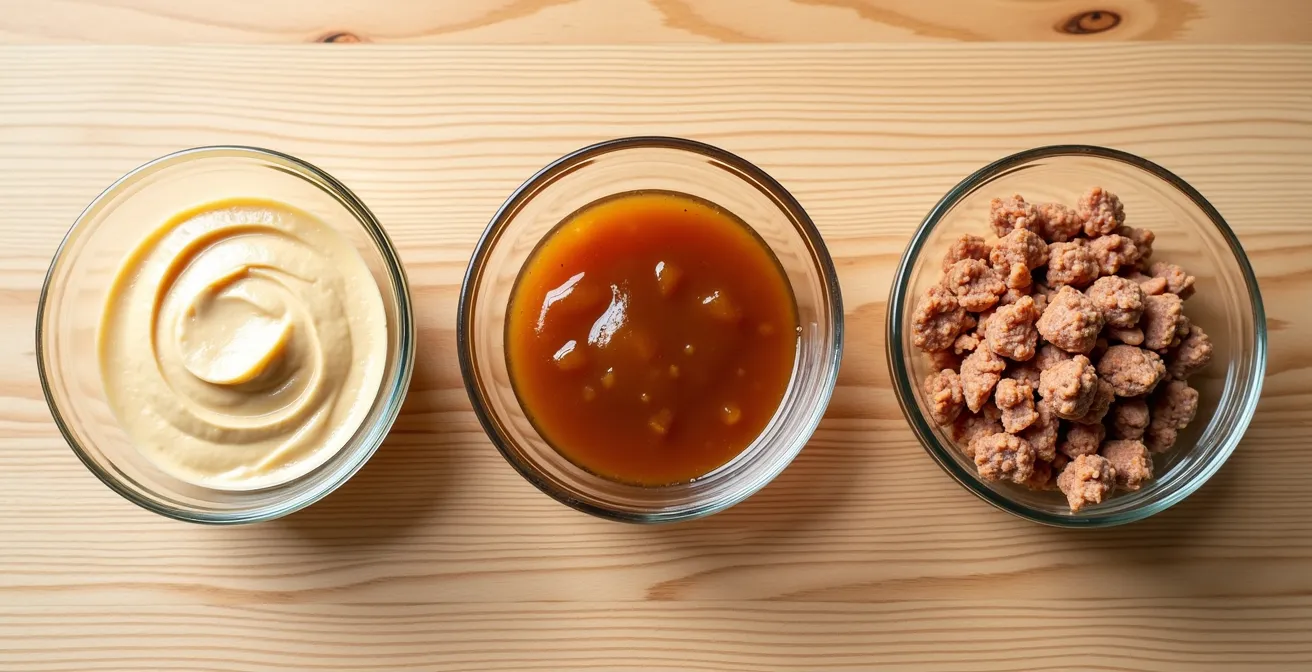
The goal is to find what your cat will accept, which may require experimentation. Some cats despise the uniform consistency of pâté but will readily eat shreds in gravy. Others may prefer minced textures. Don’t be discouraged if a chicken pâté is rejected; a duck or rabbit version of the same texture might be accepted. The process can take weeks or even months, but persistence is vital for their long-term health.
- Week 1: Place a small amount of the new texture food in a separate dish next to their regular food. Do not mix. Let the cat sniff and explore without pressure.
- Week 2: Create a “scent bridge.” Crush some of their favorite kibble or treats and sprinkle the dust on top of the new food to make it smell more familiar.
- Week 3: Begin mixing. Start with a tiny amount, such as 95% old food and 5% new. If accepted, gradually increase the new food by about 10% every few days.
- Week 4: If you meet resistance, try a different texture (shreds, minced, chunks) or a different protein source. Palatability is highly individual.
- Week 5: During the transition, using a highly palatable, high-fat option like a classic pâté can sometimes help win over a skeptical cat.
Microwave vs. Warm Water: How to Revive Scent for Senior Pets?
A cat’s willingness to eat is driven heavily by scent, and cold food straight from the refrigerator has a muted aroma. This is especially true for senior cats, whose sense of smell can diminish with age. Warming the food slightly can dramatically increase its palatability by releasing volatile aromatic compounds. However, the method of warming is critical. Microwaving is fast, but it’s a destructive and dangerous choice. It creates hot spots that can burn a cat’s mouth and, more importantly, according to feline nutrition analysis, it can destroy essential water-soluble vitamins like taurine and B vitamins.
The safest and most effective method is a gentle warm water bath, or a “cat-safe bain-marie.” This technique gently brings the food up to “mouse body temperature” (around 100°F or 38°C), the ideal temperature for feline acceptance, without degrading its nutritional integrity.
The Cat-Safe Bain-Marie Protocol
A veterinary clinic documented significant success with the warm water bath method. By placing a cat’s single-serving meal in a small glass dish and setting that dish in a larger bowl of warm (not hot) water for 2-3 minutes, the food was gently heated. This simple protocol resulted in a 40% increase in food consumption compared to serving the food cold, a particularly vital improvement for senior and convalescing cats with diminished appetites and sense of smell.
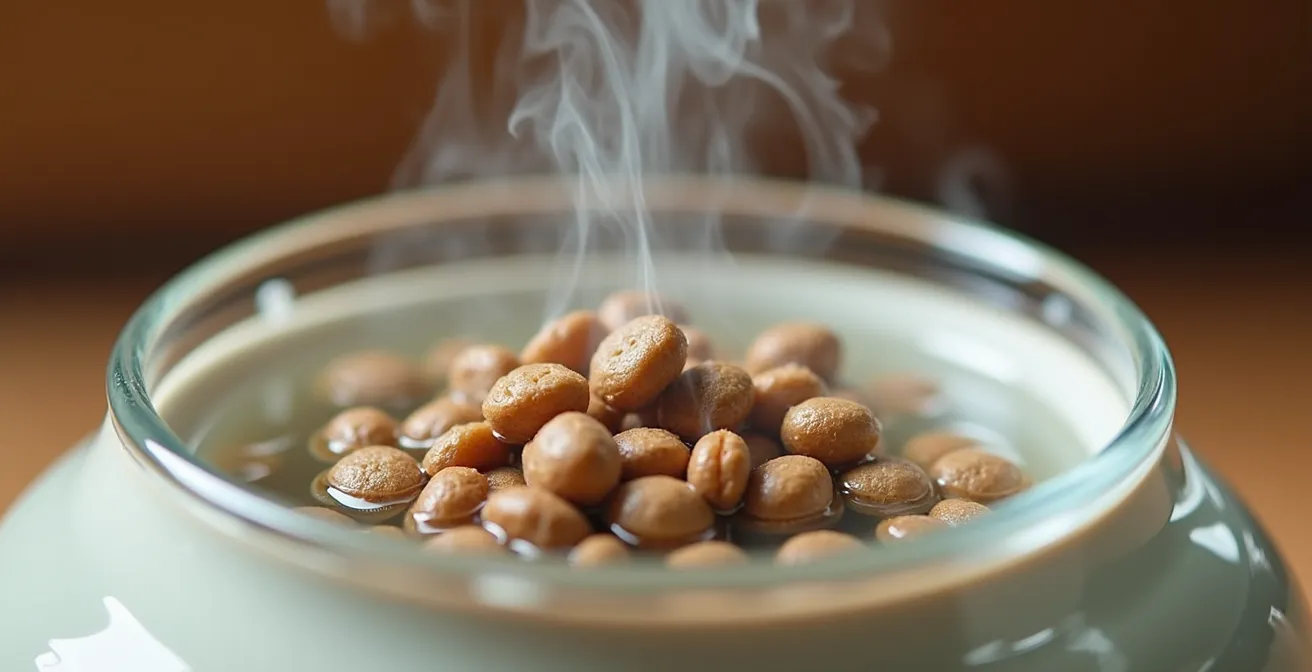
This simple step can be the difference between a cat eating a healthy meal and refusing it. By respecting the food’s nutritional composition while enhancing its aroma, you cater directly to your cat’s sensory instincts, making mealtime a more successful and positive experience.
Glass vs. Plastic: How to Store Open Cans to Avoid Oxidation?
Once you’ve committed to wet food, proper storage is essential to maintain its freshness, safety, and palatability. Leaving an open can in the refrigerator, even with a plastic lid, is a common but flawed practice. The metal can impart a metallic taste to the food, and the large surface area of exposed food leads to rapid oxidation. Oxidation not only degrades fats and vitamins but also alters the taste and smell, making it less appealing to a discerning cat.
Furthermore, plastic containers, even those labeled “BPA-free,” pose a risk. Plastic is porous, absorbs odors that can deter a cat, and can be scratched. These microscopic scratches can harbor bacteria and potentially leach other chemicals into the food over time. The gold standard for storing leftover wet food is using inert materials like glass or stainless steel. These materials do not react with the food, do not absorb odors, and are easily sterilized.
The best practice is the “Immediate Portioning Storage Strategy.” As soon as you open a new can, divide the entire contents into single-serving portions in airtight glass containers. This minimizes air exposure for each portion, keeping it fresher for longer and making mealtimes faster and more convenient.
| Material | Chemical Safety | Odor Prevention | Durability |
|---|---|---|---|
| Glass | 100% inert, no leaching | Excellent | Fragile but long-lasting |
| Stainless Steel | Completely safe | Very Good | Virtually indestructible |
| Plastic | BPA/chemical leaching risk | Poor – absorbs odors | Degrades over time |
| Original Can | Metal taste transfer | Poor once opened | Single use only |
- Immediately after opening a can, divide the contents into single-serving portions.
- Use only glass or stainless steel containers with airtight lids.
- Fill each container as much as possible to minimize the air space above the food.
- Seal each container and store it in the coldest part of the refrigerator.
- Label with the date and aim to use all portions within 3 days for optimal freshness.
Key Takeaways
- A cat’s low thirst drive is a biological trait from their desert ancestors; they are designed to get hydration from food (70%+ moisture), not a water bowl.
- Dry food, with only 10% moisture, forces a state of chronic dehydration that concentrates urine (high USG), dramatically increasing the risk of crystal formation.
- Many “grain-free” kibbles substitute grains with high-carbohydrate legumes (peas, lentils) that can alter urine pH and interfere with essential taurine absorption.
50/50 Feeding: How to Balance Kibble and Cans on a Budget?
The most significant barrier for many owners switching to a wet-food-dominant diet is cost. There is no denying that, ounce for ounce, canned food is more expensive than kibble. However, this cost must be weighed against the potential expense of treating a urinary blockage. The financial reality of this medical emergency is staggering. According to veterinary cost data, standard blockage removal surgery can cost $3,000 or more, with a devastatingly high recurrence rate of 40-50% within one year for cats who remain on a poor diet. In this light, a higher monthly food bill can be seen as a form of preventative health insurance.
For those on a tight budget, an all-or-nothing approach isn’t necessary. A “50/50” or mixed-feeding approach can still provide significant benefits, provided it is done strategically. The goal should be to maximize moisture intake while minimizing cost and the negative impact of dry food. This means prioritizing wet food as the core of the cat’s caloric intake and using kibble sparingly and intelligently, not as a primary source of nutrition.
A strategic integration plan focuses on value and purpose. This isn’t about filling one bowl with wet and one with dry; it’s about using each food type for a specific role while ensuring hydration remains the top priority.
- Prioritize Wet Food: Aim for a minimum of 75% of your cat’s daily calories to come from high-quality wet food to ensure adequate hydration.
- Use Kibble as a Tool: Use small amounts of a VOHC-approved dental kibble as occasional treats or for enrichment, not as a main meal.
- Make Kibble Work for Them: Place any dry food offered into puzzle feeders. This provides mental stimulation and slows down consumption.
- Calculate True Cost: The most economical wet foods are often large cans of simple pâté. Calculate the cost per 100 calories, not per can, to find the best value.
- Stretch Your Cans: You can increase hydration and volume without extra cost by mixing a tablespoon or two of warm water into each wet food meal.
Transitioning your cat to a species-appropriate, high-moisture diet is not just a preference; it is a critical act of preventative healthcare. By understanding the science and implementing these practical strategies, you provide your cat with the single greatest nutritional defense against painful and life-threatening urinary blockages.