
Your indoor cat isn’t in a sterile bubble; it’s a potential biological vector for parasites that threaten your family’s health.
- Parasite eggs enter your home on shoes and clothes, contaminating floors and furniture.
- Fecal tests often give false negatives, missing active but non-shedding worm infestations.
Recommendation: The only effective strategy is proactive, year-round deworming as a public health measure, not just a pet treatment.
As a responsible pet owner, you believe your indoor cat lives in a protected sanctuary, shielded from the dangers of the outside world. You meticulously manage their diet, provide a clean environment, and assume that “indoor-only” equals “invulnerable.” This assumption, however, is a dangerous oversight. The most significant threats are often invisible, carried into your home on the soles of your shoes or by a single, unnoticed flea. These are not just threats to your cat; they represent a direct zoonotic bridge to your family.
The common wisdom is that only hunting cats or those with outdoor access get worms. This leads to a false sense of security, where deworming is seen as an unnecessary precaution for an apartment-dwelling feline. But what if the greatest risk wasn’t your cat getting sick, but your cat becoming a silent Trojan horse? What if it could transmit parasites capable of causing serious illness, even blindness, in your children, all while appearing perfectly healthy?
This article moves beyond the typical pet-centric advice. As a zoonosis prevention officer, my duty is to reframe this issue from a public health perspective. We will dismantle the myth of the “sterile home” and expose the tangible risks that an undewormed indoor cat poses to the human members of its household. We will explore how your home becomes a contamination zone, why veterinary tests can be misleading, and why proactive deworming is a non-negotiable act of protection for your entire family.
This guide provides a clear, evidence-based look at the invisible parasite threat posed by indoor cats. By understanding the risks and the science behind prevention, you can take the necessary steps to safeguard the health of both your pet and your family. The following sections break down the specific dangers and solutions.
Summary: Why Proactive Deworming for Indoor Cats Is a Family Health Imperative
- Visceral Larva Migrans: The Risk of Kids Playing in Sandboxes
- Rice Grains on the Bed: Where Do They Come From?
- False Negatives: Why a Clean Fecal Test Doesn’t Guarantee No Worms?
- Pale Gums: Identifying Life-Threatening Anemia in Puppies
- Monthly vs. Quarterly: How Often Should You Deworm Based on Lifestyle?
- Shoes and Tires: How You Walk the Virus Into Your House?
- How Often Should You Scoop for 2 Cats in a Small Apartment?
- Why Enzymatic Toothpaste Works Even If You Don’t Scrub Perfectly?
Visceral Larva Migrans: The risk of kids playing in sandboxes
The most chilling reason to deworm an indoor cat has little to do with the cat itself and everything to do with the people it lives with, especially children. Roundworms (Toxocara cati) are common intestinal parasites in cats. While they may cause only mild digestive upset in your pet, their eggs, passed in feces, can become a serious human health hazard. Once in the environment—like a litter box, a potted plant, or on a carpet—these microscopic eggs can be accidentally ingested. In humans, particularly children who often put their hands in their mouths, the larvae that hatch do not mature into adult worms. Instead, they migrate through the body, a condition known as Visceral Larva Migrans.
When these larvae travel to the eye (Ocular Larva Migrans), they can cause inflammation and scarring, leading to permanent vision loss or even blindness. When they migrate to organs like the liver or central nervous system, they can cause fever, pain, and other serious symptoms. The threat is not hypothetical; medical data indicates a seroprevalence of 5-15% for Toxocara in U.S. children, with thousands of clinical cases diagnosed annually. Your home contains several high-risk zones where this transmission can occur:
- Litter boxes: The primary source of egg contamination, requiring daily cleaning.
- Potted plant soil: Can harbor eggs tracked in from outside.
- Carpets and rugs: Trap microscopic eggs from shoes and paws.
- Children’s play areas: Toys and surfaces that make contact with the floor.
- Entryways: Where outdoor contaminants first enter the home.
Deworming your cat breaks this cycle at its source, preventing it from shedding the eggs that create this invisible threat within your home. It transforms deworming from a simple pet care task into a critical public health measure for your family.
Rice Grains on the Bed: Where do they come from?
Finding small, hard, sesame seed or rice-like specks on your cat’s bedding, your furniture, or even your own bed can be a disconcerting experience. These are not grains of rice; they are tapeworm segments (proglottids). Each segment is essentially a self-contained packet of tapeworm eggs. While the adult tapeworm (Dipylidium caninum) lives inside your cat’s intestine, these segments detach and are passed in the feces or crawl out of the anus, drying up and releasing their eggs into the environment.
This brings up a critical question for the skeptical indoor cat owner: how did it get there? The answer is almost always fleas. Flea larvae ingest tapeworm eggs present in the environment. The flea matures, carrying the tapeworm cyst. Even a strictly indoor cat is at risk because a single flea can hitch a ride into your home on your clothing, on a visiting pet, or simply find its way inside from the outdoors. When your cat grooms itself and swallows just one infected flea, the tapeworm lifecycle begins anew inside its body. Elanco pet health data shows that fleas carrying tapeworms can easily infiltrate homes, putting indoor-only cats at significant risk.
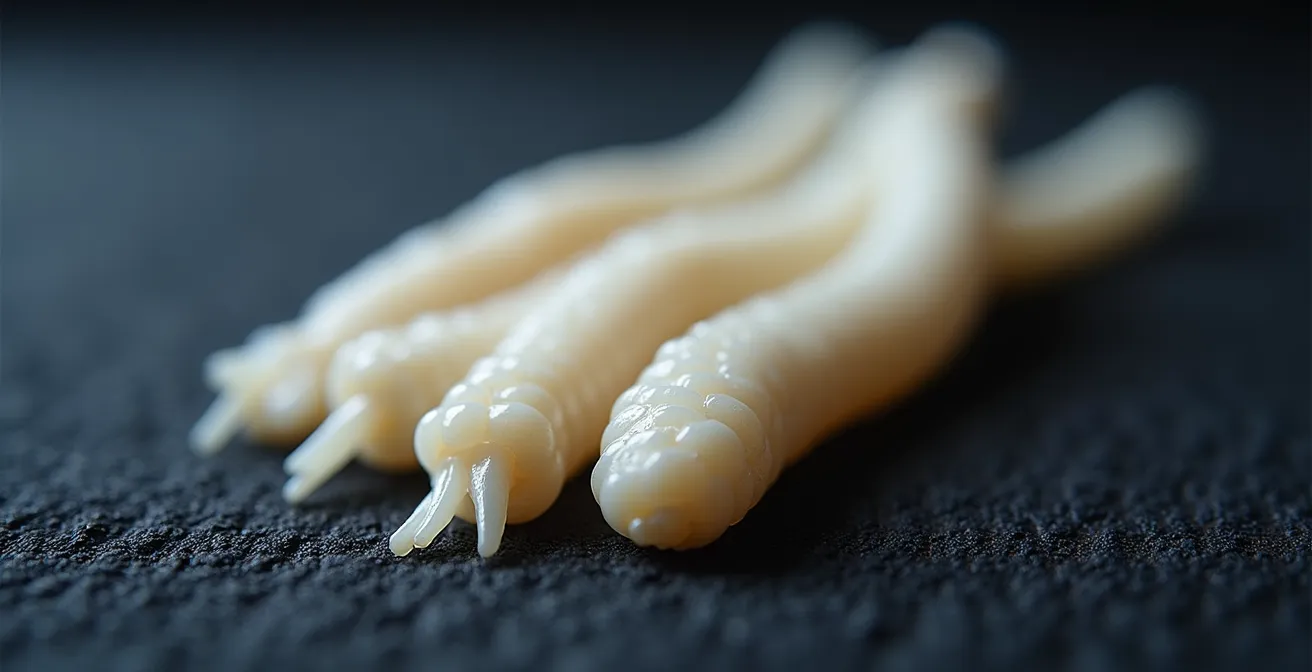
While direct transmission of this type of tapeworm to humans is rare, it is possible, especially in children who might accidentally ingest an infected flea. More importantly, the presence of tapeworm segments is an undeniable sign that your “protected” indoor environment has been breached by other parasites. It’s a visible indicator of an invisible flea problem and a clear signal that your cat’s parasite prevention strategy is failing.
False Negatives: Why a clean fecal test doesn’t guarantee no worms?
One of the most common rebuttals from a skeptical owner is, “But my cat’s fecal test was clean.” This reliance on a single diagnostic test creates a dangerous false sense of security. A negative fecal test does not mean your cat is free of parasites. There are several key reasons why a test can miss an active infection, turning it into a game of biological chance.
The primary reason is the nature of parasite lifecycles. Worms do not shed eggs continuously. There are periods, known as the “prepatent period,” after infection but before the worm matures and starts producing eggs. During this time, the cat is infected, but no eggs will be found in a fecal sample. Furthermore, many parasites exhibit intermittent shedding, meaning they release eggs sporadically. A fecal sample is just a tiny snapshot in time; if it’s collected on a day when the worms aren’t shedding, the test will come back negative, even with a heavy worm burden. As the Summer Street Cat Clinic notes, this is an evolutionary advantage for parasites to evade detection. To get a positive result, you have to be lucky enough to test a sample that contains eggs at that exact moment.
This is why veterinarians and public health experts advocate for proactive deworming over reactive testing. Waiting for a positive test means you are waiting for your cat to be actively contaminating your home. As veterinarian Dr. Amanda German states:
The reality of it is, parasites can be pretty tenacious. The products that we use for deworming are safe and effective, and every cat should be dewormed a minimum of once a year, even if they’re an indoor cat.
– Dr. Amanda German, The Drake Center for Veterinary Care
Relying solely on fecal tests is a passive, and often ineffective, approach. Proactive deworming is the only strategy that ensures your cat—and your home—are protected, regardless of what a single test shows.
Pale Gums: Identifying life-threatening anemia in kittens
While the zoonotic risk to humans is a primary concern, a heavy worm burden can be life-threatening to your cat, especially kittens. Hookworms are particularly insidious parasites. They attach to the intestinal wall and feed on blood. In a small kitten, even a moderate number of these tiny worms can lead to severe, life-threatening anemia (a lack of healthy red blood cells). In fact, Carolina Value Pet Care veterinarians confirm that virtually every kitten is born with or acquires roundworms and hookworms from its mother, either through the placenta or milk. This means kittens start their lives already carrying a parasite load.
One of the most reliable signs of anemia you can check for at home is the color of your cat’s gums. Healthy gums should be a robust pink color. Gums that are pale pink or white are a major red flag for anemia and warrant an immediate veterinary visit. This condition can progress rapidly in kittens, leading to weakness, lethargy, and death if left untreated. Regular deworming, starting from a very young age, is critical to prevent this from ever happening.
Performing a quick check at home can help you stay vigilant about your cat’s health. This simple audit allows you to spot early warning signs before they become a crisis.
Your 5-second home health check for cat anemia
- Expose the gums: Gently lift your cat’s upper lip to get a clear view of the gum tissue above the teeth.
- Check the color: Observe the color. Healthy gums should be pink, similar to the color of bubble gum. Pale pink or white is a warning sign.
- Test capillary refill time: Press your finger gently but firmly on the gum for a second. The spot should turn white. Release and time how long it takes for the pink color to return. It should be less than 2 seconds.
- Assess for paleness: If the gums are pale overall or the color returns slowly, it can indicate poor circulation or anemia, often caused by hookworms.
- Look for other signs: Correlate your findings with other symptoms of anemia, such as lethargy, a decreased appetite, or your cat seeking out unusually warm places to rest.
Monthly vs. Quarterly: How often should you deworm based on lifestyle?
Once you accept that all cats need deworming, the next logical question is, “How often?” The answer isn’t one-size-fits-all; it depends entirely on your cat’s specific lifestyle and risk factors. A “one-and-done” annual treatment is the absolute bare minimum, but for many indoor cats, a more frequent schedule is necessary to provide adequate protection for both the pet and the household.
The key is to perform an honest risk assessment. Does your cat hunt insects inside the house? Do you have a dog that goes outside and could bring in fleas? Do you live in a multi-cat household where parasites can spread rapidly through shared litter boxes? Each of these factors increases the risk of exposure and warrants a more aggressive prevention schedule. A veterinarian is the best resource for creating a tailored plan, but general guidelines exist based on lifestyle.

This table, based on recommendations from veterinary sources, provides a clear framework for deciding on the appropriate deworming frequency. It highlights that even the lowest-risk cat requires treatment multiple times a year. As this comparative analysis from Elanco shows, lifestyle is the determining factor.
| Cat Type | Deworming Frequency | Risk Factors |
|---|---|---|
| Indoor-only cats | Every 3 months (minimum) | Eggs on shoes, fleas from visitors |
| Indoor cats with outdoor access | Every 3 months | Periodic outdoor exposure |
| Hunting cats | Monthly | Infected prey consumption |
| Multi-cat households | Every 3 months | Shared litter boxes |
| Kittens | Every 2 weeks until 12 weeks old | Maternal transmission |
Shoes and Tires: How you walk the parasite eggs into your house?
The “sterile bubble” theory of an indoor-only cat bursts the moment you walk through your front door. You are the primary biological vector. Microscopic parasite eggs, like those of roundworms, are incredibly resilient and sticky. They are ubiquitous in the outdoor environment—in soil, on sidewalks, and in parks where other animals have defecated. You walk through these contaminated areas, and the eggs adhere to the soles of your shoes.
When you enter your home without removing your shoes, you effectively stamp these invisible invaders all over your floors, carpets, and rugs. Your cat then walks across these surfaces, picking up the eggs on its paws. Later, during its meticulous grooming routine, the cat ingests the eggs, and the infection begins. This is not a rare or unlikely scenario; it is the most common way indoor cats become infected with roundworms. As Dr. Amanda German from Loch Haven Veterinary Hospital confirms, “indoor cats can also get intestinal parasites because we could inadvertently bring the parasite eggs in on our shoes.”
To mitigate this constant threat, you must think of your home’s entryway as a decontamination zone. Implementing strict protocols can significantly reduce the number of contaminants you introduce. This isn’t about paranoia; it’s about practical biosecurity for the health of your family and pets. Consider these steps to fortify your home’s entrance:
- Implement a strict “shoes off at the door” policy for all household members and guests.
- Use a dedicated doormat for wiping feet before entry.
- Establish a shoe storage area immediately inside the door, away from main living areas.
- Wipe down the paws of any pets that do go outside before they roam the house.
- Regularly vacuum and clean entryways and high-traffic areas where contaminants are likely to accumulate.
Even with these measures, no system is perfect. The risk of an egg making its way inside remains, which is why proactive deworming is the essential backstop to environmental controls.
How often should you scoop for 2 cats in a small apartment?
In the context of parasite prevention, the litter box is ground zero. It is the primary site where parasite eggs are shed into the domestic environment. For a skeptical owner, understanding the science behind litter box hygiene can transform it from a chore into a critical public health task. The frequency of scooping is not about odor control; it’s about interrupting the parasite lifecycle.
Many parasite eggs are not immediately infectious when passed in feces. For example, CDC parasitology data confirms that Toxocara (roundworm) eggs require an incubation period in the environment of one to four weeks to embryonate and become capable of causing infection. This creates a crucial window of opportunity. By scooping the litter box at least once daily, you physically remove the feces and the eggs they contain before they can mature into a threat for other pets or people in the household.
This becomes exponentially more important in multi-cat households. As Blue Oasis Pet Hospital emphasizes, if one cat is shedding eggs, the shared litter box becomes a hub of transmission, quickly infecting all other cats who use it. In a small apartment with two cats, daily scooping is the absolute minimum. The ideal protocol is to scoop twice a day and to provide one more litter box than the number of cats you have (e.g., three boxes for two cats). This reduces competition for clean spaces and minimizes the chance of a cat encountering infectious material. Failing to maintain this level of hygiene effectively turns your litter box into a parasite incubator.
Key Takeaways
- Zoonotic Risk is Real: Indoor cats can transmit parasites like roundworms to humans, causing serious conditions like Visceral Larva Migrans, especially in children.
- Your Home is Not Sterile: Parasite eggs enter your home on shoes and clothing, turning your living space into a potential contamination zone.
- Proactive Prevention is Key: Fecal tests can give false negatives. The only reliable strategy is regular, preventative deworming based on your cat’s lifestyle risk factors.
Passive Protection: How modern dewormers act like a silent guardian
The final piece of the puzzle lies in understanding how modern preventative medications work. Many owners think of deworming as a harsh, reactive treatment to be used only when a problem is confirmed. The reality is that today’s medications are designed for passive, continuous protection, acting as a silent guardian for your pet. This concept is similar to how enzymatic toothpaste works on teeth: its action continues long after the initial application, breaking down plaque without constant scrubbing.
Many modern, broad-spectrum parasite preventatives that owners use monthly for flea and heartworm protection also control common intestinal worms. As PetMD explains, this year-round prevention is now recommended even for indoor-only cats. When you administer these monthly treatments, you are not just waiting for a worm to show up; you are maintaining a level of protection in your cat’s system that can kill newly acquired larvae before they have a chance to mature, reproduce, and be shed into your home environment.
Most of these dewormers work by paralyzing and killing the worms, which are then passed harmlessly from the cat’s system. According to Elanco Animal Health, this regular, continuous worming is vital to help remove any further worms your cat may pick up between doses. This shifts the strategy from “detect and destroy” to “prevent and protect.” It ensures that even if a parasite egg makes it past your environmental controls and is ingested by your cat, its lifecycle is stopped dead in its tracks. It is the ultimate safety net that protects not only your cat but also ensures your home does not become a reservoir for zoonotic parasites.
Ultimately, safeguarding your household is not a matter of luck, but of strategy. The most effective approach involves consulting with your veterinarian to establish a year-round, broad-spectrum parasite prevention plan that is tailored to your cat’s specific risk level.
Frequently asked questions about deworming indoor cats
Should indoor cats be dewormed if they never go outside?
Yes, indoor cats still need deworming because parasite eggs can be brought inside on shoes, clothing, or through fleas that enter the home.
What’s the difference between broad-spectrum and targeted dewormers?
Broad-spectrum dewormers prevent multiple types of worms proactively, while targeted treatments address specific identified parasites reactively.
Why do vets recommend monthly prevention for some indoor cats?
Monthly prevention breaks the lifecycle of common worms and is recommended for cats with higher risk factors like hunting insects or living with dogs.