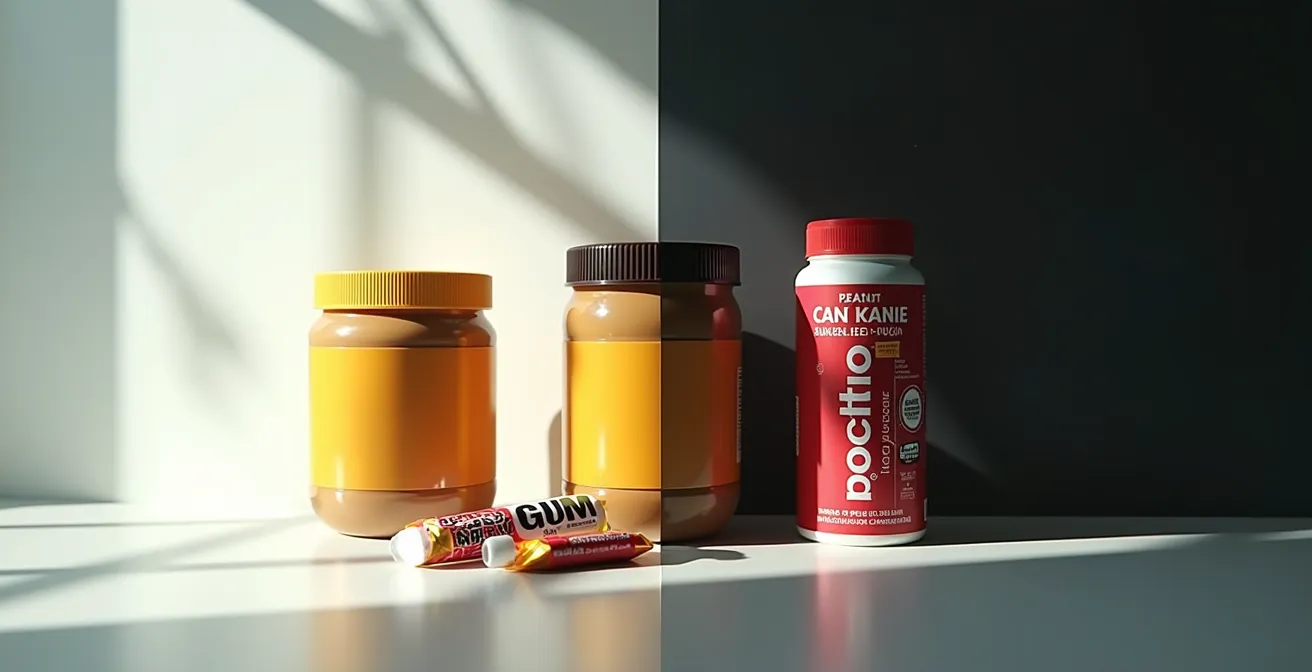
The seemingly harmless treat of peanut butter can be a death sentence for your dog due to the hidden ingredient xylitol, a sugar substitute that causes rapid, catastrophic liver failure.
- Xylitol is 100 times more toxic than milk chocolate and is found in a growing number of sugar-free products, not just peanut butter.
- Symptoms of poisoning, like collapse and seizures, can appear in under 20 minutes, making immediate, informed action critical.
Recommendation: Immediately audit your pantry for any product listing “xylitol” or “birch sugar” and treat your home as a potential contamination zone, not a playground.
Sharing a spoonful of peanut butter with your dog feels like a universal bonding moment. It’s a simple act of love. But what if that simple act could be fatal? The food landscape has changed, and a silent killer has infiltrated our pantries: xylitol. This sugar substitute, lauded for its human health benefits, is an extremely potent poison for dogs. The danger extends far beyond just “sugar-free” gum; it’s now found in peanut butters, yogurts, jams, and even some baked goods.
Many owners know to avoid chocolate or grapes, but the threat of xylitol is more insidious. It triggers a massive, rapid insulin release, causing a catastrophic drop in blood sugar (hypoglycemia) and, in many cases, acute liver necrosis. The onset is terrifyingly fast. This is not a minor upset stomach; it’s a code-red veterinary emergency where every minute counts. The core problem is that we treat our kitchens as shared spaces, but from a toxicological perspective, they are potential contamination zones filled with species-specific poisons.
This guide abandons the generic “be careful” advice. Instead, we will adopt the mindset of a toxicology expert. We will treat your home as a scene that needs to be secured. We will identify the specific threats, understand their deadly mechanisms, and establish a clear protocol for both prevention and emergency response. Your dog’s life depends not on luck, but on your knowledge and preparation. This isn’t just about avoiding a vet bill; it’s about preventing a tragedy hiding in plain sight.
For those who prefer a direct briefing, the following video from a veterinary professional outlines the critical danger of xylitol and why it’s a top concern for pet safety.
This article provides a comprehensive home hazard audit. We will move systematically through the most common and dangerous household toxins, explaining the risk and providing clear, actionable steps to secure your environment. The following summary outlines the key areas we will cover.
Summary: A Household Toxin Audit for a Safer Pet
- How Many Grapes Cause Kidney Failure in a 10kg Dog?
- Theobromine Half-Life: Why Dark Chocolate Is 10x Worse Than Milk?
- Heinz Body Anemia: The Cumulative Risk of Table Scraps
- Hydrogen Peroxide: When Is It Safe to Induce Vomiting at Home?
- hind Limb Paralysis: The Strange Symptom of Nut Toxicity
- Teflon and Candles: The Household Fumes That Kill Birds Instantly
- Permethrin Danger: Why Dog Spot-Ons Can Kill Cats?
- Pet Insurance vs. Savings Account: Which Wins for a $5,000 Emergency?
How Many Grapes Cause Kidney Failure in a 10kg Dog?
The question of a “safe” number of grapes is a dangerous one because the answer is zero. The toxicity of grapes and raisins is maddeningly unpredictable. The exact toxic compound has not been definitively identified, and the effect is highly idiosyncratic, meaning it varies dramatically from dog to dog. While some dogs have reportedly eaten small bunches of grapes with no ill effects, others have suffered fatal acute renal failure after ingesting just a few.
A 2024 scoping review confirmed a clear link between grape ingestion and illness, but stressed that the specific type or quantity causing toxicity remains a mystery. This is not a standard dose-response poison. It’s a game of Russian roulette. One dog might tolerate a grape, while its littermate could die from the same amount. Factors like the grape’s origin, ripeness, or an individual dog’s genetic susceptibility are all unknown variables. Relying on anecdotal evidence of a “dog that was fine” is a potentially fatal gamble.
Early research suggested a possible threshold; a 2005 study noted dogs developed acute renal failure after ingesting ≥3 g/kg of the fruit’s dry matter. However, this figure should be treated as an observation from a specific dataset, not a safety guideline. Given the idiosyncratic nature of the toxin, the only safe protocol is a zero-tolerance policy. This means securing fruit bowls, monitoring trash cans, and ensuring even a single grape doesn’t fall on the floor during grocery unloading. The risk is simply too high and the outcome too devastating to justify any other approach.
Theobromine Half-Life: Why Dark Chocolate Is 10x Worse Than Milk?
Unlike the mystery of grapes, chocolate toxicity is well-understood and dose-dependent. The culprits are two methylxanthines: theobromine and caffeine. Dogs metabolize theobromine much more slowly than humans, allowing it to build up to toxic levels, leading to overstimulation of the nervous system and heart. The half-life of theobromine in dogs is about 17.5 hours, meaning it lingers in their system, causing prolonged effects.
The danger level of chocolate is directly tied to its theobromine concentration, which correlates with the amount of cocoa solids. This is why not all chocolates are created equal in terms of threat. As the illustration below highlights, the darker and more bitter the chocolate, the more dangerous it is.

This visual hierarchy of risk is critical. A large dog might get an upset stomach from a milk chocolate candy bar, but that same-sized portion of baker’s chocolate could be lethal. White chocolate contains negligible amounts of theobromine and is rarely a toxic concern, though its high fat content can still trigger pancreatitis. The real danger lies at the dark end of the spectrum.
The following table provides a clear breakdown of the methylxanthine content in common household products, demonstrating the extreme danger posed by items like baker’s chocolate compared to their milk-based counterparts. The risk isn’t limited to candy; it extends to other caffeinated items that share the same toxic mechanism.
| Product | Methylxanthine Type | Concentration | Danger Level |
|---|---|---|---|
| Baker’s Chocolate | Theobromine | 450mg/oz | Extreme |
| Dark Chocolate | Theobromine | 150mg/oz | Very High |
| Milk Chocolate | Theobromine | 50mg/oz | Moderate |
| Coffee Grounds | Caffeine | 12mg/g | High |
| Energy Drinks | Caffeine | 80-300mg/serving | High |
Heinz Body Anemia: The Cumulative Risk of Table Scraps
While sudden, acute poisonings grab headlines, a more insidious danger lurks in the daily habit of sharing table scraps: cumulative toxicity. Certain compounds don’t cause immediate, dramatic symptoms but inflict slow, steady damage. This is the case with foods from the allium family (onions, garlic, leeks, and chives), which cause Heinz body anemia in dogs and cats.
These plants contain organosulfur compounds that, when metabolized, damage red blood cells, causing them to form “Heinz bodies.” These damaged cells are then removed from circulation by the spleen faster than they can be replaced. A small amount of onion on one day might not cause noticeable issues, but repeated exposure from “just a little bit” of leftover stew, sauce, or seasoned meat adds up. Over time, this leads to a dangerous shortage of red blood cells, resulting in lethargy, pale gums, weakness, and collapse. Because the onset is gradual, owners often don’t connect the illness to the seemingly harmless treats given days or weeks prior.
This principle of hidden danger in “healthy” human foods is also why xylitol is so terrifying. It’s not just about alliums; it’s about a fundamental misunderstanding of species-specific metabolism. As Dr. Matt McGlasson explains regarding the mechanism of xylitol toxicity:
The problem with Xylitol is that we can see an increased release of insulin (three to seven times greater) in dogs, leading to severely low blood sugar
– Dr. Matt McGlasson, The Animal Rescue Site
To prevent Heinz body anemia, a strict “no allium” policy is mandatory. Be vigilant about hidden sources in broths, baby food, and processed meals. The following items must be permanently off-limits:
- Onions – all forms (raw, cooked, powdered, dehydrated)
- Garlic – including garlic powder and supplements
- Leeks – commonly hidden in soups and stocks
- Chives – often used as garnish on prepared foods
- Shallots – frequently in gourmet dishes and sauces
Hydrogen Peroxide: When Is It Safe to Induce Vomiting at Home?
In the panic of a suspected poisoning, the first instinct for many owners is to make their dog vomit. While inducing emesis can be a life-saving first step, doing it incorrectly or at the wrong time can be catastrophic. The only substance that should ever be considered for this at home is 3% hydrogen peroxide (NOT the concentrated version used for hair dyeing), and only under the direct guidance of a veterinarian or poison control expert.
Time is of the essence. For a substance like xylitol, clinical symptoms can begin as early as 20 minutes after ingestion, as the body’s insulin response goes into overdrive. Inducing vomiting must happen before the toxin is absorbed from the stomach. However, there are critical situations where inducing vomiting is more dangerous than the poison itself. If the dog has ingested a caustic substance (like bleach or batteries), vomiting will re-burn the esophagus. If they’ve ingested hydrocarbons (like gasoline or motor oil), vomiting can cause aspiration into the lungs, leading to severe pneumonia. Furthermore, if the dog is already showing neurological signs like seizures, lethargy, or is having trouble breathing, they have lost their protective gag reflex and could easily aspirate the vomit.

Your first step is always to call your veterinarian or an animal poison control center. Be prepared with your dog’s weight, the substance ingested, the amount, and the time of ingestion. They will make the critical decision on whether inducing emesis is safe and appropriate.
Your Critical Checklist: When NOT to Induce Vomiting
- Is the dog already showing symptoms of hypoglycemia (weakness, stumbling, seizures)? If yes, DO NOT induce.
- Was a caustic/corrosive (e.g., bleach, batteries) or hydrocarbon (e.g., gasoline, oil) substance ingested? If yes, DO NOT induce.
- Is the dog lethargic, seizing, unconscious, or having difficulty breathing? If yes, DO NOT induce.
- Has it been more than 2 hours since ingestion? The toxin may have already left the stomach. Check with your vet.
- Have you received direct guidance from a veterinary professional to proceed? If no, DO NOT induce.
hind Limb Paralysis: The Strange Symptom of Nut Toxicity
While most food toxicities cause gastrointestinal or systemic signs, macadamia nuts are infamous for a very specific and alarming neurological symptom: temporary hind limb paralysis. Dogs who ingest macadamia nuts often develop profound weakness, tremors, and an inability to stand or walk, primarily affecting their back legs. This “wobbliness” can progress to the point where the dog is completely unable to support its own weight.
The exact mechanism for this neurotoxicity is unknown, but it is unique to macadamia nuts. While frightening, the good news is that these symptoms are typically temporary and resolve within 24 to 48 hours with supportive veterinary care. However, the presence of these symptoms requires an immediate vet visit to rule out other, more permanent causes of paralysis and to manage the clinical signs.
Case Study: The Compound Danger of Trail Mix
An owner brings in a 15kg dog that is weak, disoriented, and stumbling. The owner mentions the dog got into some “trail mix” an hour ago. The vet immediately recognizes a dual threat. The stumbling and weakness could be from macadamia nut toxicity. However, many sugar-free trail mixes also contain raisins (kidney failure risk) and are sweetened with xylitol. Blood sugar levels plummet from xylitol, causing weakness and seizures that can mimic or worsen the macadamia symptoms. This scenario requires aggressive, multi-faceted emergency treatment for three separate poisonings at once.
Not all nuts are toxic, but many pose a risk due to high fat content, which can trigger pancreatitis—a painful and potentially serious inflammation of the pancreas. The following “traffic light” system provides a general guide for nut safety, but remember, any nut can be a choking hazard, and salted or flavored nuts introduce other problems.
| Safety Level | Nut Type | Risks/Notes |
|---|---|---|
| GREEN – Safe in moderation | Plain peanuts, Plain peanut butter (xylitol-free) | High calorie, check for additives |
| YELLOW – Use caution | Almonds, Cashews, Pecans | High fat content, pancreatitis risk |
| RED – Toxic | Macadamia nuts, Walnuts (moldy), Any chocolate-covered nuts | Neurotoxic, tremors, paralysis |
Teflon and Candles: The Household Fumes That Kill Birds Instantly
The concept of household toxicity must extend beyond what your pet can eat. For sensitive species, particularly birds, the most immediate danger is in the air they breathe. The anatomy of the avian respiratory system is incredibly efficient at gas exchange, which also makes it exquisitely vulnerable to airborne toxins. A fume that is unnoticeable to a human can be instantly fatal to a bird.
The most notorious culprit is polytetrafluoroethylene (PTFE), the chemical coating in non-stick cookware (Teflon). When this cookware is overheated (above 530°F / 280°C), it releases microscopic particles and toxic gases that destroy a bird’s lung tissue, causing hemorrhage and death within minutes. This “Teflon toxicity” can also be triggered by self-cleaning oven cycles, certain heat lamps, and other non-stick appliances. Another major threat comes from scented products. Scented candles, air fresheners, aerosols, and especially essential oil diffusers release volatile organic compounds (VOCs) that can cause severe respiratory distress or liver damage in birds and, to a lesser extent, cats.
It’s crucial to understand these species-specific vulnerabilities. What is safe for one pet can be lethal to another. This is a recurring theme in toxicology, as noted by experts regarding the primary topic of this article:
Xylitol toxicity appears to be limited to dogs. Cats have no significant ill-effects from xylitol
– Veterinary Partner – VIN, Xylitol Poisoning in Dogs Clinical Review
For households with birds, a “fume audit” is not optional; it’s a matter of life and death. The only safe approach is aggressive prevention:
- Replace all non-stick cookware with stainless steel, cast iron, or ceramic.
- Never use the self-cleaning oven feature.
- Eliminate all scented candles, plug-in air fresheners, and aerosol sprays.
- Never use essential oil diffusers in a home with birds.
- Ensure extreme ventilation when using any cleaning products.
- Keep birds housed far away from the kitchen area.
Permethrin Danger: Why Dog Spot-Ons Can Kill Cats?
One of the most tragic and preventable emergencies in multi-pet households stems from a simple mistake: using a dog’s flea and tick medication on a cat. Many over-the-counter “spot-on” products for dogs contain permethrin, a synthetic insecticide that is extremely effective and safe for canines. For cats, however, it is a potent neurotoxin.
Cats lack the specific liver enzyme (glucuronosyltransferase) needed to metabolize permethrin safely. When exposed, their nervous system goes into overdrive, causing severe and uncontrollable muscle tremors, seizures, hyperthermia, and often, death. The exposure doesn’t even have to be direct application. A cat that grooms or simply snuggles with a dog that has been recently treated with a permethrin-based product can receive a fatal dose. Symptoms can appear within hours and constitute a severe, life-threatening emergency.
This highlights the absolute necessity of reading every label, every time. The scale of accidental pet poisonings is staggering. For xylitol alone, the ASPCA Animal Poison Control Center received over 3,725 calls in one year, and that number is rising as the ingredient becomes more common. The same principle of accidental exposure applies across the board, from ingested toxins to topical medications.
In a home with both dogs and cats, a strict safety protocol for parasite prevention is non-negotiable:
- Read the Label: Never, ever use a product labeled “For Dogs Only” on a cat. Look for a clear warning image of a crossed-out cat.
- Separate and Store: Keep all pet medications stored separately by species to prevent mix-ups.
- Apply with Care: Apply flea treatments in separate rooms. Keep the treated dog away from the cat for at least 24-48 hours, or until the product is completely dry, to prevent secondary exposure.
- Seek Immediate Care: If you suspect exposure and your cat begins to show any signs of twitching, tremors, or drooling, do not wait. This is an emergency that requires immediate veterinary intervention.
To Be Remembered
- Zero Tolerance is the Only Policy: For unpredictable toxins like grapes and hidden ones like xylitol, there is no “safe” amount. The only safe number is zero.
- Toxicity is Dose-Dependent and Species-Specific: The danger of a substance like chocolate depends on its concentration (dark vs. milk), and a flea medicine safe for a dog can be fatal to a cat. Read every label.
- Your Home is a Hazard Zone: Shift your mindset from a shared living space to a potential contamination zone. Conduct regular audits of your pantry, medicine cabinet, and even the air your pets breathe.
Pet Insurance vs. Savings Account: Which Wins for a $5,000 Emergency?
A toxicology emergency is not just an emotional crisis; it’s a financial one. The cost of intensive care for a severe poisoning can be staggering. A dog suffering from xylitol toxicity often requires a multi-day stay in a veterinary ICU for continuous monitoring, intravenous fluids, blood sugar regulation, and liver protectants. According to veterinary industry data, a 3-day ICU stay for xylitol poisoning typically costs between $3,000 and $7,000. Faced with such a bill, the question is not whether you can afford it, but how you have prepared for it.
The two primary strategies for managing this financial risk are pet insurance and a dedicated emergency savings account. A savings account offers flexibility and is free from exclusions, but it requires immense discipline to build and not touch. It can also be quickly depleted by a single catastrophic event. Pet insurance, on the other hand, acts as a safety net. For a monthly premium, it can cover 70-90% of eligible costs after a deductible is met, transforming a potential $5,000 bill into a more manageable one. This can remove the heartbreaking decision of “economic euthanasia,” where an owner has to decline life-saving care due to cost.
The choice between them is deeply personal and depends on your financial discipline, risk tolerance, and your pet’s age and health. For many, a hybrid approach—a high-deductible insurance plan for catastrophes combined with a smaller savings account for minor issues—provides the best of both worlds. The following table breaks down the core pros and cons of the most common options.
| Option | Pros | Cons | Best For |
|---|---|---|---|
| Pet Insurance | Covers 70-90% after deductible, Peace of mind | Monthly premiums, Pre-existing exclusions | Young pets, Risk-averse owners |
| Dedicated Savings | Full control, No restrictions | Requires discipline, May be insufficient | Disciplined savers, Healthy pets |
| Hybrid Model | Catastrophic coverage + flexibility | Requires both premium and savings | Comprehensive protection seekers |
| Care Credit | 0% interest if paid quickly | High interest after promo period | Emergency backup option |
The most effective treatment for poisoning is prevention. By adopting an expert mindset and conducting a thorough hazard audit of your home, you can neutralize threats before they become tragedies. This vigilance is the greatest gift you can give your pet.