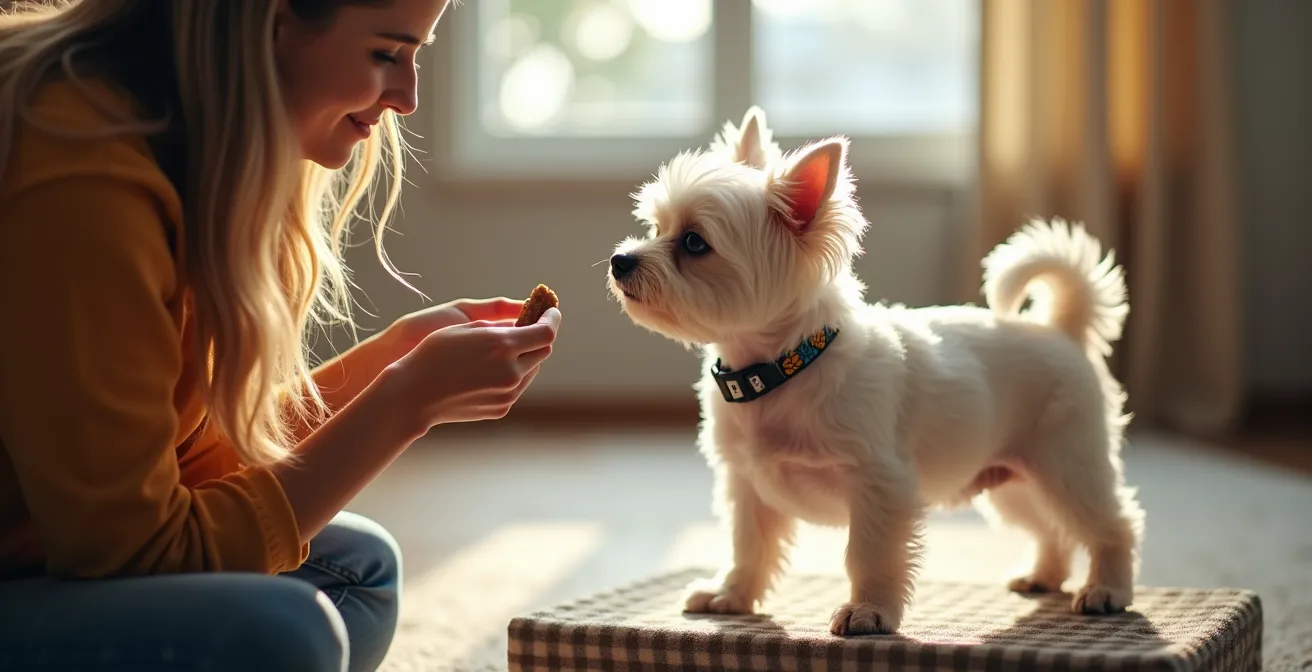
Small dog ‘syndrome’ is not a personality trait; it is a direct, predictable result of owners failing to meet their dog’s fundamental canine needs for structure and respect.
- A small dog’s physical reality—from tracheal fragility to rapid metabolism—demands specific, informed care, not coddling.
- Problem behaviors like incessant barking or aggression are learned responses to being treated like an accessory instead of a dog, a pattern unintentionally reinforced by owners.
Recommendation: Immediately begin applying the same principles of training, exercise, and boundaries to your small dog that you would to a large breed, adapting only the tools and intensity, not the philosophy.
That incessant yapping at the mail carrier, the lunging at other dogs on walks, the possessive snapping if someone gets too close on the couch. For many small dog owners, these behaviors are met with a resigned sigh or a nervous laugh: “Oh, he’s just being protective,” or “It’s just a small dog thing, isn’t it cute?” We scoop them up, shield them from the world, and in doing so, we perpetuate a cycle of anxiety and misbehavior often labeled “Small Dog Syndrome.” But this label is a dangerous misnomer. It implies the problem is inherent to the dog’s size, a quirky, unchangeable part of their personality.
The truth is far more direct: there is no such thing as small dog syndrome. There are only dogs, whose fundamental needs are identical regardless of their weight or height. What if the behaviors we find “cute” or “feisty” are actually signals of stress, fear, and a desperate need for leadership? This guide acts as a behavioral equalizer. We will dismantle the myth that small dogs are different by exploring their genuine physiological and psychological needs. It’s time to stop treating your Maltese like a fragile ornament and start respecting it like the capable Doberman it believes it is.
By understanding the physical realities and behavioral principles that apply to all canines, you can transform your relationship with your pet. This article will provide a clear blueprint for doing just that, breaking down the eight key areas where a shift in perspective is crucial for a happy, well-balanced dog.
Table of Contents: A Blueprint for Understanding Your Small Dog
- Velcro Dogs: How to Teach Independence to a Bichon Frise?
- Why Small Bladders Need More Frequent Breaks in Winter?
- Collar vs. Harness: Protecting the Trachea of a Pomeranian
- Why Daily Brushing Is Non-Negotiable for Toy Poodles?
- How to Protect Your 3kg Dog at the Park Without Picking Them Up?
- Finger Brush vs. Handle: Which Reach Is Better for Molars?
- Bulky Battery Packs: How to Avoid Chafing on Small Necks?
- Why Chihuahuas Tremble: Distinguishing Cold from Fear or Hypoglycemia?
Velcro Dogs: How to Teach Independence to a Bichon Frise?
The term “velcro dog” perfectly describes the small companion who shadows your every move, whining if a closed door separates you. While this constant affection can feel flattering, it’s often a sign of underlying separation anxiety, not love. This behavior is deeply rooted in the breeding history of many small dogs. Bichon Frises, for instance, were bred for centuries to be the constant companions of nobility. This has created a genetic predisposition toward extreme attachment, a trait that can quickly become problematic in a modern household.
Ignoring this anxiety or labeling it as simple devotion is a disservice to the dog’s mental health. Their distress is real, and it is our responsibility to teach them confidence and independence. This process starts with creating structured separation. Begin with short intervals, leaving the dog in a safe, comfortable space with a high-value chew toy. Avoid emotional, drawn-out goodbyes or hellos; your calm demeanor teaches them that your departure is not a catastrophic event. It’s about showing them that solitude is safe and rewarding, not a punishment.
Case Study: The Root of Bichon Frise Separation Anxiety
Bichon Frises were historically bred as companion animals for European nobility, creating a genetic predisposition toward extreme attachment to their human companions. Modern Bichons are often described as “velcro dogs” due to their tendency to follow their owners from room to room. According to studies on companion-bred dogs, those suffering from separation anxiety typically display excessive vocalization, with persistent high-pitched barking or howling that has led to neighbor complaints and even housing issues for many owners.
Ultimately, a dog that can comfortably be alone is a more confident and balanced dog. True companionship is built on trust and security, not on anxious dependency.
Why Small Bladders Need More Frequent Breaks in Winter?
When the temperature drops, it’s tempting to curtail outdoor time, especially with a small dog who seems to hate the cold. However, their physiological reality makes this a risky shortcut. Smaller dogs have a higher metabolism and a smaller bladder, meaning they process water and need to relieve themselves more frequently than larger breeds. This is exacerbated in winter due to a phenomenon called cold-induced diuresis, where the body increases urine production to conserve heat.

As you can see, the environment itself presents a significant challenge. Forcing a small dog to “hold it” during cold snaps is not only uncomfortable but can lead to urinary tract infections (UTIs) and house-soiling accidents that are a result of physical need, not bad behavior. The solution is not fewer trips, but better-prepared trips. Equipping your dog for the elements is a non-negotiable aspect of responsible ownership, demonstrating respect for their physical needs.
A proactive approach involves having the right gear ready by the door. This isn’t about spoiling them; it’s about acknowledging their physical limitations and providing the necessary support. A practical winter kit should include:
- A quick-to-put-on insulated coat sized for small breeds
- Protective paw booties to guard against salt and ice
- A high-visibility LED light for dark winter evenings
- Absorbent entrance mats for immediate paw drying
- An indoor potty patch for extreme weather emergencies
By preparing for the cold, you meet their needs without compromising their potty training, reinforcing the idea that you are a reliable leader who understands their world.
Collar vs. Harness: Protecting the Trachea of a Pomeranian
One of the most critical and overlooked aspects of small dog care is the choice between a collar and a harness. For a large dog with a robust neck, a flat collar is often sufficient for carrying ID tags. For a small breed like a Pomeranian, a Chihuahua, or a Yorkie, attaching a leash to a collar is an act of gross negligence. Their structural integrity is fundamentally different. The trachea (windpipe) of a small dog is incredibly delicate and prone to a condition called tracheal collapse, where the cartilage rings of the windpipe weaken and flatten.
Any pressure on the throat from a collar—especially when the dog pulls, or the owner gives a correction—can cause or worsen this painful, chronic condition. A harness, specifically a Y-shaped harness that sits on the chest and shoulders, distributes pressure across the strongest parts of the dog’s body, completely avoiding the fragile neck area. This is not a matter of preference; it is a matter of anatomical safety. Choosing a harness demonstrates an understanding of and respect for your dog’s unique physical makeup.
A comparative analysis from safety experts on small dog gear clearly shows the difference in pressure distribution and overall safety between these two common tools.
| Feature | Flat Collar | Y-Shaped Harness |
|---|---|---|
| Tracheal Pressure | Direct pressure on windpipe | Distributed across chest |
| Suitable For | ID tags only | Leash attachment & walking |
| Shoulder Movement | N/A | Full range of motion |
| Risk of Escape | Higher for small dogs | Lower when properly fitted |
| Training Control | Poor, can cause injury | Better for directional guidance |
Your Harness Fit Checklist: Ensuring Safety and Comfort
- Apply the two-finger rule: You should be able to comfortably fit two fingers between the harness and your dog’s body.
- Check for armpit chafing: Ensure there is no rubbing or restriction of movement under the front legs.
- Verify D-ring position: When you pull on the leash, the front of the harness should not lift up towards the throat.
- Test shoulder freedom: Watch your dog walk to confirm they have a full, natural range of motion in their shoulders.
- Ensure the chest plate sits correctly: The chest plate should rest on the sternum (breastbone), not press on the soft tissue of the throat.
Treating your small dog like a large one means providing them with the safest, most appropriate equipment for their specific build, and for walking, that is always a well-fitted harness.
Why Daily Brushing Is Non-Negotiable for Toy Poodles?
For breeds with high-maintenance coats like Toy Poodles, Shih Tzus, or Maltese, daily brushing is not a cosmetic luxury; it is a fundamental health requirement. Failing to do so allows small tangles to quickly escalate into large, tight mats. Many owners underestimate the severity of this issue, viewing it as a simple aesthetic problem. This is a critical misunderstanding of the dog’s physiological reality. A matted coat is a source of constant, significant pain.
The mats pull relentlessly on the skin, creating a feeling similar to having your hair in an painfully tight ponytail, 24/7. This constant tension can restrict blood flow, lead to bruising, and create a warm, moist environment underneath the mat that is a perfect breeding ground for fungal and bacterial skin infections. In severe cases, mats can become so tight they tear the skin or cause hematomas. De-matting a severely affected dog is an intensely painful procedure that often requires sedation and a full shave-down at a veterinary clinic. Daily grooming prevents this entirely.
The Hidden Pain of Matted Fur
Veterinary case studies consistently show that matted fur in toy breeds pulls on the skin continuously, causing chronic pain and restricting blood flow to the affected areas. This can lead to secondary skin infections, hematomas, and significant distress, often requiring medical intervention to resolve. Ignoring daily grooming is not a passive choice; it’s one that can lead directly to suffering.
A consistent, positive grooming routine is a core part of responsible ownership. It builds trust and reinforces your role as a caring leader. The process should be systematic:
- Begin by lightly misting the coat with a conditioning spray to reduce static and breakage.
- Use a slicker brush to gently work through the outer layer of the coat, removing loose fur and minor tangles.
- Work through the entire coat in small, manageable sections to ensure no area is missed.
- Follow up with a metal “greyhound” comb, running it from the skin outwards to find any hidden knots the brush missed.
- Teach a “chin rest” cue to help keep your dog calm and still for grooming around the sensitive face area.
- Reward calm behavior frequently with small, high-value treats throughout the session.
Preventing mats is an act of preventative healthcare. It is one of the most direct ways you can ensure your dog’s daily comfort and well-being, treating their needs with the seriousness they deserve.
How to Protect Your 3kg Dog at the Park Without Picking Them Up?
The dog park can be a terrifying place for a small dog owner. The sight of a large, boisterous dog bounding towards your 3kg companion triggers a primal urge to scoop them up into the safety of your arms. While well-intentioned, this is one of the most damaging forms of unintentional reinforcement. By picking them up, you are screaming three things to your dog: “You are helpless,” “The world is dangerous,” and “Barking/panicking is the correct response because it gets me rescued.”
This action robs them of the opportunity to learn appropriate social skills and builds a belief that they are incapable of handling interactions themselves, often leading to fear-based aggression. The correct approach is to become their advocate and protector *on the ground*. This means managing the environment and teaching your dog how to navigate it with your support. True protection is not about removal, but about empowerment through training and confident leadership.
Your goal is to build a “safe bubble” around your dog using your own body and trained cues. This teaches your dog to look to you for guidance in uncertain situations, rather than panicking. As described by trainers specializing in canine confidence, this involves a few key skills:
- Train a “middle” cue: Teach your dog to immediately position themselves between your legs on command. This is their safe zone.
- Practice body blocking: Learn to read approaching dogs from a distance. If an approach seems too rough, confidently step between the dogs to interrupt the interaction before it starts.
- Master canine body language: Recognizing signs of stress or aggression in other dogs from afar is your best tool for incident prevention.
- Use a confident posture: Your calm, assertive energy will deter many unwanted approaches more effectively than nervous shouting.
- Reward successful recalls: When your dog comes back to you amidst distractions, reward them with a very high-value treat to reinforce that you are the most interesting thing in the park.
By staying on the ground and advocating for your dog, you build their confidence and reinforce your role as a trustworthy leader, proving that safety comes from your guidance, not from being lifted out of reality.
Finger Brush vs. Handle: Which Reach Is Better for Molars?
Dental health is as critical for a small dog as it is for a large one, yet their small mouths present unique challenges. Periodontal disease is rampant in small breeds due to tooth crowding and a tendency for owners to neglect brushing. When choosing a tool, the debate often comes down to a finger brush versus a traditional handle brush. While a finger brush seems less intimidating, its effectiveness is limited, especially when it comes to the most important teeth.
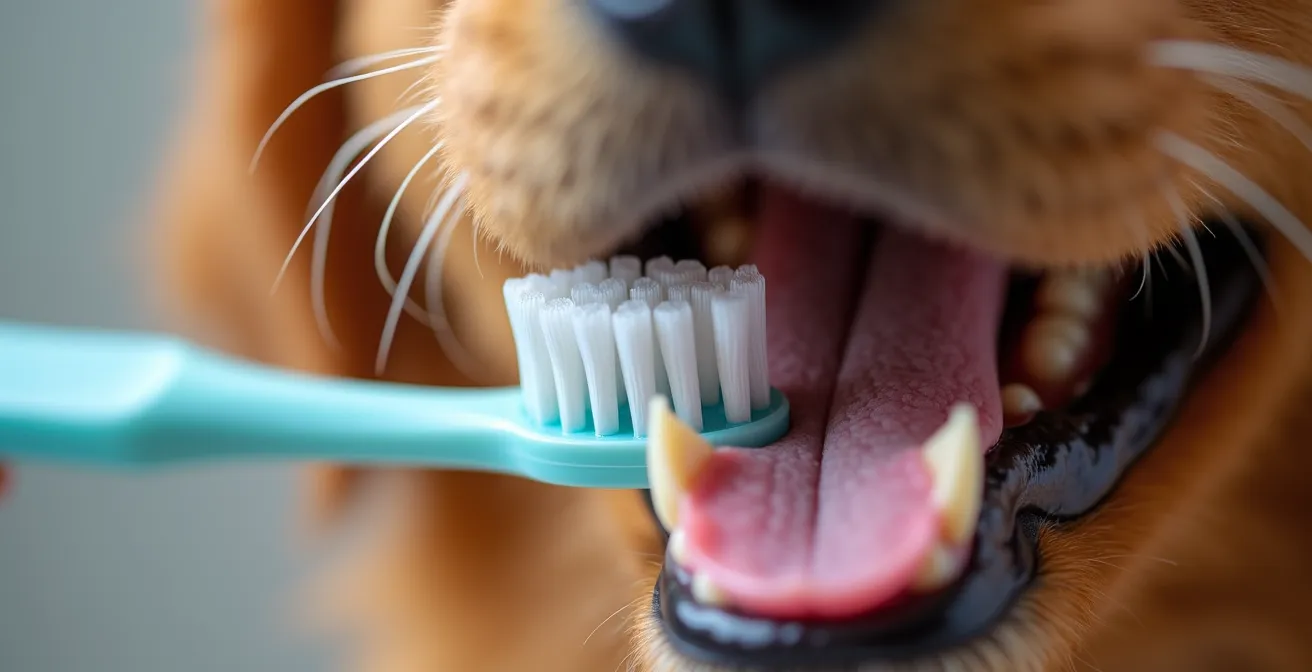
As the image shows, the real work of dental cleaning happens on the back molars, where plaque and tartar accumulate most heavily. A finger brush, limited by the length and width of your finger, often struggles to reach and effectively scrub these critical surfaces. A small-headed, long-handled brush, particularly one with an angled design, is anatomically superior for accessing the entire mouth. It allows for a more controlled and effective cleaning motion on the surfaces that matter most.
While a dog might initially accept a finger brush more readily because it feels like being petted, our goal is effective healthcare, not just tolerance. The key is to create a positive association with the handle brush through gradual introduction and lots of rewards. This respects their comfort while still meeting their non-negotiable health needs.
The choice of tool should be based on efficacy for the most critical areas of the mouth. This comparison, adapted from veterinary dental care guidelines, highlights the distinct advantages of each tool.
| Feature | Finger Brush | Handle Brush |
|---|---|---|
| Tactile Feedback | Excellent – feel pressure directly | Limited – through handle |
| Molar Access | Limited by finger length | Better with angled design |
| Dog Acceptance | Higher – feels like petting | Variable – more foreign object |
| Control | Precise for front teeth | Better for back teeth |
| Best Use | Front teeth and canines | Back molars specifically |
Ultimately, the best brush is the one that effectively cleans the entire mouth. For the crucial back molars, a well-designed handle brush is the superior choice for long-term dental health.
Bulky Battery Packs: How to Avoid Chafing on Small Necks?
GPS trackers offer incredible peace of mind, but for a small dog, the wrong device can be a source of chronic discomfort and even injury. The market is flooded with trackers designed with larger dogs in mind, featuring bulky, hard-plastic battery packs. On the delicate neck of a 3kg dog, these devices can easily cause chafing, hair loss, and painful skin irritation. The weight itself can also put a strain on their neck. This is another area where we must apply the principle of environmental scaling—what is negligible for a 30kg dog can be a significant burden for a smaller one.
Choosing a tracker for a small dog requires a different set of criteria, prioritizing a lightweight design and materials that are gentle on the skin. The goal is safety without compromising comfort. A tracker should be a tool, not a torment. As a rule, the total weight of a collar and tracker should be a tiny fraction of the dog’s body weight. When in doubt, always opt for the lighter, smoother option.
According to safety guides for small dog technology, the protocol for choosing and using a tracker safely involves careful selection and monitoring. Follow this safety protocol to ensure your dog’s comfort:
- Choose a lightweight device: Aim for a tracker that weighs less than 1-2% of your dog’s total body weight.
- Prioritize smooth casings: Look for devices with soft silicone or rounded casings rather than hard plastic with sharp edges.
- Attach the tracker to a harness: Instead of adding weight and bulk to a collar, use a small neoprene pouch or integrated clip to attach the device to the back of your dog’s harness.
- Conduct a friction test: Before the first full day of wear, have your dog wear the device for 30-60 minutes during activity and check for any signs of rubbing.
- Inspect the skin and fur regularly: After the first few long-term uses, remove the device and carefully inspect the underlying skin and fur for any redness or hair breakage.
By carefully selecting and positioning the device, you can gain the security of a GPS tracker without forcing your dog to endure daily discomfort, proving that safety and respect for their physical reality can coexist.
Key Takeaways
- Canine behavior is primarily learned and shaped by owner responses, not predetermined by a dog’s size.
- The physical fragility of small breeds (trachea, bones, skin) requires specialized equipment and informed care, not coddling or avoidance.
- Consistency in rules, boundaries, and training is the only effective and respectful way to resolve the behaviors associated with “Small Dog Syndrome.”
Why Chihuahuas Tremble: Distinguishing Cold from Fear or Hypoglycemia?
A trembling Chihuahua is an iconic image, but the cause of the shaking is often misinterpreted. Owners may rush to wrap the dog in a blanket, assuming it’s cold, or coddle it, assuming it’s scared. While both can be true, a third, more dangerous possibility is often overlooked: hypoglycemia, or low blood sugar. Small breeds have a very high metabolism and low body fat reserves, making them susceptible to sudden drops in blood sugar, especially if a meal is missed or they are under stress. Trembling is a primary symptom of this potentially life-threatening condition.
Treating every tremble as a purely emotional or temperature-related issue is to ignore the dog’s physiological reality. As a responsible owner, you must become a thoughtful diagnostician, not just a reactor. By assessing the context, you can determine the likely cause and provide the appropriate intervention. Is the environment cold? Is there a new, scary stimulus present? Or has it been more than a few hours since their last meal? Answering these questions leads to the correct response: a sweater for cold, creating distance for fear, or a small amount of high-sugar syrup (like corn syrup) for suspected hypoglycemia, followed by a vet visit.
Having a clear decision-making process is crucial for responding effectively. Follow this flowchart, recommended by veterinary behavior resources, to determine the likely cause of your dog’s trembling:
- Check the environment and their body: Are their ears or body cool to the touch? If so, the response is likely due to being cold.
- Analyze the context: Is there a new person, a loud noise, or a new environment? If so, the trembling is likely a fear or excitement response.
- Consider their last meal: Has it been more than 4-6 hours since they last ate? This significantly raises the risk of hypoglycemia.
- Observe the trembling pattern: Is it continuous or does it come and go with specific triggers? Continuous, full-body trembling is more concerning.
- Check their gum color: Pale or white gums can be a critical sign of hypoglycemia or shock and warrant an immediate vet visit.
- Apply the correct intervention: Based on your assessment, provide warmth, remove the stressor, or address the potential blood sugar drop.
By learning to read the signs and understand the potential medical causes behind a simple tremble, you move from a reactive owner to a proactive, knowledgeable caretaker who treats their small dog with the seriousness their health deserves.