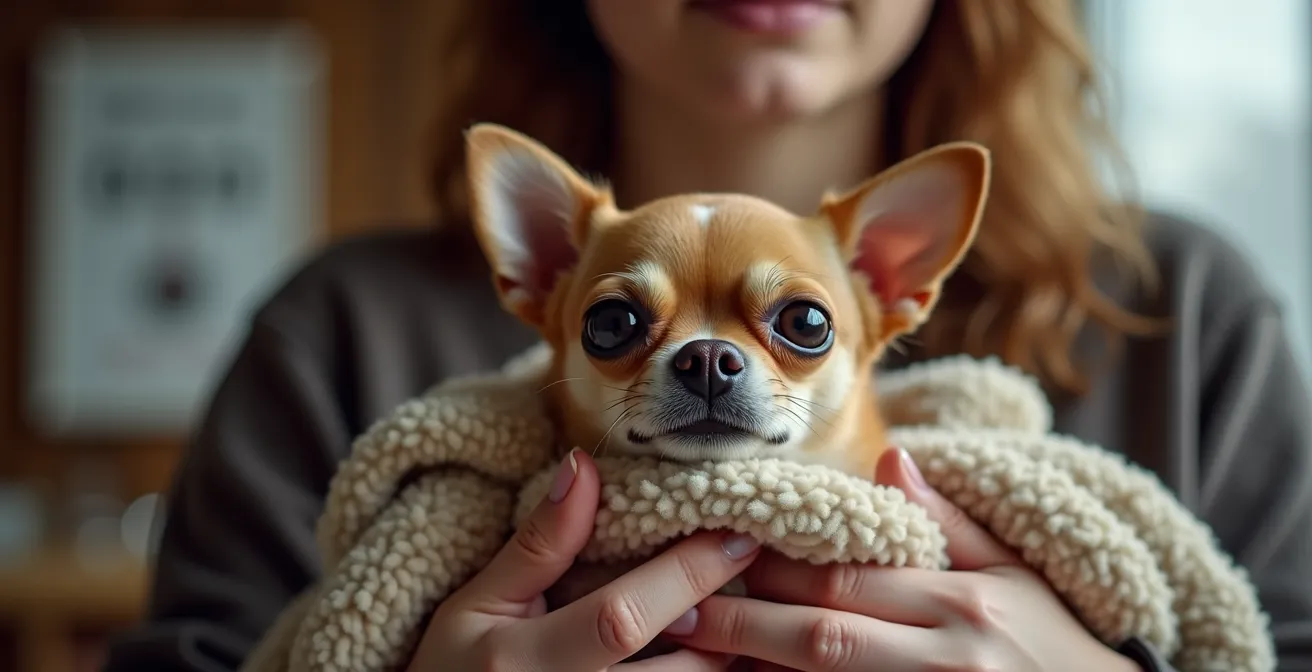
Your Chihuahua’s constant shaking isn’t just a quirk; it’s a vital communication signal that new owners must learn to decode to ensure their safety and well-being.
- The shaking often stems from a unique physiological paradox: a tiny body with a high metabolism that struggles with thermal regulation and blood sugar stability.
- Behavioral trembling is also common, driven by a “big dog” personality in a fragile frame, leading to resource guarding and anxiety if not managed correctly.
Recommendation: Shift from simply reacting to the shivers (e.g., with a sweater) to proactively managing their unique needs in nutrition, environment, and training.
That constant, near-vibrational tremor of your new Chihuahua puppy can be both endearing and deeply unsettling. As a new owner, you’re likely caught between a smile at their tiny quivers and a knot of anxiety in your stomach. Is it a harmless shiver from the air conditioning, a sign of fear, or something far more serious? The internet offers a deluge of generic advice: “they get cold,” “they’re nervous,” or the ever-present “it could be low blood sugar.” While true, these answers barely scratch the surface of the Chihuahua’s complex reality.
The truth lies in a concept I call the “physiological paradox.” The Chihuahua is a marvel of contrasts: a tenacious, Doberman-sized personality trapped within a fragile, 2kg body. This creates a unique set of vulnerabilities that other breeds simply don’t face. Their trembling isn’t just a single symptom; it’s a high-stakes communication system broadcasting everything from a minor chill to a life-threatening metabolic crash. Understanding this is the first step from being a worried owner to a confident guardian.
This guide moves beyond the platitudes. We will not just list the causes of shaking; we will teach you how to decode them. By understanding the intricate link between their high-speed metabolism, their physical fragilities like the molera and delicate trachea, and their surprisingly bold temperament, you can learn to interpret each shiver with precision. We will equip you with the knowledge to distinguish a simple need for a warm blanket from an urgent need for veterinary intervention, transforming your anxiety into effective, loving care.
This article provides a comprehensive framework for managing your Chihuahua’s well-being. By exploring their critical needs from puppyhood to adulthood, you’ll gain the confidence to provide the specialized care this unique breed deserves. The following sections will guide you through the most crucial aspects of their health and happiness.
Summary: Why Chihuahuas Tremble: Distinguishing Cold from Fear or Hypoglycemia?
- Nutri-Cal and Frequent Meals: The Survival Guide for 8-Week-Old Chis
- How to Prevent Resource Guarding of the Owner in Chihuahuas?
- The Fontanel Risk: Protecting the “Molera” Soft Spot on the Head
- 20 Minutes or 2 Hours: How Much Walking Does a Chi Actually Need?
- Sweaters aren’t Fashion: Thermal Regulation for 2kg Dogs
- Collar vs. Harness: Protecting the Trachea of a Pomeranian
- Pale Gums: Identifying Life-Threatening Anemia in Puppies
- Small Dog Syndrome: Why Treat Your Maltese Like a Doberman?
Nutri-Cal and Frequent Meals: The Survival Guide for 8-Week-Old Chis
For a Chihuahua puppy, especially one under 12 weeks, trembling can be the first sign of a life-threatening emergency: hypoglycemia. This condition, a rapid drop in blood sugar, is the foremost danger for this breed in its early life. Their tiny bodies have minimal fat reserves and an incredibly fast metabolism, meaning they burn through energy at a startling rate. A missed meal or a sudden burst of stress or play can deplete their glucose stores, leading to weakness, disorientation, tremors, and in severe cases, seizures or coma. As a breed specialist, this is the first cause of shaking I teach new owners to rule out.
Proactive management is non-negotiable. You must ensure your puppy eats small, frequent meals of a high-quality, calorie-dense puppy food—at least four times a day. This provides a steady supply of energy, preventing dangerous dips in blood sugar. It’s also wise to keep a high-calorie nutritional supplement like Nutri-Cal or a tube of corn syrup on hand for emergencies. A small dab on the gums can rapidly raise their glucose levels during a crisis. It’s a critical tool in your puppy first-aid kit, because a hypoglycemic event occurs when blood glucose levels fall below 60 mg/dL, a threshold that can be reached alarmingly fast in a toy breed.
Monitoring is just as important as feeding. Watch for subtle signs of weakness or a “drunken” walk, especially after a play session or a period of fasting. Keeping the puppy’s environment warm is also crucial, as shivering to stay warm burns precious calories that their system cannot afford to lose. The goal is to create a stable, predictable routine that supports their fragile metabolic system until their bodies are more developed and better able to regulate their own blood sugar, which often improves by 8 months of age.
Your Action Plan: Preventing a Hypoglycemic Crisis
- Consistent Feeding Schedule: Provide four small, high-quality meals per day to maintain stable energy levels. Never allow a young puppy to go more than a few hours without food.
- Warm Environment: Keep your puppy’s living space warm and free of drafts. Provide plenty of soft blankets for them to nest in and conserve body heat.
- Symptom Monitoring: Be vigilant for early signs of hypoglycemia, including unusual weakness, lack of coordination, stumbling, or increased trembling.
- Emergency Supplies: Keep maple syrup, Karo syrup, or a high-calorie nutritional gel on hand. At the first sign of a crisis, apply a small amount directly to the puppy’s gums.
- Diet Quality Check: Ensure the puppy’s food is specifically formulated for the growth of small-breed puppies, providing the necessary calories and nutrients.
How to Prevent Resource Guarding of the Owner in Chihuahuas?
When a Chihuahua trembles and growls from the safety of your lap, it’s often misinterpreted as cute, protective behavior. In reality, it’s a clear sign of resource guarding—and the resource is you. This behavior stems from the breed’s inherent insecurity and their tendency to form intense bonds. They are not being “brave”; they are terrified of losing access to their source of safety and comfort. Allowing this behavior to go unchecked can lead to escalating aggression and anxiety, creating a stressful environment for both you and your dog.
Separation anxiety involves a distressed reaction to owners leaving the house and this is a common issue with Chihuahuas. Feelings of isolation can lead to intense sadness, restlessness, and/or overwhelming panic.
– PetChiDog, Leaving a Chihuahua Home Alone – Separation Anxiety Guide
The key to prevention is to build confidence and teach independence from day one. This goes against the instinct to coddle such a tiny, shivering creature, but it’s essential for their mental health. You must treat them like a “real dog.” This means establishing clear boundaries and teaching them that they can be safe and calm even when they are not in physical contact with you. Use baby gates to create a ‘den’ space, and practice short, frequent departures where your comings and goings are low-key and uneventful.
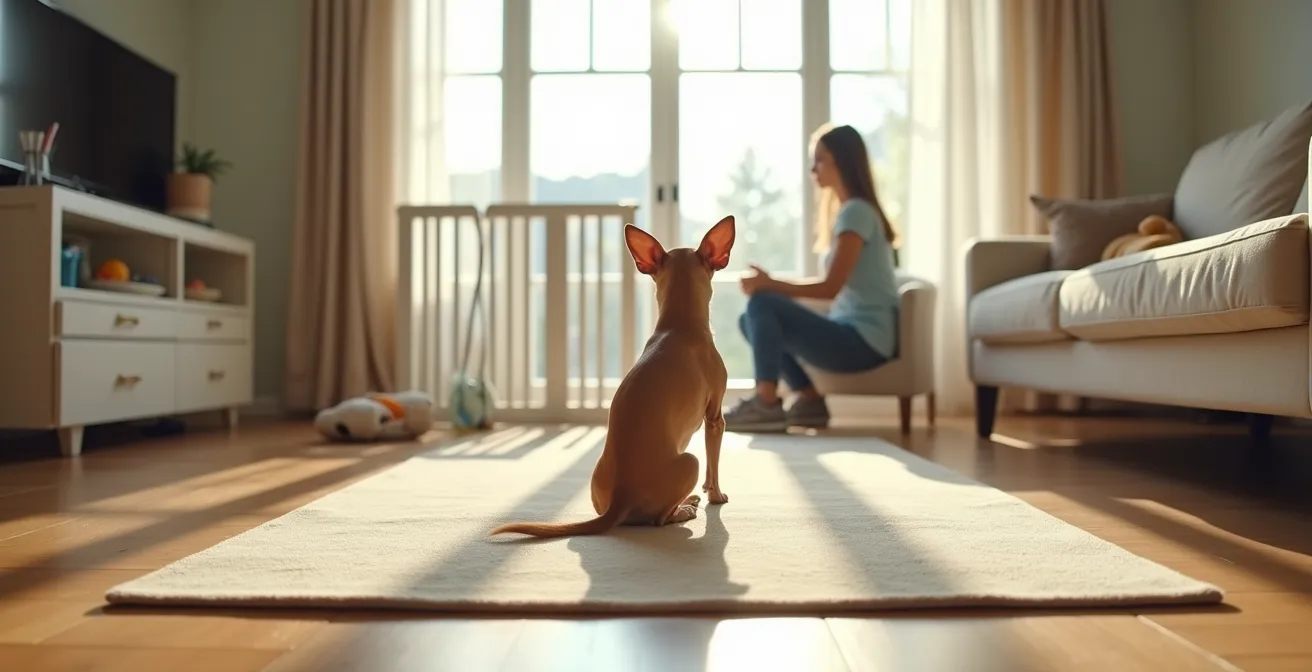
As this scene illustrates, structured independence training is crucial. The goal is a dog that can relax on its own mat while you move about the room, confident that you will return. One of the most effective methods is “Trade-Up Training.” When you need to approach or move your dog, offer a high-value treat in exchange. This changes their association from “I’m losing my spot” to “Good things happen when my owner approaches.” By building these positive associations and fostering their self-assurance, you prevent the fear-based need to guard you as a resource.
The Fontanel Risk: Protecting the “Molera” Soft Spot on the Head
One of the most unique and fragile features of the Chihuahua is the “molera,” an unclosed fontanel or soft spot on the top of their skull, similar to that of a human baby. While it is a recognized characteristic of the breed, it represents a significant physical vulnerability. It’s a common misconception that all Chihuahuas have one; in reality, while a significant number are born with it, some are not, and in many, it closes over time. However, for a large portion of the breed, this soft spot remains a permanent feature.
The prevalence of this trait is remarkably high. Studies and breed experts estimate that approximately 80% to 90% of all Chihuahuas are born with this anatomical feature. Its presence is not considered a defect but a breed trait, particularly in “apple-head” Chihuahuas, which are more likely to have and retain a molera compared to their “deer-head” counterparts. For owners, this means exercising extreme caution. An accidental bump, a fall, or rough play with larger dogs can cause a direct injury to the brain, which lacks the full protection of a bony skull in that area.
The following table, based on information from breed authorities, illustrates how the likelihood of a molera varies. This is not a fashion choice; it’s a critical piece of anatomical information for any owner.
| Chihuahua Type | Molera Likelihood | Retention Rate |
|---|---|---|
| Apple-head | Higher likelihood | More likely to retain |
| Deer-head | Lower likelihood | Less likely to retain |
| Teacup | Highest likelihood | Often permanent |
Protecting a dog with a molera involves creating a safe environment. This means no jumping from high furniture, careful handling, and supervised interactions with other pets and children. Using a harness instead of a collar can also prevent accidental pressure or yanking that could lead to a fall. It is a constant state of awareness, another facet of managing the breed’s inherent fragility.
20 Minutes or 2 Hours: How Much Walking Does a Chi Actually Need?
A common mistake owners make is underestimating a Chihuahua’s need for exercise, assuming their small size equates to low energy. While they aren’t built for marathon runs, they are far from being permanent lap dogs. A bored Chihuahua is often an anxious or destructive one, and trembling can be a sign of pent-up nervous energy. The question isn’t just about physical exertion; it’s about providing the right balance of physical and mental stimulation to satisfy their “big dog” brain.
Chihuahuas have moderate energy levels, but they are known for their bursts of activity and playfulness. Daily walks, interactive toys, and short play sessions can provide them with sufficient mental and physical stimulation.
– Joyride Harness, Best Dog Harness for Chihuahuas Guide
A good starting point for a healthy adult Chihuahua is around 20 to 30 minutes of walking per day. This should not be a single, grueling march but can be broken into two shorter, brisk walks. These outings are about more than just potty breaks; they are crucial opportunities for sniffing, exploring, and experiencing the world. This sensory enrichment is vital for their mental health and helps prevent the anxiety that can manifest as shaking. For puppies or seniors, these sessions should be shorter and gentler, always guided by their individual stamina.
Beyond walks, a holistic exercise plan includes dedicated playtime and mental challenges. Interactive puzzle toys, short training sessions to learn new tricks, or even simple agility courses built with household items can be incredibly beneficial. These activities not only burn energy but also build confidence, directly counteracting the insecurity that often underlies nervous behaviors. A tired, mentally stimulated Chihuahua is a calm Chihuahua. Here are some key guidelines to follow:
- Break exercise into shorter sessions if your Chi has limited stamina, especially for puppies or senior dogs.
- Include a mix of physical exercise (walks, fetch) and mental stimulation (training, puzzle toys).
- Consider simple agility exercises using pillows or boxes to build confidence and coordination.
- Always use a doggy sweater or coat for outdoor exercise in cool or damp weather to help them regulate body temperature.
- Remember the golden rule: a tired Chihuahua is a happy Chihuahua, far less likely to focus on anxiety-driven behaviors like trembling.
Sweaters aren’t Fashion: Thermal Regulation for 2kg Dogs
The image of a Chihuahua in a tiny sweater is a cultural cliché, often dismissed as a frivolous fashion statement. This is a dangerous misconception. For a Chihuahua, a sweater is not an accessory; it is a critical piece of functional equipment for survival. Their trembling is most often a direct result of their struggle with thermal regulation, a core component of their physiological paradox. Their small body mass and thin coat provide poor insulation, and this is compounded by a hyperactive metabolism.
To put it in perspective, it is estimated that these dogs burn three times as many calories as other canines just to maintain their body temperature and energy levels. This means they lose heat at a dramatically faster rate. A room temperature that feels perfectly comfortable to you can be chilly for them. A slight breeze can feel like an icy wind. This constant heat loss forces them to shiver, which is the body’s involuntary muscular reaction to generate warmth—an action that, ironically, burns even more of their precious calories.
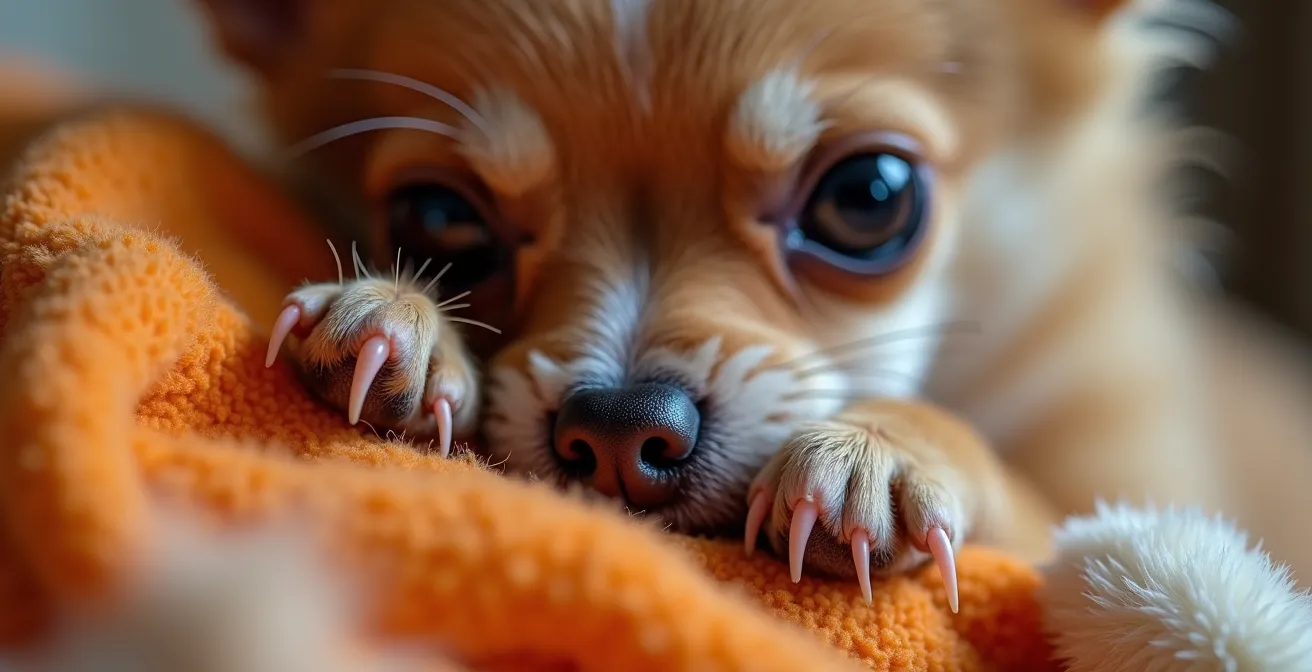
As this image highlights, the contrast between their delicate, sparse fur and a properly insulating material is stark. Their natural coat offers minimal protection. Therefore, providing external sources of warmth is not coddling; it is a necessity. This includes soft, cozy beds they can burrow into, blankets placed in their favorite spots, and, most importantly, a well-fitting sweater or coat for walks or even for wearing indoors on cooler days. Ignoring their need for warmth forces their body into a constant state of stress, which can lead to chronic anxiety and a weakened immune system.
Collar vs. Harness: Protecting the Trachea of a Pomeranian
While the title mentions Pomeranians, the principle is even more critical for Chihuahuas due to their propensity for a condition known as a collapsed trachea. This delicate cartilage tube that carries air to the lungs is notoriously fragile in many toy breeds. A traditional collar, when pulled upon by either the owner or a lunging dog, places direct and focused pressure on this vulnerable area. Over time, or even from a single sharp tug, this pressure can damage the tracheal rings, causing them to weaken and collapse, leading to a characteristic “goose honk” cough, breathing difficulties, and significant distress.
For this reason, a collar should only ever be used on a Chihuahua for holding identification tags. For walking, a harness is not just recommended; it is essential safety equipment. However, not all harnesses are created equal. The best choice for a Chihuahua is a harness that distributes pressure evenly across the chest and shoulders, completely avoiding the neck. Vest-style harnesses are good, but many experts prefer a specific design.
As professional dog trainer Ali Smith notes, a Y-shaped harness is often ideal. This design allows for the most natural freedom of movement in the shoulders while keeping all pressure away from the throat. The following table compares common harness types, highlighting why certain designs are safer for small, fragile dogs.
In her review of the best harnesses, Ali Smith, founder of Rebarkable, specifically recommends a certain style for the breed’s unique anatomy, stating:
Puppia harnesses work well for Chis. The Y-shaped design is what Chihuahuas need, as it offers the most freedom of movement on walks.
– Ali Smith, Professional dog trainer and founder of Rebarkable
Choosing the right harness is a simple, proactive step to prevent a painful and chronic medical condition. It’s a fundamental part of managing their physical fragility.
| Harness Type | Best For | Pressure Distribution |
|---|---|---|
| Y-Shaped | Active dogs, freedom of movement | Even across chest and shoulders |
| H-Shaped (Step-in) | Small or less active dogs | Around torso |
| Vest Harness | Added comfort, reducing strain | Covers more body area |
Key Takeaways
- A Chihuahua’s trembling is a complex signal, not a simple quirk, often linked to their high metabolism and difficulty with thermal and blood sugar regulation.
- Physical vulnerabilities like an open fontanel (molera) and a fragile trachea require specific, proactive safety measures like using a harness and creating a fall-proof environment.
- Addressing behavioral issues like “Small Dog Syndrome” and resource guarding through consistent training and confidence-building is as crucial as managing their physical health.
Pale Gums: Identifying Life-Threatening Anemia in Puppies
While trembling is a visible alarm bell, one of the most silent and deadly signs of a crisis in a Chihuahua puppy is a change in gum color. Healthy gums should be a robust bubblegum pink. If you press on them, the color should fade and return almost instantly. Pale, white, or grayish gums are a sign of anemia or shock, often linked to severe hypoglycemia, internal injury, or illness. This is not a “wait and see” symptom; it is an absolute emergency that requires immediate veterinary attention.
In the context of a trembling puppy, pale gums escalate the situation from a potential problem to a probable crisis. It indicates the body’s systems are beginning to shut down. The trembling may become more severe, or be replaced by extreme lethargy and unresponsiveness. This is the advanced stage of the hypoglycemic crash we discussed earlier, where the brain is being starved of glucose and the body lacks sufficient red blood cells to carry oxygen. At this point, every second counts.
If you observe pale gums alongside other symptoms like weakness or tremors, you must initiate an emergency protocol while preparing to leave for the veterinarian immediately. Your calm, swift action can be the difference between life and death.
Your Emergency Checklist: Responding to a Hypoglycemic Crisis
- Immediate Glucose Application: Without delay, rub a small amount of maple syrup, corn syrup, or honey directly onto the puppy’s gums and under their tongue. Do not force them to swallow.
- Maintain Body Temperature: Wrap the puppy snugly in a warm blanket to prevent heat loss and combat shock.
- Veterinary Contact: Head to the nearest emergency veterinarian immediately. Call them en route to let them know you are coming with a suspected hypoglycemic puppy.
- Continuous Symptom Watch: Look for signs of weakness, severe tremors, disorientation, or seizures. Report these observations to the vet.
- Heightened Puppy Monitoring: Be especially vigilant if your puppy is under 3 months old, as they are at the highest risk for sudden and severe hypoglycemic episodes.
Small Dog Syndrome: Why Treat Your Maltese Like a Doberman?
The final piece of the puzzle in understanding your Chihuahua’s trembling is psychological. “Small Dog Syndrome” is a term for a host of undesirable behaviors—yapping, lunging, guarding—that owners tolerate in small dogs but never would in a large breed like a Doberman. We often fail to provide the structure, training, and rules that dogs of all sizes need to feel secure. By treating them like fragile infants, we inadvertently fuel their anxiety, which manifests as trembling, nervousness, and aggression.
The solution is to treat your Chihuahua not like a toy, but like a dog. They thrive on predictability and clear leadership. This means consistent rules (e.g., no jumping on people), basic obedience training (sit, stay, come), and teaching them to be calm and independent. As we’ve seen, this directly combats resource guarding and separation anxiety. A dog that understands the rules of its world is a confident dog, not a fearful one. The goal is to build their confidence so they don’t feel the need to react fearfully to every new person or situation.
Case Study: Building Independence to Reduce Anxiety
The principle of desensitization is highly effective. Teaching dogs that your comings and goings are unimportant through frequent, short departures helps them internalize the concept that you always return. This simple but consistent practice is a cornerstone of preventing the development of severe separation anxiety and building the confidence they need to remain calm when alone.
Ultimately, managing a Chihuahua is about respecting the paradox. You must protect their fragile body with the right food, warmth, and safety gear, while simultaneously challenging their intelligent mind with training and consistent boundaries. As they grow, their bodies become more resilient. Many puppies, for example, become much better at regulating their own blood sugar as they mature. As noted by Chihuahua Wardrobe, many puppies grow out of hypoglycemia by 8 months of age as their bodies become larger and demand relatively less energy. But the need for psychological security through leadership and training remains for life.
By embracing both their physical fragility and their bold spirit, you can move beyond the worry and build a profound, trusting relationship. The key is not to eliminate the tremble, but to understand what it’s telling you, ensuring your tiny companion lives a long, healthy, and confident life.